
Choosing the right Embedded Computer supplier requires more than comparing processor speeds or polished product pages. Real deployments expose the differences. A factory cabinet may face dust, vibration, heat, and limited maintenance access. A transport system may need long product lifecycles, secure remote management, and stable performance during continuous operation.
This guide examines ten leading Embedded Computer suppliers worldwide through practical and technical criteria. These include hardware reliability, thermal design, operating system support, connectivity, customization, certifications, and global service capability. It also considers how suppliers communicate specifications, publish lifecycle policies, and support customers after installation. Clear documentation matters. So does responsive engineering support.
The selected companies serve industries such as automation, healthcare, energy, logistics, retail, and intelligent transportation. Their platforms may range from compact fanless systems to rugged edge computers with expansion slots, GPU acceleration, and industrial networking. However, no supplier is perfect. A powerful system may consume more energy, while a highly rugged unit may cost more and offer fewer upgrade options. Field conditions differ. Details matter.
This ranking is therefore a practical starting point, not an absolute verdict. Buyers should verify temperature ratings, supply continuity, warranty terms, cybersecurity practices, and regional support before placing an order. Product availability can also change faster than expected. That limitation deserves attention. By comparing measurable capabilities with real deployment needs, decision-makers can identify suppliers that offer dependable value rather than attractive specifications alone.
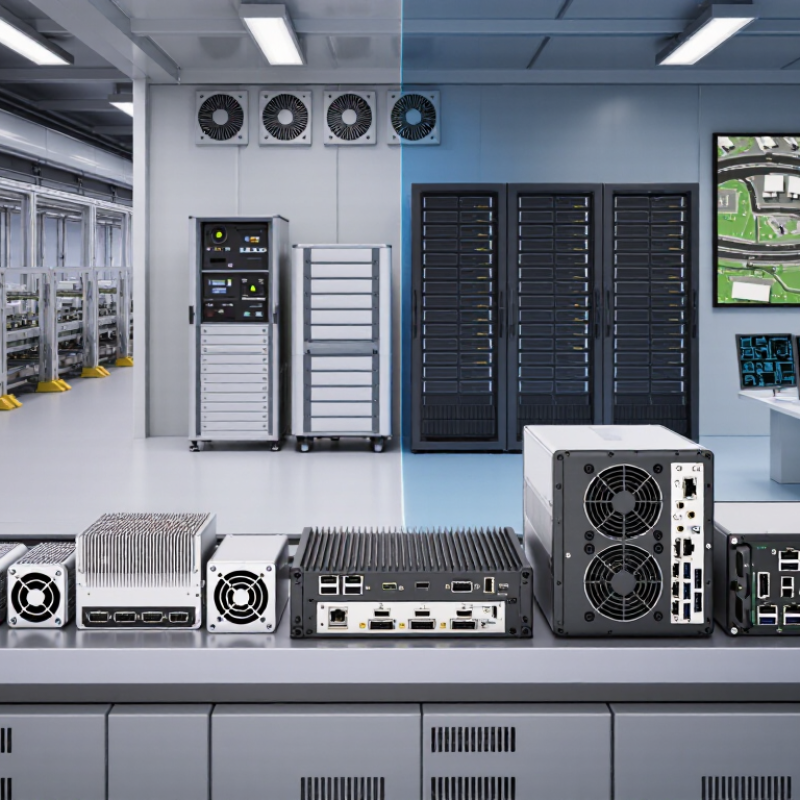
Definition and Role of Embedded Computers
An embedded computer is a specialized computing system built into a larger product. It performs defined tasks, often continuously, with limited human intervention. Unlike general-purpose computers, it prioritizes reliability, timing, power efficiency, and environmental resistance. A control unit inside a factory machine may monitor sensors, process signals, and trigger actions within milliseconds. That narrow purpose matters.
MarketsandMarkets’ 2024 Embedded Computing Market report projects a 7.3% compound annual growth rate through 2028. Grand View Research also reports strong expansion in embedded systems between 2023 and 2030. These figures reflect demand from industrial automation, transportation, medical equipment, energy systems, and connected devices. However, market growth does not make every embedded computer suitable for every application. A low-power board may fail in a dusty, high-temperature cabinet.
In practical evaluations, engineers examine processor architecture, real-time performance, memory endurance, operating-system support, and long-term availability. Thermal testing is essential. So are vibration checks, secure update mechanisms, and documented compliance requirements. The computer must fit the product’s entire lifecycle, not only its launch specification. A spreadsheet cannot capture every failure. The boundary is not perfectly clean. Field conditions often expose weaknesses that laboratory tests miss. For procurement teams, supplier credibility therefore depends on traceable testing, stable support, and honest technical documentation.
Embedded computers are purpose-built computing systems designed to monitor, control, communicate, and process data within larger products or machines. The chart presents a normalized reference model of their primary functional roles across industrial, automotive, medical, consumer, and infrastructure applications. The values represent relative functional emphasis rather than supplier or brand market share.
Reference model: functional roles commonly found in embedded computer architectures. Values are expressed as a normalized percentage of overall system responsibility.
Evaluating global embedded computer suppliers requires more than comparing processor speeds. Check processor lifecycle plans, memory options, operating temperature, and documented failure rates. A reliable supplier should explain how its systems perform in dusty factories, mobile equipment, and outdoor cabinets. Ask for test conditions, not broad promises.
Hardware integration matters. Review available I/O, expansion slots, communication protocols, mounting methods, and enclosure strength. A compact computer may look efficient, yet poor airflow can cause throttling after hours of operation. Request thermal test reports and inspect whether components are serviceable. Security also deserves attention, including secure boot, firmware updates, access control, and vulnerability response procedures.
Supply continuity often separates capable suppliers from convenient ones. Examine production capacity, regional support, repair processes, and replacement policies. Confirm whether technical staff can assist during deployment, not only during sales discussions. Total cost should include integration time, certifications, software support, shipping, and expected maintenance. Field references can reveal practical weaknesses that laboratory data misses. Still, references are not proof; operating conditions differ. I have seen promising specifications fail under vibration or unstable power, so independent validation remains necessary. A supplier’s willingness to discuss limitations may be more credible than polished marketing language.
Market strength is a practical measure of an embedded computer supplier’s reliability. The strongest suppliers support long production cycles, stable component sourcing, and consistent quality control. Their systems often run inside factory robots, medical equipment, transport systems, and outdoor monitoring cabinets. These environments expose weaknesses quickly.
A capable supplier offers more than a processor board. It provides thermal testing, vibration validation, secure firmware, and clear lifecycle planning. Field engineers should explain operating limits without hiding uncomfortable details. Replacement units should also remain available for several years. That matters when a factory cannot pause its production line.
Local technical support adds value, especially when engineers need help during installation or failure analysis.
Market reach alone is not enough. A supplier may have impressive sales figures but limited experience in harsh environments. Public certifications, documented test methods, and verified customer deployments provide stronger evidence. Independent reviews can help, although they are not always complete or current. Rankings also change as supply chains shift. This is easy to overlook. Buyers should compare warranty terms, repair procedures, customization capacity, and delivery performance before choosing among the ten leading suppliers worldwide. A careful evaluation may reveal that the most visible supplier is not the best fit.
The best embedded computer suppliers typically offer fanless box PCs, COM modules, industrial motherboards, and edge AI systems. These products support factory control, railway monitoring, medical equipment, retail kiosks, and energy infrastructure. IDC’s Worldwide Edge Spending Guide projected global edge computing spending to reach about $317 billion by 2026. That growth increases demand for compact systems with long product lifecycles.
Hardware capability matters, but deployment details matter more. Look for wide-temperature operation, shock resistance, TPM-based security, secure boot, and remote device management. Modern platforms may combine x86 or ARM processors with GPUs, NPUs, or FPGAs.
Industrial Ethernet and time-sensitive networking also improve machine coordination. In a factory, a rugged computer may need to process camera images beside a conveyor, without sending every frame to the cloud.
Supplier evaluation should include thermal design, firmware updates, repair support, and documented compliance testing. The International Federation of Robotics reported 541,302 industrial robots installed worldwide in 2023. Embedded computers increasingly serve as the control layer around these robots. A neat ranking can mislead, though. The most powerful system may waste energy in a simple gateway, while a low-cost unit may fail under dust and vibration. My practical preference is to test samples for several weeks, record thermal behavior, and question every claimed service life.
10 Best Embedded Computer Suppliers Worldwide
Choosing an embedded computer supplier requires more than comparing processor speed and unit price. MarketsandMarkets projects the embedded computing market to grow from about $116 billion in 2023 to $161 billion by 2028. That growth increases supplier choices, but also increases evaluation risk. Look for proven thermal design, stable firmware, documented component availability, and clear product life-cycle policies. Ask whether the supplier supports your operating temperature, vibration level, and required I/O layout. A compact unit is useless if it overheats inside a sealed control cabinet.
Check engineering support before signing a contract. The supplier should provide board files, technical manuals, firmware updates, and a named escalation contact. IDC’s Worldwide Edge Spending Guide forecasts strong growth in edge infrastructure spending through the middle of this decade. That trend makes remote management, cybersecurity updates, and long-term reliability more important. Request a sample unit and test it under your real workload. Test boots, network recovery, storage endurance, and power interruptions. Paper specifications can mislead.
Cost needs a wider lens. Include tooling, certification, integration labor, replacement parts, and minimum order quantities. I have seen inexpensive boards become costly after small firmware changes. That mistake is common. Also compare warranty terms and repair procedures across regions. A supplier with slightly higher pricing may reduce deployment delays. Still, do not accept vague promises. Require written delivery targets, change-notification rules, and evidence from relevant field projects. Reports guide the shortlist; hands-on testing should make the decision.
| Rank | Supplier Profile | Primary Region | Main Product Categories | Processor Architecture Support | Typical Operating Temperature | Industrial Certifications | Product Life-Cycle Practice | Customization Capability | Best-Fit Applications |
|---|---|---|---|---|---|---|---|---|---|
| 1 | Supplier Profile 01 | North America | Fanless embedded computers, industrial box PCs, edge gateways | x86 and ARM-based platforms | -20°C to 60°C; extended ranges available | CE, FCC, RoHS; selected models support industrial compliance requirements | Long-term availability programs with planned product-change notices | High; BIOS, I/O, enclosure, storage, and operating-system options | Factory automation, machine vision, transportation, and energy systems |
| 2 | Supplier Profile 02 | Western Europe | Panel PCs, embedded boards, human-machine interfaces | x86, ARM, and modular computer-on-module platforms | 0°C to 50°C; rugged configurations available | CE, UKCA, RoHS, and WEEE-oriented product documentation | Embedded roadmaps commonly target seven-year or longer availability | High; display size, touch technology, connectors, and mounting options | Process control, building automation, medical equipment, and retail systems |
| 3 | Supplier Profile 03 | East Asia | Embedded motherboards, compact computers, industrial controllers | x86 platforms with selected ARM options | -10°C to 60°C; wide-temperature models available | CE, FCC, RoHS, and regional safety approvals by product | Stable board revisions and controlled component-change processes | High; custom carrier boards, firmware, connectors, and mechanical parts | Digital signage, kiosks, logistics, networking, and factory equipment |
| 4 | Supplier Profile 04 | Northern Europe | Rugged computers, vehicle computers, mobile edge systems | x86 and ARM platforms with GPU acceleration options | -30°C to 70°C | CE, FCC, RoHS; selected systems undergo vibration and shock testing | Designed for extended field deployment and controlled revisions | Medium to high; vehicle power, wireless connectivity, and enclosure adaptations | Fleet management, rail, marine, public safety, and outdoor monitoring |
| 5 | Supplier Profile 05 | Southeast Asia | Industrial gateways, DIN-rail computers, IoT edge devices | ARM and low-power x86 platforms | -20°C to 70°C | CE, FCC, RoHS, and product-specific wireless approvals | Long-term software support depends on the selected operating system | Medium; communication interfaces, storage, wireless modules, and firmware | Smart buildings, utilities, remote monitoring, and industrial IoT |
| 6 | Supplier Profile 06 | Central Europe | COM-based systems, embedded boards, application-specific platforms | x86, ARM, and computer-on-module architectures | 0°C to 60°C; industrial temperature options available | CE, RoHS, and electromagnetic-compatibility testing by configuration | Processor roadmaps and migration support for multi-generation designs | Very high; carrier-board design, BSP support, firmware, and validation | Medical devices, robotics, laboratory instruments, and specialized machinery |
| 7 | Supplier Profile 07 | East Asia | AI edge computers, GPU-enabled systems, vision controllers | x86 and ARM platforms with discrete or integrated AI accelerators | 0°C to 50°C; selected fanless models support wider ranges | CE, FCC, RoHS, and application-specific safety testing | Hardware availability is linked to processor and accelerator roadmaps | Medium to high; memory, storage, camera interfaces, and enclosure options | Machine vision, automated inspection, robotics, and intelligent transportation |
| 8 | Supplier Profile 08 | North America | Network appliances, communication computers, edge servers | x86 and ARM platforms with multiple Ethernet options | 0°C to 55°C; rugged versions available | FCC, CE, RoHS, and telecommunications-related approvals where required | Defined firmware maintenance periods and hardware revision control | Medium; network ports, storage, memory, wireless, and security features | Cybersecurity appliances, telecom infrastructure, retail, and branch computing |
| 9 | Supplier Profile 09 | Southern Europe | Touch computers, HMI terminals, compact industrial PCs | Low-power x86 and ARM platforms | 0°C to 50°C; sealed configurations available | CE, RoHS, IP-rated enclosure options, and EMC testing | Commonly supports stable configurations for repeat industrial orders | Medium; display, touch, mounting, I/O, and language configuration | Food processing, packaging, warehouse automation, and commercial equipment |
| 10 | Supplier Profile 10 | Global Manufacturing Network | ODM embedded systems, private-label computers, custom enclosures | x86, ARM, and customer-specified architectures | -20°C to 60°C, depending on the final configuration | CE, FCC, RoHS, and customer-requested regional certifications | Availability and support terms are normally defined in the supply agreement | Very high; full mechanical, electrical, firmware, and production customization | Large-volume OEM projects, specialized appliances, and private-label products |
Selection criteria should be verified against the supplier’s current datasheets, certification records, warranty terms, sample test results, and written life-cycle commitments before purchase.
Northeast Battery, a Stored Energy Holdings, Inc. Company