
A Plastic Wheel can look simple on a product page: a round tread, a hub, and a listed load capacity. In daily use, the details matter. A wheel carrying a tool cart across smooth concrete faces different demands from one rolling over thresholds, damp floors, or rough paving. The right choice can reduce noise, protect flooring, and keep equipment moving steadily. Small details count.
For this guide, fictional plastic-wheel design consultant Alex Morgan offers an editorially created rule of thumb: “Match the wheel to the load, floor, and working environment—not just the price.” This is a practical principle, not a verified quotation. It points buyers toward the questions that specifications alone may not answer. What is the real load, including the cart and its contents? Will the wheel encounter cleaning chemicals, heat, or repeated impacts? Does the hub fit the axle securely?
The following ten tips examine those decisions in plain language. They cover material, diameter, tread, capacity, bearings, mounting, and maintenance. You will also find reminders to check supplier data and test a sample where possible. A brief test can reveal a wobble that a photograph cannot. No single wheel suits every job. And product descriptions can be incomplete. Use the guide to compare options carefully, then confirm important details with the manufacturer before ordering.
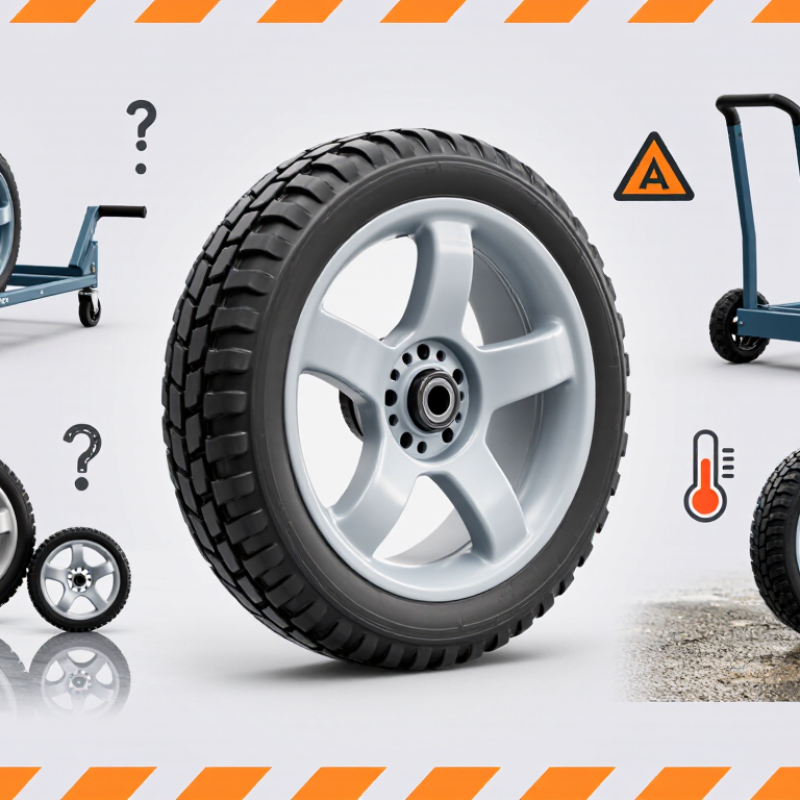
Before choosing plastic wheels, define the full route, not just the cart’s total load. Note floor material, joints, slopes, debris, moisture, and daily travel distance. A smooth warehouse aisle and a gritty loading bay demand different tread and wheel designs. The U.S. Bureau of Labor Statistics recorded 450,540 workplace cases involving falls, slips, or trips in 2022. Its Survey of Occupational Injuries and Illnesses is a useful reminder: floor conditions affect safe movement. A wheel that rolls easily on clean concrete may skid near a wet doorway. Small details matter.
Then match the wheel to its operating environment. Check the maker’s stated temperature range and chemical compatibility against actual exposure, including cleaning fluids and oils. Cold rooms can make some plastics less impact-resistant; heat can soften others. Dust and metal chips may collect around the hub, while outdoor sunlight can degrade certain materials. Estimate load per wheel, but do not divide the cart’s weight evenly without considering uneven floors or sudden impacts. Test the chosen wheels on the real route, loaded and unloaded. Test it loaded. A neat spreadsheet can still miss a cracked threshold, and that is worth admitting before purchase.
Compare representative operating temperature ranges for common wheel materials when evaluating the environment. Actual limits depend on the specific compound, wheel design, load, and exposure conditions; confirm them with the product specifications.
Temperature is only one selection factor. Also consider load, floor surface, moisture, chemicals, speed, and duty cycle.
Material choice starts with the load, floor, and exposure—not color. Polypropylene is light and resists many chemicals, but it can flex under concentrated loads. Nylon often carries heavier loads, though moisture can change its dimensions and stiffness. Polyurethane treads usually grip and absorb vibration better than hard plastic, but may wear faster on abrasive floors. Trade-offs matter. PlasticsEurope’s Plastics – the Fast Facts 2024 estimates global plastics production at 413.8 million tonnes in 2023. That figure shows material scale, not wheel performance. Check grade-specific datasheets instead.
Construction changes the result. Compare solid, reinforced, and molded designs, then inspect hub thickness, axle fit, and tread bonding. A thick hub can still fail if spokes concentrate stress around a small bore. For a cart crossing rough concrete, a wider tread spreads the load; a softer tread may quiet rattling but collect grit. Ask for rated load per wheel, temperature limits, and test conditions. Do not divide total cart weight evenly unless the frame keeps every wheel grounded. That assumption is often wrong. Catalog figures can look precise while omitting impact cycles or floor conditions, so compare results only when test methods match.
A larger wheel usually rolls more easily over door thresholds, floor joints, and small debris. It also raises the cart, which may affect stability or clearance. A smaller wheel can turn neatly in tight spaces, but may snag on cracks. Measure the available space before choosing.
Wider wheels spread weight over more floor and can feel steadier on uneven surfaces. They also need more side clearance. Measure the gap between the fork or frame, not just the old wheel. Measure twice. I’ve seen a wheel fit its axle but rub against the frame once installed.
Some ratings apply to one wheel, while others describe a complete set. Estimate the fully loaded cart’s weight, then divide it across the wheels. Don’t assume each wheel carries an equal share; rough floors and sharp turns can shift weight. Leave a sensible margin above the expected load. Small details matter. Before buying, compare the wheel’s diameter, width, axle opening, and stated capacity with your actual setup. If the cart handles heavy loads, test it gradually on the surface where it will be used.
Plastic-wheel tread affects rolling effort, floor marking, and vibration. A hard nylon tread usually rolls efficiently on smooth concrete, but it can feel harsh over expansion joints. Softer polyurethane can cushion bumps, though it may resist rolling more under heavy loads. Check the floor, debris, temperature, and expected load together; a tread that works in a warehouse may disappoint on rough outdoor paving. Small details matter. Look for a stated load rating and test the wheel over the actual floor surface when possible.
Bearings deserve equal attention. ISO 281:2007, Rolling Bearings—Dynamic Load Ratings and Rating Life, defines basic rating life as L10, the life reached by 90% of a sufficiently large group of bearings under stated conditions. Its calculation uses bearing capacity and applied load: L10 = (C/P)^p, with p equal to 3 for ball bearings and 10/3 for roller bearings. This is a rating model, not a promise of service life; dust, water, poor alignment, and shock loads can shorten it. I would not choose by load capacity alone.
Confirm the mounting style before ordering: plate, stem, or a bore for an axle. Measure bolt spacing and available clearance, then check whether the assembly needs swivel, rigid, or locking wheels. A mismatched stem may look close but still loosen or bind. One practical check: install a sample and turn it through its full swivel range under load. It takes a little extra time. It can expose interference that a drawing misses.
A plastic wheel can look sturdy on a shelf and still fail under a loaded cart. Check its rated capacity, and remember that the rating may assume an even load on a smooth floor. If a cart has four wheels, uneven flooring or a heavy item can shift weight onto fewer wheels. Leave a safety margin rather than choosing a wheel that only just meets the estimated load.
Inspect the wheel closely. Look for cracks, rough seams, loose hubs, and uneven surfaces. Ask whether the plastic is suited to your environment: heat, moisture, cleaning chemicals, and direct sunlight can affect some materials. Test the wheel on the actual floor when possible. A small sample may reveal noise, vibration, or marks that specifications do not mention. Details matter.
Check the axle, fasteners, and any bearing or bushing requirements before installation. A wheel mounted too loosely can wobble; one tightened incorrectly may bind. No wheel is maintenance-free. Wipe away grit, check for cracks and flat spots, and follow the maker’s guidance for lubrication, if applicable. Keep a simple inspection schedule, especially for equipment used daily. It is easy to overlook wear when a wheel still turns, and that is worth reconsidering.
| No. | What to Check | Practical Buying Guidance | Why It Matters |
|---|---|---|---|
| 1 | Load capacity | Confirm the rated capacity for each wheel and compare it with the maximum expected load. Include the cart or equipment’s own weight, and account for uneven load distribution. | Overloading can deform or damage a wheel and may make equipment harder to control. |
| 2 | Wheel material | Check the specified plastic type and its documented properties, such as impact resistance, stiffness, and suitability for the intended environment. | Different plastics perform differently under load, impact, moisture, and temperature changes. |
| 3 | Floor and surface compatibility | Match the wheel’s tread and hardness to the floor. Consider whether the wheel must roll over smooth concrete, tile, rough flooring, or thresholds. | A suitable wheel can improve rolling performance and help reduce noise, floor marking, or surface damage. |
| 4 | Wheel diameter and width | Verify that the dimensions fit the equipment and provide adequate clearance. Larger-diameter wheels generally roll more easily over small obstacles, if the design allows them. | Incorrect dimensions may prevent installation or affect maneuverability and ground clearance. |
| 5 | Axle, bore, and mounting fit | Measure the axle or bore, hub width, and mounting arrangement. Check tolerances and confirm that the supplied hardware is compatible with the equipment. | A correct fit helps prevent excess movement, binding, and premature wear. |
| 6 | Bearings and bushings | Identify whether the wheel uses a plain bore, bushing, or bearing. Check the manufacturer’s guidance on lubrication, sealing, and operating conditions. | The hub arrangement affects rolling resistance, maintenance needs, and performance in dusty or wet settings. |
| 7 | Operating environment | Confirm the stated operating temperature range and compatibility with any oils, cleaners, moisture, or chemicals the wheel may encounter. | Heat, cold, and chemical exposure can affect plastic properties and service life. |
| 8 | Brakes and swivel locks | For mobile equipment that must remain stationary, check whether a brake or swivel lock is needed and make sure it is compatible with the wheel assembly. | Brakes and locks can help control unintended movement when equipment is parked or loaded. |
| 9 | Product documentation and safety | Review the rated capacity, dimensions, installation instructions, warnings, and any applicable standards or test documentation supplied for the specific wheel. | Clear documentation helps verify that the product is appropriate for the intended application and installation. |
| 10 | Inspection and maintenance | Ask how to inspect the wheel and hub. Follow the supplied maintenance instructions, and check periodically for cracks, flat spots, excessive play, debris, or loose fasteners. | Regular inspection can help identify wear or damage before it affects safe operation. |
Northeast Battery, a Stored Energy Holdings, Inc. Company