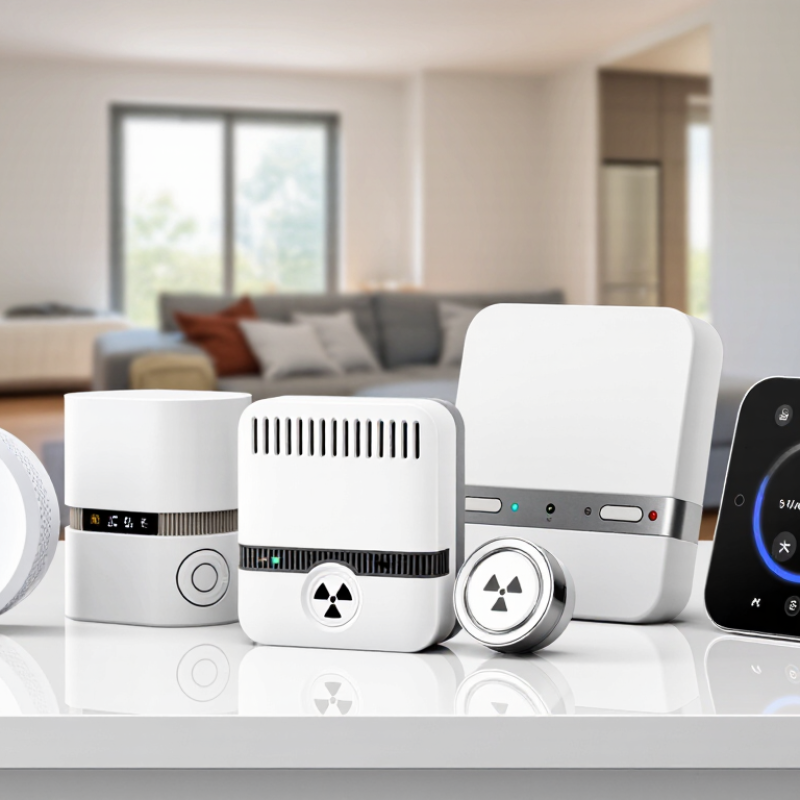
| Photoelectric Smoke Alarm | Optical sensing chamber that detects smoke particles, particularly from slow, smoldering fires. | Replaceable batteries, sealed long-life batteries, or mains power with battery backup. | Available in wired or wireless interconnected versions, depending on the product system. | Some models provide mobile alerts, low-battery notifications, self-testing, and alarm history. | Generally responds well to smoldering fires and tends to produce fewer nuisance alarms from cooking than ionization-only designs. | May respond more slowly to some rapidly flaming fires than an ionization sensor. | Bedrooms, hallways, living rooms, and residential spaces. | Confirm local certification, battery requirements, radio frequency approval, and compatibility with regional electrical systems. |
| Ionization Smoke Alarm | Uses a small ionization chamber that is typically more responsive to fast-flaming fires. | Usually battery-powered; some versions support mains power and backup batteries. | Wired or wireless interconnection may be available, but compatibility is normally limited to the same approved system. | Smart connectivity is less common than in newer photoelectric or dual-sensor products. | Can provide rapid response to certain flaming fires and is often compact and economical. | Can be more prone to nuisance alarms from cooking or steam; disposal and regulatory requirements may vary because of the radioactive source used in many designs. | Locations where fast-flaming fire detection is a priority and local regulations permit this technology. | Check national rules on radioactive-source products, disposal, importation, and required safety approvals before purchase. |
| Dual-Sensor Smoke Alarm | Combines photoelectric and ionization sensing to detect a broader range of fire signatures. | Replaceable batteries, sealed batteries, or mains power with battery backup. | Often offered with wired or wireless interconnection, subject to system compatibility. | May include app alerts, hush control, sensor-status monitoring, and automated self-tests. | Provides broader fire coverage than a single-sensor design when correctly installed and maintained. | Usually costs more and may still require careful placement to reduce nuisance alarms. | Homes, apartments, rental properties, and mixed-use residential layouts. | Look for recognized conformity marks and verify that the alarm is approved for the intended country or market. |
| Heat Alarm | Detects a fixed high temperature or a rapid rise in temperature rather than smoke. | Battery-powered or mains-powered with battery backup. | Can be wired or wirelessly interconnected in compatible systems. | Some models provide remote status reporting and low-battery notifications. | Useful where smoke alarms may cause frequent nuisance alarms, such as kitchens, garages, workshops, or dusty areas. | Normally responds later than a smoke alarm and should not replace smoke alarms in sleeping areas or escape routes. | Kitchens, garages, boiler rooms, utility rooms, and dusty environments. | Use only where permitted by local installation guidance; select the correct temperature rating for the environment. |
| Standard Wired Interconnected Alarm | May use photoelectric, ionization, dual-sensor, or heat detection technology. | Permanent mains power with battery backup is common. | Alarms communicate through dedicated interconnect wiring; activation of one unit can trigger others on the same circuit. | Smart functions depend on the connected gateway or alarm system; basic models may have no app control. | Reliable communication in buildings where wiring can be installed or is already available. | Installation can be disruptive and may require qualified electrical work; systems are not universally compatible. | New construction, major renovations, and properties with accessible electrical wiring. | Check voltage, wiring method, local electrical codes, and whether the interconnect signal is compatible with regional standards. |
| Wireless Interconnected Alarm | Uses smoke or heat sensors with radio communication between compatible alarm units. | Battery-powered, sealed-battery, or mains-powered units with battery backup. | Multiple alarms can communicate without dedicated interconnect wires; range depends on construction and radio design. | Some systems support wireless gateways, smartphone alerts, event logs, and remote testing. | Faster installation and easier retrofitting in finished homes or heritage buildings. | Radio range can be reduced by concrete, metal structures, basements, and building layout; batteries require monitoring. | Existing homes, apartments, rental properties, and multi-room installations without accessible wiring. | Verify permitted radio bands, regional wireless approvals, maximum network size, and performance through walls and floors. |
| Smart Wi-Fi Smoke Alarm | Usually uses photoelectric or dual-sensor detection with a Wi-Fi communication module. | Battery-powered or mains-powered with battery backup; Wi-Fi access may increase energy use. | May support alarm-to-alarm interconnection, app-based notifications, or both, depending on the design. | Smartphone alerts, remote testing, low-battery warnings, device health reports, and integration with selected home platforms. | Provides remote notifications when occupants are away and can support centralized monitoring. | Requires compatible Wi-Fi, account setup, software support, and adequate network coverage; internet outages can interrupt remote alerts. | Connected homes, vacation properties, and users who need remote status information. | Check 2.4 GHz or 5 GHz requirements, data-privacy terms, cloud-service availability, app support, and regional network compatibility. |
| Low-Power Wireless Smart Alarm | Smoke or heat sensing combined with a low-power radio protocol designed for connected devices. | Long-life batteries are common; mains-powered gateway devices may be required. | Can form a local wireless network and communicate through a hub or gateway. | Remote notifications, device health monitoring, battery status, test reminders, and automation triggers may be supported. | Often offers lower energy consumption and better local-network resilience than Wi-Fi-only designs. | Usually depends on a compatible hub, gateway, or ecosystem; cross-system compatibility is not guaranteed. | Large homes, property managers, and installations requiring centralized monitoring. | Confirm protocol support, gateway availability, maximum device count, encryption method, and local support arrangements. |
| Voice-Alert Smoke Alarm | May use photoelectric, ionization, or dual-sensor detection combined with spoken warnings. | Battery-powered or mains-powered with battery backup. | Some models can transmit voice alerts to other compatible units. | Voice location messages, alarm-type notifications, hush functions, and sometimes mobile alerts. | Spoken warnings can provide clearer information than a siren alone, especially in larger homes. | Language availability varies; voice features may not be suitable for every market or household. | Multi-room homes, households with children, and users who benefit from clear location information. | Check supported languages, volume requirements, accessibility features, and whether voice messages comply with local product rules. |
| Specialized Hearing-Alert System | Uses smoke or heat detectors connected to visual, vibrating, or auxiliary alert devices. | Battery-powered, mains-powered, or a combination of both. | Detector units can communicate with bed shakers, strobe indicators, pagers, or accessible alarm receivers. | Remote notifications, test reminders, event monitoring, and integration with accessibility equipment may be available. | Improves notification options for people who may not hear a conventional alarm. | Requires additional equipment, careful placement, and regular testing of every alert path. | Households with deaf or hard-of-hearing occupants and supported-living environments. | Check accessibility regulations, receiver compatibility, visual-alert intensity, vibration performance, and emergency service requirements. |