
Buying an Anchor Bolt across borders is not simply a price comparison exercise. It involves engineering accuracy, supplier credibility, material control, and dependable delivery. A bolt that looks correct in a product photo may fail when its thread length, grade, or coating differs from the project specification.
This guide presents ten practical buying tips for global purchasers. It focuses on details that experienced buyers check before approving an order. These include diameter, thread pitch, tensile strength, corrosion protection, washer compatibility, packaging, and inspection records. Small errors matter. A two-millimeter mismatch can delay installation or force costly rework at the jobsite.
Standards must be confirmed, not assumed. Buyers should compare drawings, technical data sheets, and applicable regional requirements. Material certificates and batch traceability can provide useful evidence, while independent inspections may reduce quality risks. Supplier communication also deserves attention. Clear samples, signed specifications, and written tolerances help prevent misunderstandings across languages and time zones.
The cheapest quotation may not be the lowest total cost. Freight, rejected goods, replacement time, and customs delays can change the result quickly. A reliable supplier should explain production capacity, testing methods, packaging details, and after-sales support without vague promises.
Some decisions remain imperfect. Forecasts change, project teams overlook details, and even careful inspections have limits. That is why a disciplined purchasing process should include verification points and documented approvals. A practical review can protect both budget and structural performance. Small checks help. Clear evidence matters. This is where experienced global buying becomes valuable.
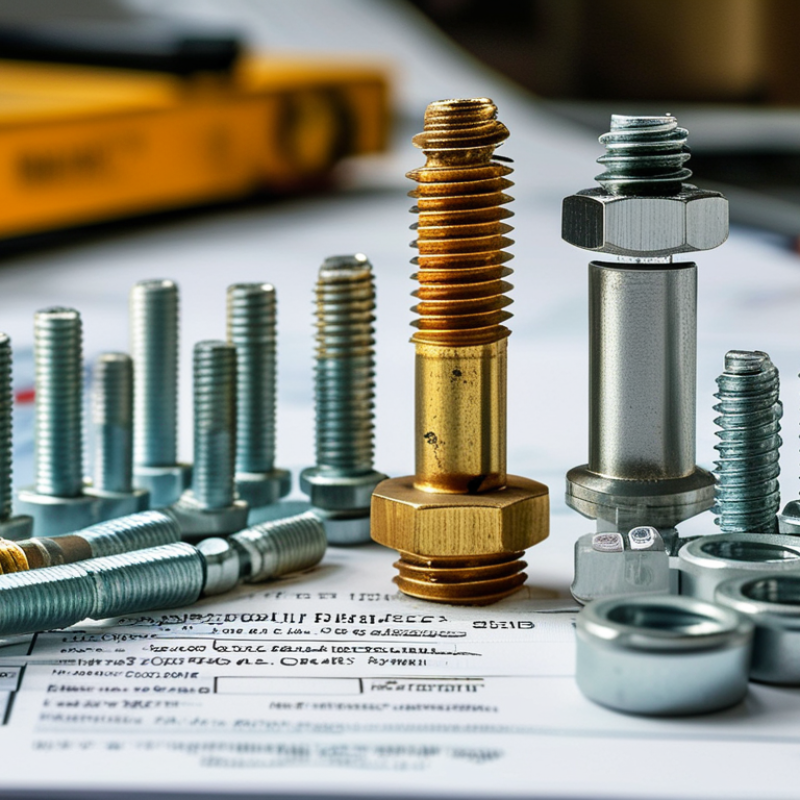
10 Anchor Bolt Buying Tips for Global Buyers
Anchor bolts connect structural members to concrete foundations. Their selection begins with the load, substrate, and installation method. Cast-in bolts suit new foundations and offer strong, predictable positioning. J-bolts and L-bolts provide mechanical anchorage through their bent ends. Wedge and sleeve anchors work well for existing concrete, but edge distance matters. Chemical anchors use resin to bond threaded rods inside drilled holes. They require clean holes and careful curing control.
Applications vary widely. Steel columns often need high-strength threaded rods with accurate templates. Machinery foundations demand stable alignment and resistance to vibration. Guardrails, solar structures, storage systems, and pipe supports may require different embedment depths. Diameter alone does not define performance. Check tensile and shear loads, concrete strength, embedment, spacing, and washer size. Rust changes everything. Select suitable coatings or stainless materials for humid, coastal, or chemically exposed locations. Local standards and project specifications should guide grades and testing.
A common buying mistake is treating every anchor bolt as interchangeable. Fit is not enough. Thread quality, nut compatibility, straightness, and batch traceability also affect installation reliability. Ask for material certificates and inspection records when the application is critical. Chemical anchors need temperature and curing data before loading. Mechanical anchors need verified torque. Design tables help, but they cannot replace site assessment. Concrete may be cracked, weak, or unexpectedly thin. That detail deserves another check.
Before buying anchor bolts, define the load they must resist. Separate tension, shear, bending, and combined forces. A wall-mounted frame may pull outward while also sliding sideways. That interaction matters.
Record static and dynamic loads. Machinery vibration can loosen an otherwise suitable connection. Include impact, wind, temperature changes, and accidental loading where relevant. Do not guess. A qualified structural engineer should confirm design loads and safety factors. I have seen buyers select bolts from diameter alone, then discover that the concrete edge distance was inadequate. The bolt looked strong. The installation was not.
Size must match the substrate, fixture, hole, washer, and nut. Check bolt diameter, grade, length, thread engagement, and required embedment. The effective embedment may change in cracked or weak concrete. Confirm spacing and edge distance before drilling. A longer bolt is not automatically safer. It may collide with reinforcement or fail to develop its intended strength.
Installation requirements should be written before purchase. Specify hole diameter, drilling method, hole depth, cleaning process, tightening torque, and curing time for chemical systems. Dry, dusty holes can reduce holding power. Wet conditions may also affect product selection. Use a template when several bolts must align with a base plate. Mark the final torque and inspection method on the site drawing. Details matter. If the specification is unclear, pause the order and ask for an engineered revision; changing bolts after delivery is costly and sometimes impossible.
10 Anchor Bolt Buying Tips for Global Buyers
Material selection begins with the installation environment. Carbon steel suits many indoor projects, but humid ports and coastal sites demand stronger corrosion protection. Stainless steel resists rust well, although its strength and cost vary by grade. Check chemical composition, not only the invoice description. I have seen “stainless” parts fail because the grade was never verified. Small details matter.
Tip: Request mill certificates, mechanical test reports, and coating records before shipment. Match the bolt’s strength grade with the structural design, tightening method, and expected load. A higher grade is not automatically safer. Excessive hardness can reduce toughness and complicate field installation. Confirm thread dimensions, nut compatibility, and proof-load requirements with a qualified engineer.
Coating choice should reflect exposure, service temperature, and maintenance access. Hot-dip galvanizing provides a durable zinc layer for outdoor applications, but coating thickness can affect thread fit. Mechanical galvanizing may suit some assemblies, while specialized coatings help in severe chemical environments. Salt-spray hours are useful for comparison, not a complete prediction of service life. Real conditions are messier. Inspect sample bolts for bare spots, damaged threads, uneven coating, and trapped moisture after packing. Consider transport humidity, too. Packaging is often overlooked. A reliable supplier should explain inspection frequency, traceability, and corrective action when results fall short. Ask difficult questions early.
| No. | Buying Dimension | What to Check | Common Options or Reference Values | Practical Guidance for Global Buyers |
|---|---|---|---|---|
| 1 | Base Material | Confirm the steel or stainless-steel grade, chemical composition, heat treatment, and suitability for the service environment. | Carbon steel is widely used for general construction. Stainless steel grades such as 304 and 316 are selected for improved corrosion resistance. Grade 316 generally performs better than 304 in chloride-bearing environments because of its molybdenum content. | Do not specify “stainless steel” without naming the grade. Match the material to humidity, salt exposure, chemicals, temperature, and contact with dissimilar metals. |
| 2 | Strength Grade | Verify the applicable standard, tensile strength, yield or proof strength, and whether the bolt, nut, and washer grades are compatible. | ISO metric property classes commonly include 8.8, 10.9, and 12.9. Class 8.8 has a nominal tensile strength of 800 MPa and a nominal yield ratio of 0.8; exact requirements depend on the governing standard. | Higher strength is not automatically better. Use the structural engineer’s design values and avoid pairing high-strength bolts with unsuitable nuts or washers. |
| 3 | Anchor Type and Geometry | Identify whether the product is a cast-in anchor bolt, headed bolt, bent anchor, sleeve anchor, wedge anchor, or chemical anchor system. Check diameter, embedment, thread length, projection, and bend dimensions. | Cast-in anchors transfer load through embedment, heads, plates, hooks, or bends. Post-installed anchors rely on mechanical expansion or a qualified adhesive system. | The anchor type must match the concrete condition, installation sequence, edge distance, spacing, cracked or uncracked concrete, and design load direction. |
| 4 | Diameter and Load Capacity | Check tension, shear, combined loading, effective embedment depth, concrete strength, edge distance, spacing, and steel failure modes. | Nominal bolt diameter alone does not determine capacity. Concrete breakout, pullout, pry-out, splitting, and steel fracture can govern the design. | Request a design calculation or tested load data for safety-critical applications. Do not compare products only by outside diameter or published ultimate load. |
| 5 | Thread Standard and Tolerance | Specify metric or inch threads, nominal diameter, pitch or threads per inch, thread class, thread length, and nut compatibility. | Metric coarse threads are common in international projects, while fine threads may be selected for specific adjustment or locking requirements. Thread tolerances must be compatible with the mating nut. | Provide a complete thread callout on the purchase order. Mixing metric and inch components can cause assembly failure and permanent thread damage. |
| 6 | Corrosion Protection | Evaluate the coating type, coating thickness, surface preparation, service environment, and risk of hydrogen embrittlement for high-strength fasteners. | Common options include electroplated zinc, hot-dip galvanizing, mechanical galvanizing, zinc-flake coatings, and stainless steel. Hot-dip galvanizing generally provides a thicker zinc layer than electroplating, but dimensional and thread considerations apply. | Select the coating based on exposure, not appearance. Confirm coating compatibility with the nut, required torque, thread allowance, and local environmental regulations. |
| 7 | Environmental Exposure | Classify the installation as indoor, outdoor, coastal, marine, industrial, underground, or exposed to chemicals, de-icing salts, or constant moisture. | Atmospheric corrosivity increases with moisture, chlorides, pollutants, and time of wetness. Crevices and water-trapping details can accelerate localized corrosion. | For severe chloride exposure, compare a suitable stainless grade or engineered coating system instead of relying on standard zinc plating alone. |
| 8 | Standards and Traceability | Request the applicable product standard, material certificate, heat or lot number, inspection records, and dimensional and mechanical test results. | Common reference systems include ISO, ASTM, EN, and national construction standards. Requirements differ by product type, material, coating, and application. | A certificate should identify the actual supplied lot and test results, not only state that the product is “standard compliant.” Confirm acceptance with the project specification. |
| 9 | Installation and Pretension | Check hole diameter, drilling method, cleaning procedure, curing time for adhesive systems, tightening method, torque requirements, and installation temperature. | Torque is affected by friction, lubrication, coating, thread condition, and washer type. Torque alone does not guarantee a specific preload unless the relationship has been validated. | Provide installation instructions with the shipment. For critical connections, use a calibrated method and document inspection results. |
| 10 | Packaging, Logistics, and Inspection | Review packaging strength, corrosion protection during transport, labeling, quantity control, delivery documents, sampling plan, and dimensional inspection requirements. | Anchor bolts are vulnerable to thread damage, mixed lots, coating abrasion, and moisture exposure during storage and shipment. | Use capped or protected threads where appropriate, sealed packaging for humid routes, clear lot labels, and pre-shipment inspection for dimensions, coating condition, grade marking, and quantity. |
Global buyers should treat anchor bolt standards as purchase requirements, not paperwork. Specify the governing standard, edition, steel grade, diameter, thread class, coating, and dimensional tolerances. Common references include ASTM F1554, ASTM F3125, EN 15048, EN 14399, and ISO 898-1. Confirm that the supplier’s certificate matches the exact bolt lot. A familiar standard name is not enough.
Ask for heat numbers, mechanical test results, chemical composition, and coating thickness records. Testing should cover tensile strength, yield strength, elongation, hardness, and thread inspection. Calibration records should trace back to an ISO/IEC 17025-accredited laboratory. The ISO Survey 2023 reported 1,265,216 valid ISO 9001 certificates worldwide. However, ISO 9001 confirms a quality system, not individual bolt performance. That distinction is often missed.
Check tolerances against the drawing. Measure thread engagement, overall length, bend, washer fit, and nut rotation on sample pieces. For structural applications, request third-party inspection when risk justifies the cost. World Steel Association data placed global crude steel production near 1.9 billion tonnes in 2023, showing the scale of material supply, but not its consistency. Certificates can still contain errors. I have seen heat numbers copied incorrectly. Recheck them against markings, packing labels, and test reports before shipment. Five minutes at receiving may prevent a costly site delay.
10 Anchor Bolt Buying Tips for Global Buyers
Compare suppliers using a fixed specification sheet, not a polished quotation. Request bolt grade, diameter, thread length, coating, nut compatibility, and test documents. The World Bank’s 2023 Logistics Performance Index collected 4,090 assessments across 139 economies. It highlights reliability as a major logistics concern. Ask suppliers for recent on-time delivery records, not promises. A cheap unit price may hide testing, tooling, or inland freight charges. Calculate landed cost carefully.
Packaging deserves direct inspection. Heavy anchor bolts can damage cartons, lose labels, or arrive with surface rust. Require moisture-resistant inner bags, strong export pallets, separators, and visible lot numbers. Request photographs before shipment. Also compare container loading plans. UNCTAD reports that maritime transport carries over 80% of global merchandise trade by volume, so small packaging failures can affect long journeys. They become expensive.
Lead time should include production, inspection, booking, customs, and delivery. Get each stage in writing. Ask whether raw material is stocked or purchased after ordering. For urgent projects, compare partial shipment options and their extra costs. After-sales support matters when threads fail on site. Confirm response times, replacement procedures, evidence requirements, and technical contacts. Keep samples from the approved lot for comparison. This is often overlooked. I would also challenge my own assumptions: the fastest supplier may not offer the most dependable packaging, and the lowest price may reflect thinner documentation. Use trial orders before committing to large volumes.
Northeast Battery, a Stored Energy Holdings, Inc. Company