
In today’s energy-conscious world, understanding the configuration of your power sources is essential for optimizing efficiency and performance. One crucial aspect in this context is the concept of a "battery group." A battery group refers to a specific arrangement of batteries that work together to meet your energy requirements, ensuring that your devices and systems operate smoothly and reliably. This arrangement can significantly influence the overall energy storage capacity, discharge rates, and longevity of the energy supply system.
The impact of a battery group extends beyond just the technical specifications; it also plays a vital role in personalizing energy solutions to fit varying needs. Whether you're powering household appliances, renewable energy systems, or electric vehicles, the right battery group can enhance performance, reduce costs, and provide greater resilience against power fluctuations. Understanding how different configurations and types of batteries interact within a battery group is essential for making informed decisions regarding your energy storage solutions, allowing you to tailor your setup for maximum effectiveness and efficiency.
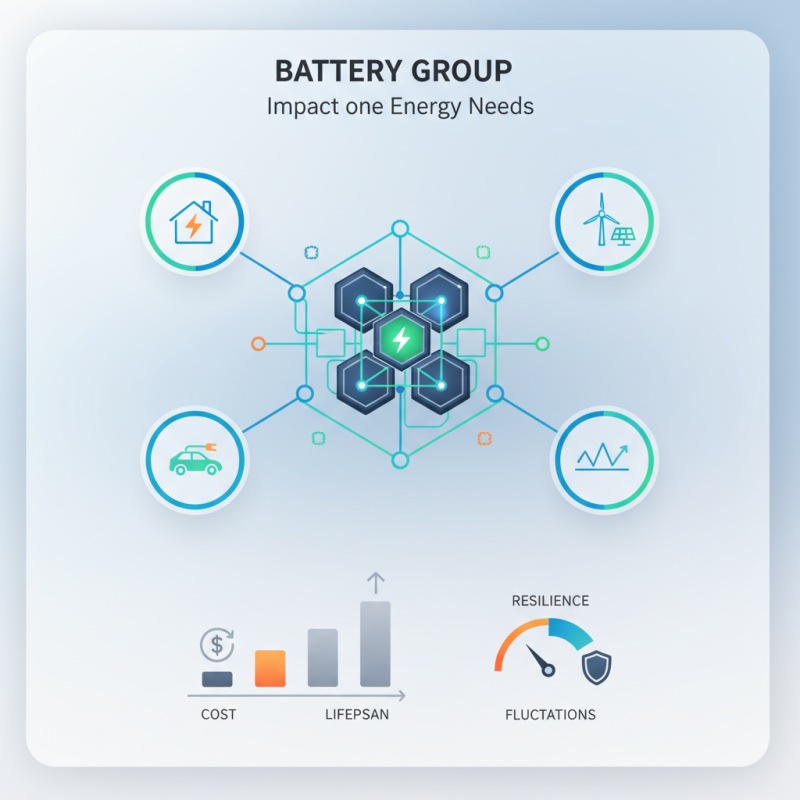
Battery groups are an essential classification that represents a range of battery sizes and capacities, which in turn influences energy needs across various applications. According to a market report by Research and Markets, the global battery market is projected to grow significantly, reaching nearly $200 billion by 2025. This growth underscores the importance of understanding different battery groups, particularly how they relate to energy requirements in various sectors such as automotive, renewable energy, and consumer electronics.
Each battery group is defined by specific dimensions, terminal configurations, and capacity ratings that cater to particular energy demands. For instance, a standard Group 24 battery, commonly used in RVs and boats, typically has a capacity of around 70-85 amp-hours. In contrast, a Group 31 battery can provide up to 100 amp-hours, making it suitable for larger vehicles and more demanding applications. The choice of battery group is crucial, as it directly affects system performance, maintenance, and overall efficiency. As highlighted in a report by the International Energy Agency, optimizing battery selection can lead to improved energy utilization, enhancing the operational lifespan of devices while reducing overall costs related to energy consumption.
Battery groups play a pivotal role in energy storage systems, influencing how effectively energy can be stored and utilized. These groups consist of multiple batteries connected together to achieve a specific voltage and capacity, tailored to meet the energy needs of various applications. Whether for residential solar power systems or large-scale energy grids, the configuration and capacity of a battery group can significantly affect the overall performance, efficiency, and longevity of the storage system.
When setting up a battery group, it's essential to consider several factors. First, ensure that the batteries used are compatible and have similar specifications, such as voltage and capacity. Mismatched batteries can lead to inefficiencies and reduce the lifespan of the system. Additionally, monitoring the state of charge and health of each individual battery is crucial for maintaining the balance within the group.
Tips: Regularly check the temperatures of the batteries, as extreme conditions can affect performance. Also, implement a battery management system (BMS) to optimize the charging and discharging cycles. This can help extend the lifespan of the batteries within the group while ensuring a reliable energy supply for your needs.
Choosing the right battery group for your energy needs involves understanding various factors that can influence your decision. Firstly, the size and capacity of the battery group must align with your energy consumption patterns. Data from the International Energy Agency (IEA) suggests that residential energy consumption increased by approximately 11% globally from 2017 to 2021. This rise underscores the necessity of assessing individual energy requirements versus the available battery group options. When selecting a battery, consider both peak demand and average usage to ensure you select a model that can sustain your energy load effectively.
Another influential factor is the type of energy being used and its application. For instance, whether your energy needs are for home automation, renewable energy storage, or electric vehicle charging will greatly impact your battery choice. According to the U.S. Energy Information Administration (EIA), residential solar generation has surged, making it crucial to select a battery group that can integrate seamlessly with renewable sources. Understanding the efficiency of different battery technologies and their discharge rates is crucial, as these factors will ultimately impact both performance and longevity.
Tips: When selecting a battery, always evaluate the total energy your household consumes during peak hours versus off-peak hours. Additionally, factor in future energy needs, as households may expand their energy requirements with new technologies or appliances. Lastly, when comparing battery groups, look for sustainability certifications, as these can indicate a more eco-friendly manufacturing process and operation.
This chart illustrates the energy capacities of various battery groups, which can influence energy needs based on applications such as RVs, boats, and renewable energy systems. Selecting the appropriate battery group is crucial for ensuring sufficient energy supply.
When calculating your energy requirements with battery groups, it’s essential to start by understanding your overall energy consumption. This begins with assessing your daily power usage, which can be estimated by adding up the wattage of all devices you plan to power and estimating how many hours each device will run.
For instance, if you have multiple devices such as lights, kitchen appliances, and electronics, consider their individual wattages and usage duration. This gives you a comprehensive picture of your energy needs in watt-hours per day.
Once you have established your total energy consumption, you can determine the appropriate size of your battery group. Battery groups consist of multiple batteries connected to meet specific voltage and capacity requirements. To choose the right battery group, divide your total energy needs by the voltage of the battery system. This will inform you of the amp-hours required from your battery group, helping you decide how many batteries you need and what type to select. It's crucial to ensure that your battery group has a sufficient capacity to handle your daily energy load while allowing extra room for unexpected spikes in energy consumption. Properly aligning your battery capacity with your energy demands will ensure efficient operation and longevity of your energy system.
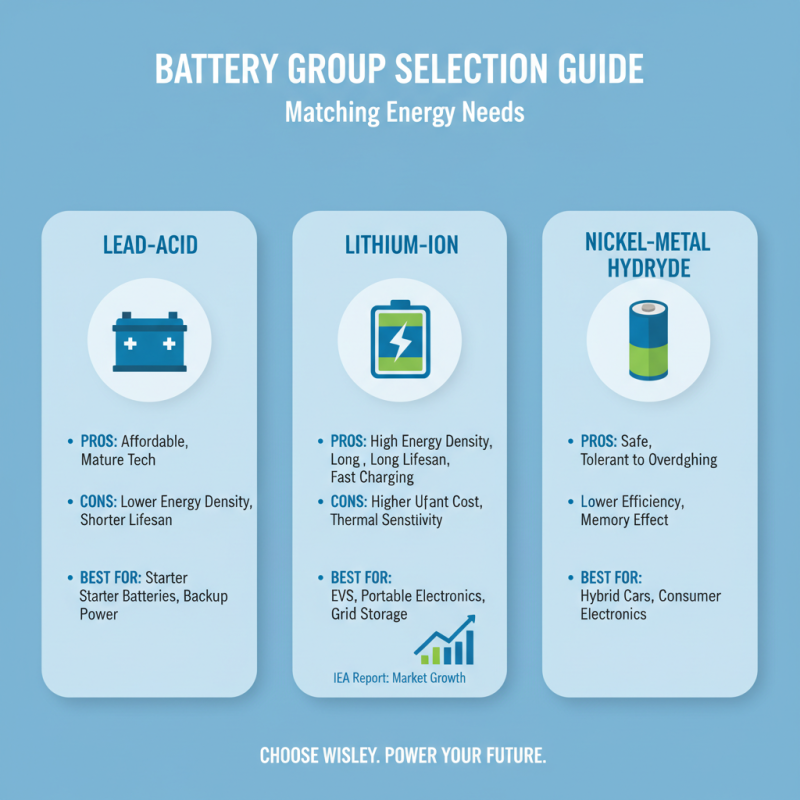
When selecting a battery group, it is crucial to understand the benefits and limitations of various battery types to match your energy needs effectively. Different battery groups, such as lead-acid, lithium-ion, and nickel-metal hydride, each have unique characteristics. For instance, lithium-ion batteries are known for their high energy density, making them suitable for applications requiring compact energy storage. According to a report by the International Energy Agency (IEA), the global market for lithium-ion batteries is expected to grow significantly, supporting the transition to renewable energy sources. However, their higher upfront cost can be a limiting factor for some users.
On the other hand, lead-acid batteries offer a more cost-effective solution, particularly for applications like backup power and off-grid setups. Despite their lower efficiency and shorter lifespan compared to lithium-ion, they remain popular due to their widespread availability and established technology. A study by the Battery Council International highlights that lead-acid batteries can provide robust performance in various conditions but may weight heavily on the overall system in terms of size and weight.
Tips: When choosing a battery group, consider your energy usage patterns and future scalability. For example, if you anticipate needing more power down the line, investing in a more advanced battery group like lithium-ion could save you money in the long run. Additionally, always evaluate the total cost of ownership, including installation and maintenance, to ensure that the chosen battery group aligns with your overall energy strategy.
Northeast Battery, a Stored Energy Holdings, Inc. Company