
We can help!
800-441-8824

What Is the Best Block Forming Machine from China?
Choosing the best Block Forming Machine from China requires more than comparing prices or polished factory photographs. The right choice depends on block size, production volume, raw materials, automation level, and local working conditions. A small contractor may need a compact hydraulic machine, while a large plant may require an automated line with pallet feeding, curing support, and quality monitoring.
In this guide, we examine practical factors from a buyer’s perspective. These include machine structure, vibration strength, hydraulic stability, mould accuracy, energy use, and after-sales service. A reliable supplier should provide clear technical drawings, machine videos, spare-parts information, and installation guidance. Factory audits and sample production can reveal details that brochures often hide.
Look closely at the finished blocks.
Edges should remain sharp, surfaces should look even, and product dimensions should stay consistent after curing. A useful supplier will explain production limits honestly instead of promising unrealistic output. This matters because actual capacity can change with material moisture, operator skill, mould replacement, and curing time.
There is no universal winner.
Some buyers may prefer lower investment and simpler maintenance. Others may value automation, faster cycle times, and long-term production stability. We also need to admit that comparing Chinese machines is not always simple. Supplier data may use different testing conditions, and advertised capacity may not match daily output.
The following sections compare machine types, manufacturers, technical specifications, costs, certifications, and service quality. They are designed to help buyers make a careful decision based on evidence, not attractive claims.
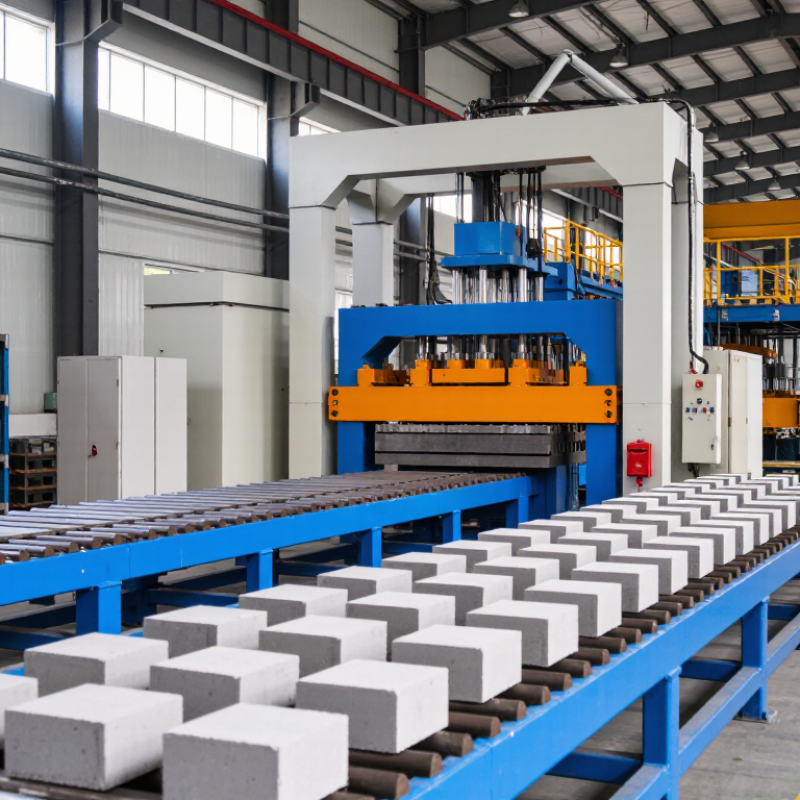
Table of Contents [Hide]
What Defines the Best Chinese Block Forming Machine?
The best Chinese block forming machine is not defined by output alone. It is defined by repeatable blocks, controlled energy use, and serviceable design. UNEP’s 2024 Global Status Report states that buildings and construction consumed 32% of global energy in 2022. That figure makes efficiency a production requirement, not a marketing phrase. Buyers should inspect motor ratings, hydraulic losses, curing compatibility, and power consumption per finished block. Numbers need site testing.
A reliable machine begins with documented engineering controls. The ISO Survey 2022 recorded more than 1.2 million ISO 9001 certificates worldwide. Certification does not guarantee a good machine. It does show whether a manufacturer maintains traceable processes, corrective actions, and inspection records. Ask for mold-life data, dimensional tolerance results, cycle-time logs, and spare-part lead times. Request samples from several production batches. One perfect sample proves little. Real performance appears after dust, vibration, and repeated shifts.
The strongest equipment also fits local reality. Check aggregate moisture, cement variation, pallet quality, climate, operator skill, and grid stability. The International Energy Agency estimates cement production causes about 7% of global CO2 emissions. Material efficiency therefore matters alongside electricity use. Good machines reduce rejects through stable feeding and pressure control. They should also allow safe cleaning and quick mold changes. Yet compromises remain. Higher automation may require stronger maintenance skills. A cheaper purchase can become expensive through downtime. The best choice is the machine that survives measured use, not the one with the largest brochure number.
What Is the Best Block Forming Machine from China? - What Defines the Best Chinese Block Forming Machine?
| Machine Profile | Primary Block Applications | Typical Production Capacity | Forming Method | Typical Hydraulic Pressure | Typical Motor Power | Cycle Time | Automation Level | Expected Block Quality | Mould Change Convenience | Best-Fit Project | Overall Evaluation |
|---|---|---|---|---|---|---|---|---|---|---|---|
| Semi-Automatic Compact Machine | Concrete hollow blocks, solid blocks, paving blocks and small masonry units | Approximately 2,000–4,000 standard hollow blocks per 8-hour shift, depending on block size and operating conditions | Mechanical vibration with hydraulic or mechanical compaction | Approximately 8–16 MPa | Approximately 15–25 kW | 25–40 seconds | Manual feeding with semi-automatic demoulding and pallet handling | Consistent when aggregate grading, moisture and vibration are properly controlled | Generally simple; mould replacement commonly requires several hours | Small construction-material businesses, local contractors and moderate-volume projects | ★★★★☆ |
| Automatic Hydraulic Block Machine | Hollow blocks, solid blocks, curbstones, paving blocks and interlocking pavers | Approximately 5,000–12,000 standard blocks per 8-hour shift, depending on mould configuration | Hydraulic compression combined with controlled vibration | Approximately 16–25 MPa | Approximately 25–45 kW | 15–25 seconds | Automatic material feeding, forming, demoulding and pallet transfer | High density and good dimensional consistency with stable raw-material control | Usually designed for relatively fast mould replacement and adjustment | Commercial block plants requiring balanced productivity, quality and operating cost | ★★★★★ |
| High-Pressure Paver Block Machine | Interlocking pavers, decorative paving units, kerbstones and high-density landscape products | Approximately 500–1,200 square metres of paving products per 8-hour shift, depending on product size | High-pressure hydraulic compression with controlled vibration | Approximately 20–35 MPa | Approximately 35–60 kW | 15–30 seconds | Automatic forming with optional face-mix feeding and pallet circulation | High density, sharp edges and suitable surface quality for demanding paving applications | Moderate; additional face-mix and mould components may increase changeover time | Municipal paving, landscaping, road projects and decorative concrete production | ★★★★★ |
| Multi-Product Automatic Production Line | Hollow blocks, solid blocks, pavers, curbstones and special-shaped concrete products | Approximately 8,000–20,000 standard blocks per 8-hour shift, depending on product mix and line layout | Hydraulic pressing and vibration with automated batching and material handling | Approximately 18–30 MPa | Approximately 45–90 kW for the complete production line | 12–25 seconds | High automation with programmable controls, conveyors, pallet circulation and optional curing systems | Very consistent when the batching, mould and curing systems are correctly calibrated | Moderate to advanced; mould storage and quick-change tooling are important selection factors | Large plants serving several product markets and requiring flexible production planning | ★★★★★ |
| Low-Consumption Entry-Level Machine | Standard hollow blocks, solid blocks and basic paving units | Approximately 1,500–3,000 standard hollow blocks per 8-hour shift | Vibration compaction with mechanical or limited hydraulic assistance | Approximately 6–12 MPa | Approximately 10–20 kW | 30–50 seconds | Manual or semi-automatic operation with basic control functions | Suitable for general-purpose blocks when production parameters are carefully managed | Simple design, but manual alignment may be required after mould changes | Start-up operations, rural projects and markets with limited initial investment | ★★★☆☆ |
Note: The figures shown are typical industry ranges for concrete block-forming equipment. Actual output, power consumption, cycle time and product quality vary according to block dimensions, concrete mix design, aggregate moisture, mould configuration, curing conditions, operator skill and local electrical standards.