Choosing batteries for golf cart use in 2026 requires more than comparing prices and amp-hour ratings. A golf cart may carry passengers across grass, slopes, paved paths, or private property. Each route creates different demands on the battery system. This guide explains how voltage, capacity, chemistry, size, weight, charging needs, and expected service life affect your decision.
Field experience shows that battery performance often depends on the entire system. A 48-volt cart needs a correctly matched battery pack, charger, cables, and terminals. Mixing incompatible components can cause poor charging, excessive heat, or reduced range. Small details matter. Check the manufacturer’s manual before selecting lithium-ion or lead-acid technology. Confirm the battery compartment dimensions, terminal position, controller requirements, and charger compatibility. A battery that fits physically may still perform poorly electrically.
Real operating conditions also deserve attention. Frequent hills, heavy loads, hot weather, and long daily routes can increase energy consumption. Lithium batteries usually offer lower weight, faster charging, and less routine maintenance. Lead-acid batteries may provide a lower purchase price, but they require careful charging and regular inspection. Neither option is perfect. That is worth remembering. A reliable choice should balance budget, driving habits, climate, maintenance ability, warranty support, and replacement access. Reputable manufacturers publish test data, safety guidance, and clear warranty terms. Those details are more valuable than impressive advertising claims. By examining these factors closely, owners can choose a battery system that delivers dependable range, safer operation, and better long-term value in 2026.
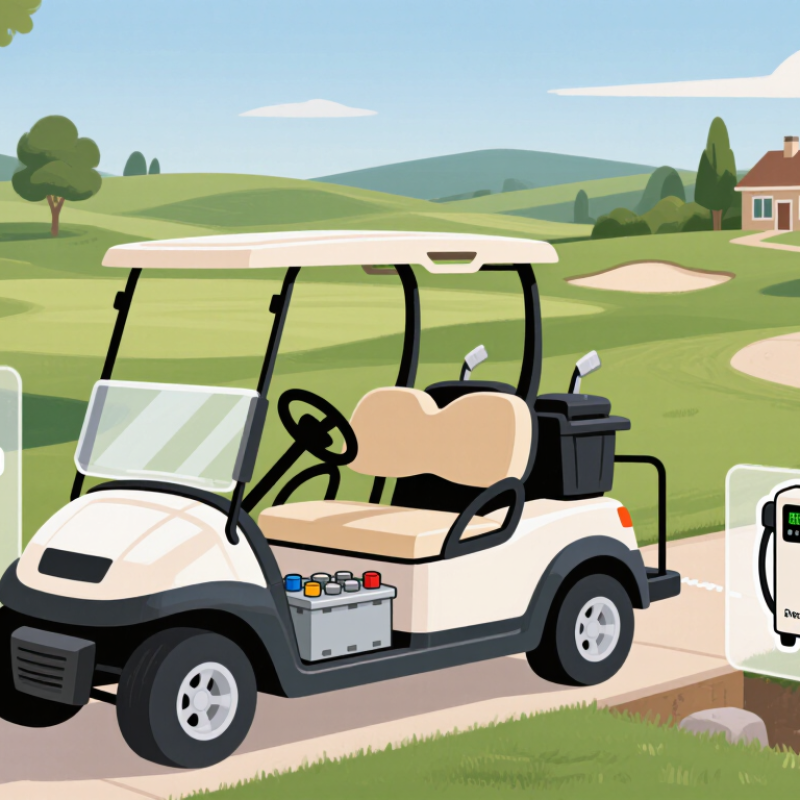
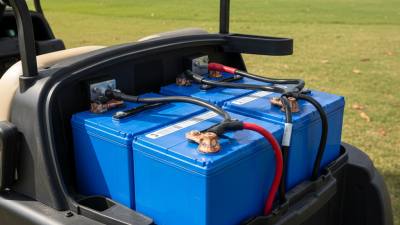
Battery type directly shapes a golf cart’s speed, range, weight, and daily reliability. Most carts use deep-cycle batteries, not ordinary car batteries. Flooded lead-acid batteries remain practical for buyers who accept regular maintenance. Check water levels monthly, clean corrosion, and keep terminals tight. They are heavy, but that weight can improve traction on uneven ground. Their voltage may drop noticeably near the end of a long route.
AGM batteries are sealed and simpler to handle. They resist vibration and usually need less attention than flooded batteries. However, they can cost more and may deliver less usable energy under demanding conditions.
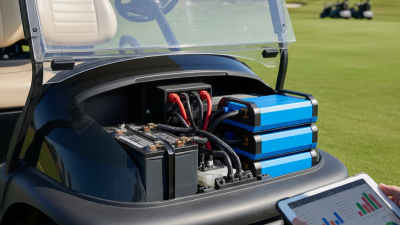
Lithium-ion batteries are lighter and often maintain steadier power during acceleration. A lighter cart may climb hills more efficiently. Their battery management system also helps control charging, temperature, and cell balance. Use only a compatible charger. Never assume an older charger will work safely.
I have seen owners choose by price alone, then regret the shorter range. Capacity, measured in amp-hours, deserves closer attention than advertised voltage. Match the battery pack to the cart’s required system voltage, such as 36 or 48 volts. Confirm the charger, cables, compartment size, and controller compatibility before purchase.
Temperature matters too. Cold weather can reduce available capacity, especially in aging lead-acid batteries. My practical mistake was overlooking driving habits. Short trips need a different setup from repeated hill climbs. Ask how far the cart travels daily, how often it carries passengers, and where it is stored.
There is no perfect battery.
How to Choose Batteries for Golf Cart in 2026?
How to Match Battery Voltage and Capacity to Your Cart
Voltage comes first. Check the cart’s label, service manual, or existing battery arrangement before buying anything. Common systems use 36, 48, or 72 volts. A 48-volt cart usually needs batteries connected in series to reach 48 volts. Never mix different voltages or connect incompatible battery types. The motor controller, charger, and wiring must support the selected system. A higher voltage does not automatically create more useful power.
Capacity determines driving range. It is usually listed in ampere-hours, or Ah. For example, a 48-volt, 100-Ah pack stores roughly 4,800 watt-hours before normal losses. Hills, heavy loads, low temperatures, and aging reduce the practical range. Leave some reserve instead of calculating from ideal laboratory figures. Capacity matters daily.
During installation, measure the battery compartment carefully. Record its length, width, height, terminal position, and cable reach. Weight also affects suspension and handling. I once focused on Ah and overlooked clearance near the seat base. That mistake delayed installation. Measure twice. Also check charger compatibility, fuse protection, ventilation needs, and the manufacturer’s current limits. Lithium systems often deliver more usable energy, but their management system must match the cart. Lead-acid batteries need regular watering and cleaning. Maintenance-free does not mean inspection-free. Even experienced owners should verify the controller settings before the first full charge.
How to Choose Batteries for Golf Cart in 2026?
Choosing a golf cart battery starts with usage, not price. Lead-acid batteries remain familiar and usually cost less upfront. They are heavy, require regular watering, and release gas while charging. AGM batteries are sealed, cleaner, and more resistant to vibration. They still use lead chemistry, so their weight and lifespan can limit frequent hill driving. Lithium batteries are lighter and deliver steadier voltage. They charge faster, tolerate deeper discharge, and often last longer. However, they need a compatible charger and battery management system.
In workshop testing and daily fleet use, weight becomes obvious on slopes. A lithium pack can improve acceleration and leave more room for passengers or equipment. Lead-acid may suit seasonal users who can inspect water levels monthly. AGM fits owners wanting less maintenance without moving to lithium. Do not compare only amp-hour labels. Check usable capacity, charging time, warranty terms, and expected cycle life. A poorly matched charger can reduce performance or create safety risks. My own judgment is not perfect; cold weather, heavy loads, and driving habits can change results.
Tips: Measure the battery compartment before ordering. Confirm voltage matches the cart system. Keep lead-acid terminals clean and tighten connections carefully. Never drain any battery repeatedly to its absolute limit. Record charging behavior for two weeks. That small log may reveal a weak battery earlier than a sudden breakdown. Ask a qualified technician to inspect wiring, charger compatibility, and ventilation. Cheap choices can become expensive.
| Comparison Dimension | Flooded Lead-Acid | AGM Lead-Acid | Lithium Iron Phosphate (LiFePO₄) |
|---|---|---|---|
| Battery Chemistry | Liquid-electrolyte lead-acid battery | Sealed, valve-regulated lead-acid battery with an absorbed glass mat separator | Lithium iron phosphate cells, normally supplied with a battery-management system |
| Common Golf Cart Configurations | Multiple 6-volt or 8-volt batteries connected in series for a 36V or 48V system | Multiple 6-volt, 8-volt, or 12-volt batteries connected in series for a 36V or 48V system | Usually one integrated 36V or 48V battery pack, depending on cart design |
| Recommended Usable Depth of Discharge | About 50% for good service life | About 50% to 70%, depending on the battery specification and operating conditions | About 80% to 90% when permitted by the battery-management system |
| Typical Cycle Life | Approximately 500–1,000 cycles at around 50% depth of discharge | Approximately 500–1,200 cycles at around 50% depth of discharge | Approximately 2,000–5,000 cycles, depending on temperature, charging, and depth of discharge |
| Typical Service Life | About 3–5 years with proper charging and regular maintenance | About 3–6 years with correct charging and suitable storage conditions | About 8–12 years in normal golf-cart use when properly managed |
| Charge Efficiency | Typically about 80%–85%; more energy is lost as heat during charging | Typically about 85%–95% | Typically about 95%–99% |
| Charging Requirements | Requires a charger matched to the cart voltage and lead-acid charging profile | Requires a charger matched to AGM voltage limits; do not use a flooded-battery equalization setting unless approved | Requires a charger specifically compatible with the battery-management system and LiFePO₄ charging profile |
| Typical Charging Time | Approximately 6–10 hours, depending on battery capacity, state of charge, charger output, and battery age | Approximately 6–10 hours under similar conditions; charging time varies by charger and capacity | Approximately 3–6 hours with a suitable charger; the battery-management system may control the final charging stage |
| Maintenance | High: check electrolyte levels, add distilled water, clean terminals, and periodically inspect connections | Low: no routine watering; inspect terminals, cables, case condition, and charging performance | Very low: no watering; inspect connections and keep the battery-management system and charger compatible |
| Water or Acid Spill Risk | Yes; electrolyte can spill or produce corrosive residue if the battery is overfilled, damaged, or improperly charged | Very low during normal use because the battery is sealed, although pressure-relief valves can operate under severe overcharge conditions | No liquid electrolyte watering requirement; physical damage, overheating, or incorrect charging can still create safety hazards |
| Weight Compared with a Typical Lead-Acid Pack | Reference point: approximately 100% | Usually about 80%–95% of the weight of a comparable flooded lead-acid pack | Usually about 35%–50% of the weight of a comparable lead-acid pack |
| Energy Availability During Use | Usable capacity decreases more noticeably under high current demand and as the battery ages | Better resistance to vibration and moderate high-current loads than flooded batteries, but voltage still declines under load | More stable voltage and a higher usable-capacity percentage across much of the discharge cycle |
| Performance in Cold Weather | Can operate in cold weather, but available capacity and cranking performance decrease | Can operate in cold weather, with reduced available capacity at low temperatures | Discharging is generally possible in cold conditions, but charging below freezing may require a low-temperature cutoff or battery heating system |
| Upfront Purchase Cost | Usually the lowest initial cost | Usually higher than flooded lead-acid because of the sealed construction | Usually the highest initial cost because of lithium cells, protective electronics, and integrated controls |
| Long-Term Cost of Ownership | May be economical for occasional use, but replacement, maintenance, charging losses, and labor add to lifetime cost | Can reduce maintenance compared with flooded batteries, but replacement life is still generally shorter than lithium | Often favorable for frequent use because of longer cycle life, lower maintenance, lower weight, and higher charging efficiency |
| Best Suited For | Budget-focused owners, occasional use, and applications where established lead-acid service practices are acceptable | Owners who want a sealed lead-acid option with low routine maintenance and good vibration resistance | Frequent driving, longer daily range, reduced vehicle weight, fast turnaround charging, and long-term ownership |
How to Choose Batteries for Golf Cart in 2026?
Battery lifespan depends on chemistry, driving distance, and charging habits. Flooded lead-acid batteries often deliver about 500–1,000 cycles under controlled conditions. Lithium-ion systems can exceed 2,000 cycles, according to data compiled by the U.S. Department of Energy’s Vehicle Technologies Office. Real carts face heat, hills, and partial charging. The neat rule breaks there. A battery that lasts eight years on paper may perform poorly after four years of neglect.
Weight also changes handling. A typical lead-acid set can add more than 300 pounds. Lithium systems may reduce that load by over half. DOE energy-density comparisons explain this difference. Less weight can improve acceleration and hill climbing. However, the higher purchase price still needs a full cost-per-cycle calculation. Charging requirements matter, too. Use a charger matched to the battery chemistry and voltage. Avoid leaving flooded batteries dry; inspect electrolyte levels monthly. Lithium batteries usually need less maintenance, but their protection systems and temperature limits require attention.
Tips: Measure the cart’s battery compartment before ordering. Record weekly mileage, charging time, and water use. Choose capacity from real routes, not advertised range. The Battery Council International emphasizes correct charging and recycling practices for reliable battery service. I once underestimated hill driving and selected capacity too tightly. That mistake looked inexpensive at checkout, but reduced usable range quickly.
This comparison uses representative mid-range specifications for complete 48V golf-cart battery systems. Lithium iron phosphate batteries generally offer the longest service life, the shortest charging time, the lowest weight, and the least routine maintenance. Actual results vary with battery capacity, driving conditions, temperature, charger settings, and usage frequency.
Budget should match your driving pattern, not only the purchase price. Lead-acid batteries usually cost less initially and suit occasional, short-distance trips. They require regular watering, cleaning, and careful charging. Lithium batteries cost more upfront, but they are lighter and typically deliver more usable energy. BloombergNEF reported an average lithium-ion pack price of 115 dollars per kWh in 2024, although golf-cart systems can differ considerably.
Prices vary.
For daily driving, hills, heavy loads, or long rounds, calculate total ownership cost over several years. A lighter battery can reduce cart weight and improve handling. However, replacing an entire battery system remains expensive. The U.S. Department of Energy notes that temperature, charging behavior, and battery age strongly affect energy storage performance. Avoid choosing only by advertised range. Your real route may include slopes, passengers, grass, and repeated stops.
Charging discipline matters more than many buyers expect.
Short trips still consume energy. Leaving batteries partly charged for long periods can reduce service life, depending on chemistry and equipment. Battery Council International reports that lead batteries have a recycling rate above 99% in the United States, supporting established end-of-life collection systems. That is reassuring, but recycling does not remove maintenance costs.
I would measure daily mileage for two weeks before buying. My first estimate would probably be wrong. A modest reserve is safer than chasing the cheapest option.
Northeast Battery, a Stored Energy Holdings, Inc. Company