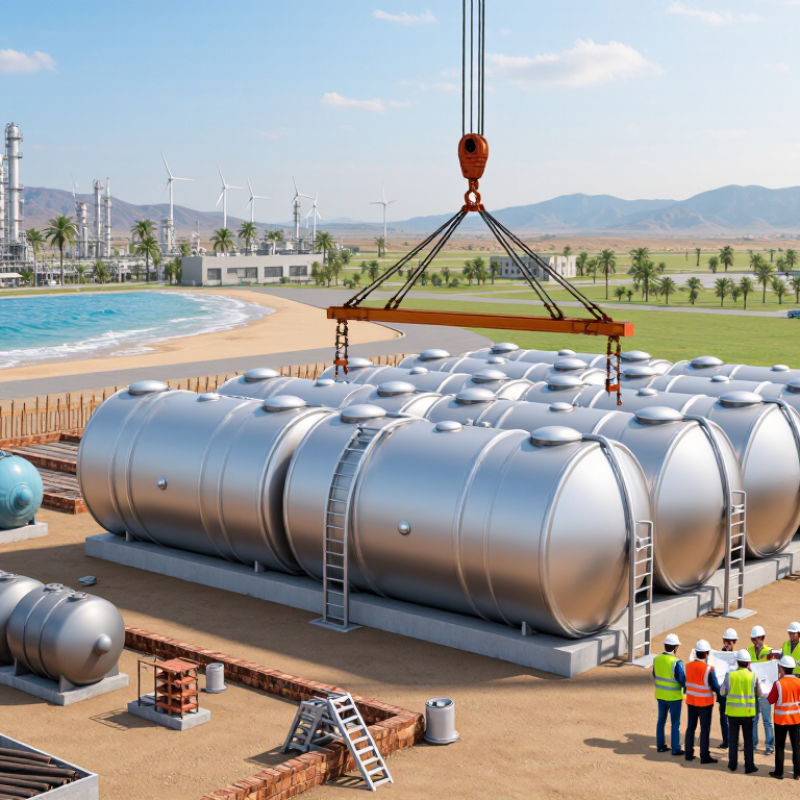
| Stored Water Type | - Potable drinking water
- Process water
- Fire-protection water
- Rainwater or treated wastewater
| Use stainless steel surfaces and components suitable for the intended water-contact application. For potable water, specify materials and seals approved for drinking-water contact in the project jurisdiction. | Water chemistry, hygiene requirements, cleaning frequency and regulatory approvals vary according to the application. | Confirm water-contact approval, gasket composition, internal fittings, cleaning chemicals and local health regulations. |
| Required Capacity | Common project capacities range from approximately 5 m³ to more than 1,000 m³, depending on the facility and demand profile. | Calculate usable volume from average demand, peak demand, emergency reserve, fire reserve and required operating margin. Select the nominal tank volume only after deducting unusable freeboard and outlet levels. | A nominal capacity is not always equal to the usable water volume. | Check daily consumption, peak flow, refill rate, minimum operating level, emergency storage and future expansion. |
| Tank Configuration | Vertical cylindrical, sectional bolted, panel-type and horizontal configurations are commonly used. | Choose a vertical cylindrical or sectional tank where land efficiency and modular installation are priorities. Consider horizontal tanks where height restrictions or transport limitations apply. | The configuration affects footprint, structural loading, logistics, assembly time, maintenance and cost. | Review site height limits, access routes, foundation dimensions, crane availability and installation sequence. |
| Stainless Steel Grade | - 304 or equivalent: common indoor and low-chloride water service
- 316L or equivalent: higher resistance to chlorides and many corrosive environments
| Select 304 only after confirming chloride exposure and water chemistry are suitable. Specify 316L for coastal, marine, de-icing-salt, industrial or otherwise chloride-prone conditions when supported by the corrosion assessment. | Stainless steel corrosion resistance depends on grade, chloride concentration, temperature, crevices, deposits and fabrication quality. | Obtain chloride, pH, conductivity, temperature, disinfectant and cleaning-chemical data. Do not select the grade from location alone. |
| Water Chemistry | Important parameters include pH, chloride, sulfate, alkalinity, hardness, dissolved oxygen, conductivity and disinfectant residual. | Require a documented water analysis before finalizing the stainless steel grade, weld procedure and internal accessories. | A water source described as “fresh water” may still contain chloride or treatment chemicals that influence material performance. | Use recent laboratory results and evaluate the highest expected concentration, not only the average value. |
| Operating Temperature | Many cold-water systems operate near ambient temperature. Typical hot-water applications may operate around 50–60°C, subject to system design. | Confirm the maximum continuous temperature, short-term temperature, thermal cycling and disinfecting temperature before selecting steel grade, seals and insulation. | Higher temperature can increase corrosion risk and may reduce the suitability of some gasket and liner materials. | Specify minimum, normal and maximum water temperatures, including thermal-shock conditions during cleaning or disinfection. |
| Design Pressure | Most atmospheric storage tanks operate close to atmospheric pressure, while closed systems may experience low positive or negative pressure. | Define operating pressure, design pressure, vacuum condition, hydrostatic head and any connected-pipe surge before structural design. | A tank designed for atmospheric service should not be treated as a pressure vessel without a separate engineering assessment. | Check vent sizing, overflow capacity, vacuum protection, inlet flow, outlet flow and pump-start or pump-stop transients. |
| Wind and Seismic Conditions | Project-specific wind speed, seismic design category, ground conditions and exposure classification vary by country and site. | Design the shell, roof, anchorage, foundation interface and connections using the governing local structural requirements. | Empty or partially filled tanks may experience different wind and seismic load effects from full tanks. | Confirm basic wind speed, importance factor, seismic parameters, soil report, anchor loads and operating liquid levels. |
| Foundation and Soil | Common foundations include reinforced-concrete slabs, ring beams and engineered platforms, depending on tank type and ground conditions. | Match the tank base, load distribution and anchorage system to the geotechnical report and foundation design. | Differential settlement can cause leakage, distortion, connection stress or misalignment of pipework. | Verify allowable soil bearing pressure, settlement limits, slab flatness, drainage, concrete strength and anchor layout. |
| Panel Thickness and Structural Design | Panel or shell thickness is project-specific and is affected by tank diameter, water depth, stiffeners, loads and fabrication method. | Require calculations for hydrostatic pressure, buckling, wind, seismic loads, roof loads, maintenance loads and connection forces. | Choosing a thicker sheet alone does not replace a complete structural design. | Review design drawings, load combinations, material certificates, weld details, bolt grades and allowable deflection. |
| Fabrication and Welding | Stainless steel fabrication should control heat input, contamination, distortion, weld quality and surface condition. | Specify qualified welding procedures, compatible filler materials where required, stainless-only tools and post-weld cleaning or passivation. | Carbon-steel contamination, heat tint and poor weld finishing can reduce corrosion resistance around welds. | Check welding qualifications, inspection method, weld acceptance criteria, pickling or passivation procedure and traceability. |
| Internal Surface Finish | Smooth, cleanable internal surfaces are preferred for potable and hygienic water systems. | Specify an appropriate surface finish, continuous weld treatment where required, minimized crevices and accessible inspection points. | Roughness, crevices and weld discoloration can retain deposits and make cleaning more difficult. | Define surface-finish requirements, weld appearance, crevice control, drainability and inspection access. |
| Roof and Ventilation | Roofs may be flat, domed or pitched. Vents must accommodate filling, emptying, thermal changes and water-level fluctuations. | Select a roof system capable of carrying specified maintenance, wind, rain, snow or other project loads. Provide screened or protected vents where hygiene requires it. | Inadequate ventilation can create vacuum, overpressure, condensation or contamination risks. | Check vent area, insect screening, overflow arrangement, roof access, snow load, drainage and internal condensation control. |
| Insulation and Climate | Hot, cold, humid, coastal, desert and freeze-prone climates impose different requirements. | Consider external insulation, cladding, heat tracing, freeze protection, shading or condensation control according to climate and water temperature. | Climate affects water quality, energy consumption, external corrosion conditions and maintenance access. | Confirm ambient temperature range, solar exposure, humidity, rainfall, snow, freezing degree-days and coastal salt exposure. |
| Inlet, Outlet and Overflow | Pipe sizes depend on demand, pump capacity, refill time, fire flow and allowable velocity. | Size connections hydraulically and provide separate overflow, drain, outlet isolation and sampling arrangements where required. | Poor connection design can cause turbulence, dead zones, overflow flooding or excessive pressure loss. | Verify flow rates, pipe diameters, nozzle reinforcement, vortex control, drain slope, overflow discharge and maintenance isolation. |
| Water Quality and Stagnation Control | Storage time may range from hours to several days depending on demand and reserve requirements. | Design inlet and outlet locations to promote turnover, minimize dead legs and maintain required disinfectant residual. | Long retention time and poor circulation can affect water freshness and microbiological control. | Review turnover time, mixing pattern, low-use periods, sampling points, cleaning plan and disinfection procedure. |
| Cleaning and Maintenance | Inspection intervals depend on water type, local regulations, operating conditions and tank accessibility. | Provide manways, ladders, platforms, drains, inspection lighting provisions and safe access without compromising hygiene. | A tank that cannot be safely inspected or drained may create avoidable operational and health risks. | Confirm manway size, access safety, confined-space procedures, drainage, cleaning chemicals and replacement-part access. |
| Applicable Standards | Requirements may involve local building codes, structural standards, potable-water regulations, welding standards and electrical codes. | Identify the governing jurisdiction and establish one coordinated design basis. Commonly referenced frameworks may include EN, ISO, ASTM, AWWA or national standards, as applicable. | Standards are not interchangeable, and the applicable edition can vary by country and contract. | List the required standards in the specification and confirm certification, testing, inspection and documentation obligations. |
| Transport and Installation | Remote projects may require sea freight, road transport, containerized delivery or local assembly. | Prefer sectional or modular construction when site access is restricted. Confirm maximum panel dimensions, package weights and assembly tools. | Transport constraints can influence tank geometry, delivery schedule and total installed cost. | Check container limits, customs documents, lifting points, site roads, unloading equipment, labor skills and weather protection. |
| Quality Assurance and Documentation | Typical records include material certificates, drawings, calculations, welding documents, inspection reports and commissioning records. | Require a project-specific inspection and test plan with defined hold points and acceptance criteria. | Complete documentation supports approval, traceability, maintenance and future replacement. | Request certificates of material origin, dimensional inspection, weld inspection, leak testing, passivation records and as-built drawings. |
| Lifecycle Cost | Total cost includes purchase, transport, foundation, installation, insulation, cleaning, inspection, water treatment and future repair. | Compare options by total cost of ownership rather than sheet-metal price alone. Consider service life, accessibility and corrosion allowance or replacement strategy. | A lower initial price may lead to higher cleaning, repair, energy or replacement costs. | Evaluate expected service life, maintenance frequency, spare parts, downtime, energy use and local technical support. |