| Insulation material | Cross-linked polyethylene (XLPE) | Commonly used for insulated overhead distribution conductors. Many designs specify a 90°C maximum continuous conductor temperature, subject to the applicable standard and cable specification. | Outdoor suitability depends on the compound being formulated and tested for UV exposure, moisture, and the intended service environment. | Check the specified temperature rating, insulation thickness, voltage class, and applicable product standard rather than relying on the material name alone. |
| Insulation material | Polyethylene (PE) | Used in some overhead conductor designs. Temperature limits vary by construction and governing specification; they should not be assumed to match XLPE ratings. | UV resistance depends on the formulation, including any carbon-black content or other permitted stabilization, and on the relevant qualification requirements. | Consider when the utility or project specification calls for PE, and verify its temperature and environmental ratings for the intended installation. |
| Phase conductor | Stranded aluminum conductor | Aluminum is widely used for overhead distribution because of its low weight and electrical conductivity. Conductor size and stranding affect resistance, current capacity, and mechanical properties. | Aluminum forms a protective oxide layer, but connections still require compatible fittings and installation practices to control contact resistance and corrosion. | Size the conductor using the system load, allowable voltage drop, fault requirements, installation conditions, and the applicable ampacity rules. |
| Neutral or messenger | Aluminum-alloy strand, such as an alloy specified for overhead use | In many ABC constructions, the neutral may also serve as the supporting messenger. Its material and construction are selected for electrical and mechanical duties. | Wind, ice, span length, and temperature affect mechanical loading and sag; the messenger must be suitable for the design loads. | Confirm whether the neutral is load-bearing and whether its specified strength and electrical properties meet the line design. |
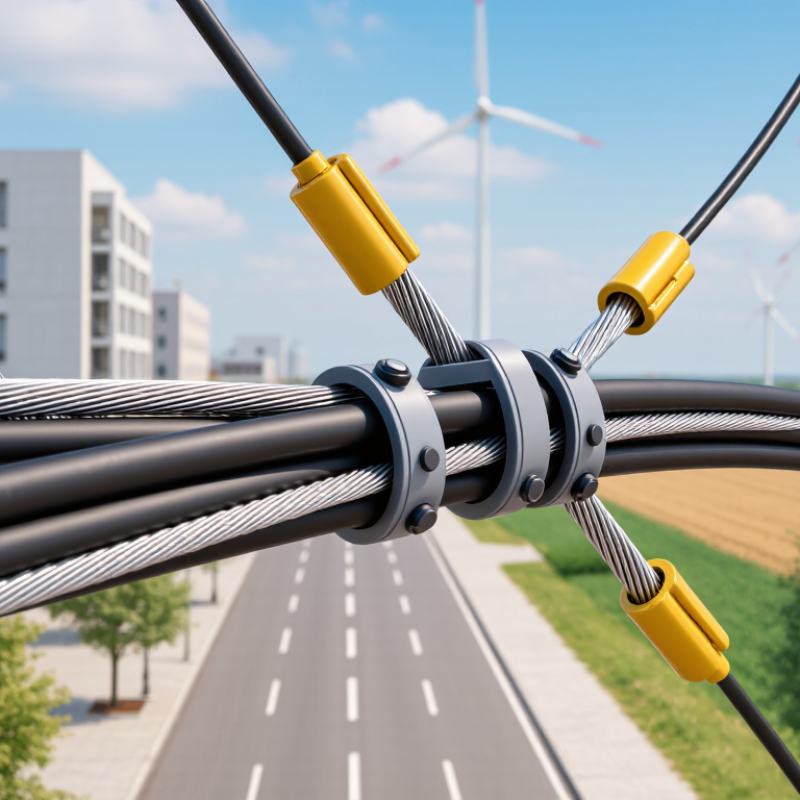
| Conductor configuration | Separate insulated phase cores laid around a neutral or messenger | ABC commonly groups insulated conductors into a compact overhead assembly. The number and sizes of cores depend on the network arrangement and design. | Bundling can reduce exposure of bare conductors, but it does not make the assembly immune to falling branches, abrasion, or installation damage. | Match the core count and conductor arrangement to the system voltage, phases, neutral requirements, and local utility practice. |
| UV and sunlight exposure | UV-resistant outdoor insulation | UV performance is determined by the insulation compound and the test requirements in the applicable standard or purchase specification. | Sunlight intensity, exposure duration, temperature, and local climate influence long-term aging. A generic claim of “UV resistant” does not define service life. | Request evidence of compliance with the required UV or weathering tests; do not infer a guaranteed lifespan without project-specific data. |
| Rain and moisture | Insulated overhead construction | Insulation provides a covering around the conductor, but ABC is not automatically equivalent to underground or water-blocked cable. | Water ingress at damaged insulation, joints, or terminations can contribute to deterioration. Correct accessories and sealing practices matter. | Confirm the cable’s moisture-related requirements and use compatible connectors, terminations, and repair methods. |
| Wind, ice, and temperature variation | Mechanical design and installation | Allowable span, sag, and tension depend on conductor construction, support spacing, installation tension, and design assumptions. | Wind and ice loading, thermal expansion, and repeated temperature changes can affect clearances and mechanical stress. | Use local loading criteria and the cable manufacturer’s approved sag-tension data; have the line designed for site conditions. |
| Electrical rating | Voltage and current capacity | Ratings depend on conductor size and material, insulation, ambient conditions, installation configuration, and the governing standard. | High ambient temperatures and solar heating can reduce current-carrying capacity compared with reference conditions. | Verify voltage class and ampacity from the applicable standard or engineering calculation; do not select by conductor size alone. |
| Important: ABC constructions and ratings vary by country, utility specification, and applicable standard. Confirm the required standard, conductor sizes, insulation properties, mechanical loading, and environmental tests before procurement or installation. |