How to Choose the Right Battery Group for Your Vehicle?
Choosing the right battery group for your vehicle is crucial. It affects performance, longevity, and reliability. A wrong choice can lead to trouble on the road. Every vehicle has specific requirements. Factors like size and capacity play vital roles.
Understanding battery group specifications is essential. Different vehicles require distinct battery groups. For instance, larger cars often need a more powerful group. Smaller vehicles might need a basic option. Knowing your vehicle's needs is the key to a smooth ride.
However, selecting the best option can be challenging. Many consumers struggle with terminology. There are numerous brands and types available. Reading reviews and comparing specifications may help. Still, one must reflect on their choice regularly. Making a mistake now could lead to issues later.
Understanding Battery Groups and Their Importance for Vehicles
Understanding battery groups is crucial for vehicle performance. Each vehicle requires a specific battery group size to function optimally. This aspect often gets overlooked by many drivers. Using the wrong battery group can lead to starting issues and electrical malfunctions. It is vital to check your vehicle's manual for the correct specifications.
Selecting the right group size involves knowing both the physical dimensions and the power requirements. Batteries come in various shapes and capacities. A battery that is too small may not deliver adequate power. On the flip side, a battery that's too large can lead to installation problems. It might even cause damage to your vehicle’s electrical system.
Many forget to consider climate as a factor in battery selection. In colder climates, a higher cold cranking amp (CCA) rating is important. In warmer regions, deep cycle batteries may be more beneficial. Each environment poses unique challenges. An ideal battery group fits not just the technical specifications but also suits your environment. Ignoring these details can lead to regrets later.
Battery Groups and Their Importance for Vehicles
Identifying Your Vehicle's Battery Specifications and Requirements
Choosing the right battery for your vehicle is crucial. Each vehicle has specific battery requirements based on its make and model. To identify these needs, check your owner's manual. This document often lists the recommended battery group size. It includes voltage, dimensions, and terminal configuration.
Inspecting your old battery can also provide insights. Look for the etching or labels on the battery. The group number is often printed there. Be cautious; replacing a battery with the wrong group can cause issues. It may fit loosely or not connect properly. Make sure to verify all information before purchasing.
Weather conditions can also influence your battery choice. If you live in a colder area, consider a battery with high cold cranking amps. This specification ensures reliable starts in winter. Reflect on your driving habits too. If you frequently use electronics while parked, opt for a battery with higher reserve capacity. Evaluating these factors can prevent headaches down the road.
Evaluating Different Types of Battery Groups Available on the Market
When evaluating battery groups for your vehicle, it's crucial to understand the diverse options available. There are generally two main types: lead-acid and lithium-ion batteries.
Lead-acid batteries have been popular for decades. They are heavier but cost-effective. Recent reports indicate that about 70% of vehicles still use this type. However, their lifespan is typically around three to five years. This may not suffice for everyone.
In contrast, lithium-ion batteries are becoming a hot choice for modern vehicles. They are lighter, have a longer life span, and offer better performance.
Data shows that these batteries can last up to ten years. Despite their higher initial cost, they need less frequent replacement. This can be a significant advantage in the long run.
Tip: Always check the specifications of your vehicle's battery group. Compatibility is key, and not all batteries fit all vehicles.
Another point of caution is the maintenance requirements of different battery types. Lead-acid batteries need regular checks for fluid levels and may require equalization charging. If overlooked, their performance might decline sooner than expected.
Remember, not all battery choices are perfect, and what works for one vehicle may not be suitable for another.
Tip: Consider the climate where you live. Extreme temperatures can affect battery performance. Choose wisely!
Key Factors to Consider When Choosing a Battery Group
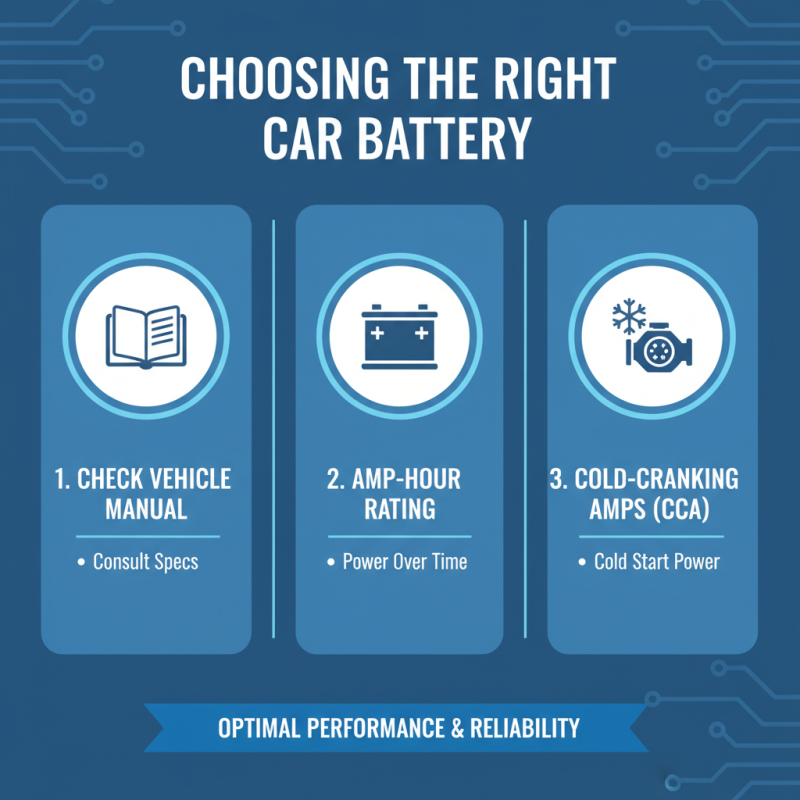
Choosing the right battery group for your vehicle is crucial. Several key factors should influence your decision. Start by checking the specifications listed in your vehicle's manual. Look for amp-hour ratings and cold-cranking amps that meet your car's needs. This ensures adequate power support, especially in cold climates.
Next, consider the dimensions of the battery. The battery must fit snugly in the tray. A loose battery can cause vibrations, leading to potential damage. It may seem minor, but even a small gap can create issues over time. Additionally, think about the type of battery technology. While lead-acid batteries are common, AGM or lithium options may offer better performance.
Lastly, reflect on your usage patterns. If you frequently drive short distances, your battery may not fully recharge. This could shorten its lifespan. It’s also wise to evaluate your local climate. Extreme temperatures can significantly affect battery performance. Make note of these aspects as you search for the right choice. By weighing these factors, you can make a more informed decision that suits your vehicle's requirements.
Tips for Proper Installation and Maintenance of Your Vehicle's Battery
When it comes to your vehicle's battery, proper installation is crucial. The average lifespan of a car battery is about three to five years. However, improper installation can decrease this lifespan significantly. Ensure that the terminals are clean and tightly connected. Corrosion at the terminals can lead to poor performance. Regularly check for any signs of wear or damage on your battery.
Maintaining your battery is just as important. Consider the temperature in your area. Batteries can lose up to 50% of their ability in cold weather. Keeping a battery insulated can help. It’s also essential to keep the battery clean and free from dirt or debris. Some users may overlook this, but a clean battery has better conductivity. According to industry reports, a well-maintained battery can lead to up to 30% better performance.
Always keep an eye on the battery's fluid levels if it's not a sealed type. Low fluid can cause overheating. Regular inspections can help catch potential issues before they become critical. Many people wait until a battery fails to consider maintenance. This will leave you stranded and can cost more over time.
How to Choose the Right Battery Group for Your Vehicle? - Tips for Proper Installation and Maintenance of Your Vehicle's Battery
| Battery Group |
CCA (Cold Cranking Amps) |
RC (Reserve Capacity) |
Dimensions (LxWxH in inches) |
Weight (lbs) |
| Group 24F |
600 |
120 |
10.24 x 6.81 x 9.88 |
38.5 |
| Group 34 |
750 |
100 |
10.25 x 6.8 x 7.87 |
38.0 |
| Group 65 |
850 |
140 |
12.1 x 7.5 x 7.5 |
50.0 |
| Group 78 |
700 |
110 |
12.2 x 6.8 x 7.6 |
44.0 |