
Choosing the right battery group for your vehicle can be a daunting task. Many factors influence this choice, and it can feel overwhelming. A battery group determines compatibility with your car’s electrical needs. Selecting the correct one is crucial for optimal performance.
When deciding, consider the vehicle type and its specific requirements. Different vehicles necessitate different battery groups. For example, larger vehicles often require batteries with higher capacity. This is something you must think about carefully. Additionally, starting your vehicle in cold weather demands more from your battery group.
Want to avoid possible regrets? Research various battery options. Consult your vehicle’s manual for recommendations. Sometimes people overlook this step. A little extra time can prevent future issues. Your vehicle’s performance hinges on the right battery choice. Don’t underestimate this process; it matters greatly.

Choosing the right battery group for your vehicle is crucial for optimal performance.
Vehicle battery groups define the size, shape, and specifications needed for your car’s battery.
Understanding these classifications can save you from headaches down the road. Each group size fits specific vehicles, affecting power output and compatibility.
It's essential to know the physical dimensions and terminal configurations of battery groups.
A poorly fitted battery can lead to loose connections or short circuits.
This could cause your car not to start. Always check your vehicle’s manual for the recommended battery group.
However, it’s common for drivers to overlook this detail. They may end up with batteries that are too big or too small.
Different vehicle types have different energy needs.
For instance, trucks usually require more robust batteries than sedans.
Considerations like climate and driving habits can also impact battery choice.
In cold weather, a battery with higher cold-cranking amps is crucial.
Many consumers fail to research the importance of these factors, leading to premature battery failures.
It’s wise to reflect on your specific requirements before purchasing.
Choosing the right battery group for your vehicle involves several important factors. The first aspect to consider is the battery size. It should fit properly in the designated space without forcing it in. Measure the height, width, and length accurately. An improper fit can lead to damage or performance issues.
Next is the cold cranking amps (CCA) rating. This rating indicates how well the battery can start your vehicle in cold weather. A higher CCA is beneficial for cold climates. Also, consider the reserve capacity. This is how long the battery can power your vehicle’s electrical systems if the alternator fails. Ideally, opt for a battery with a higher reserve capacity.
Another factor is the maintenance level. Some batteries require regular checks, while others are maintenance-free. Maintenance-free batteries tend to be easier but may have a shorter lifespan. Pay attention to the warranty as well. A longer warranty may suggest better quality. Reflect on how these characteristics align with your driving conditions. Each detail matters in selecting the right battery group.
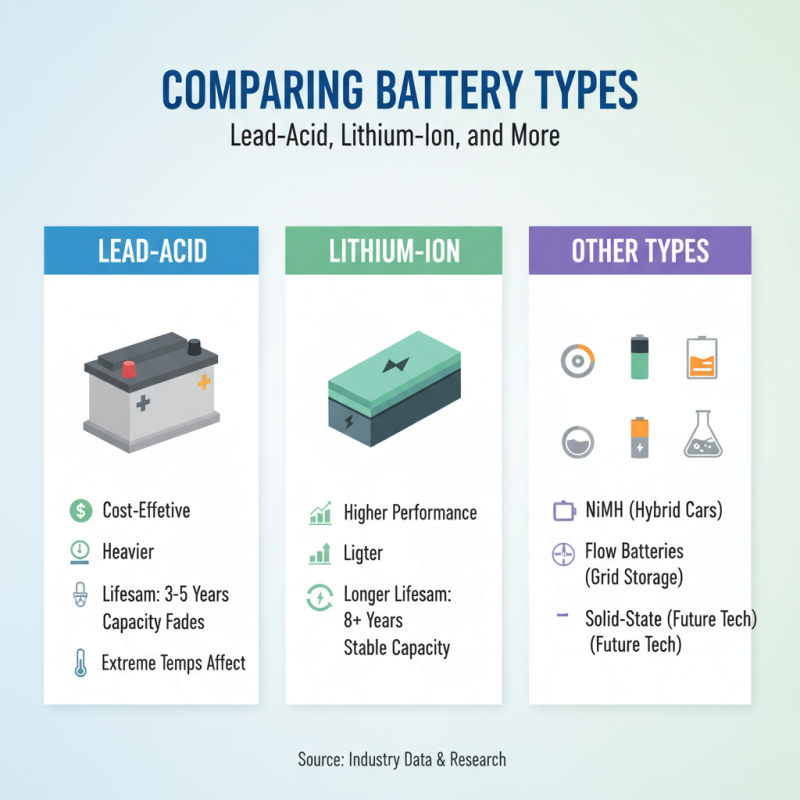
When choosing the right battery group for your vehicle, understanding the different battery types is crucial. Lead-acid batteries are traditional and widely used. They are reliable and cost-effective. However, they are heavier and have a shorter lifespan. According to industry data, the average lifespan for lead-acid batteries is about three to five years. Their capacity fades over time, especially in extreme temperatures.
On the other hand, lithium-ion batteries have emerged as a popular alternative. They are lighter and more efficient. In fact, they can last up to ten years with proper care. Their energy density is significantly higher, allowing for more power in less space. However, they come with a higher initial cost. Some studies show that while lithium-ion installations can be cheaper over time, the upfront investment may deter some consumers.
Other types of batteries, like nickel-metal hydride, can be viable for specific applications. Yet, these options may not suit every vehicle. Every battery choice comes with trade-offs. It's essential to consider your vehicle’s requirements and your budget before making a decision. In the end, selecting the right battery group involves balancing performance and cost.
When selecting a battery for your vehicle, size and compatibility are key factors. The wrong battery size can lead to poor performance and safety issues. According to industry standards, many vehicles require specific group sizes. For instance, a common size for sedans is Group 24, while SUVs often use Group 65. Failing to match these specifications can result in electrical failures.
It’s essential to evaluate the physical dimensions of the battery. Measure the battery space in your vehicle to ensure a proper fit. A battery that is too large may not secure properly, while a small battery can impact connections. Furthermore, note the terminal placement. The wrong configuration can lead to complications. A study from the Battery Council International emphasizes that improper installation can reduce battery life by up to 30%.
Research shows that ensuring compatibility with your vehicle model can save both time and money. The wrong choice could lead to frequent replacements. In fact, using batteries that don’t match your vehicle’s specifications often leads to warranty issues. Therefore, check your owner’s manual or consult with a professional. Take the time to consider all aspects before purchasing. It may help avoid costly mistakes down the road.
Maintaining your vehicle's battery is crucial for optimal performance. Regular checks can prevent unexpected breakdowns. Monitor the battery's charge level frequently. Using a multimeter can make this task easy. A fully charged battery shows 12.6 volts or more. Low voltage indicates the need for recharging. Aim for this routine check every month.
Cleanliness matters too. Remove any corrosion from terminals. Use a mixture of baking soda and water for a gentle scrub. After cleaning, apply a thin layer of petroleum jelly to protect against further corrosion. Tighten the connections securely, but avoid overtightening. It’s a fine balance; close attention is necessary to avoid damage.
Temperature extremes can impact battery performance. In cold weather, battery capacity decreases. Perform a load test before winter hits. In hot weather, keep an eye on electrolyte levels. Check for signs of swelling or leaks. It's easy to overlook, and small issues can escalate. Regular maintenance ensures longevity, despite occasional oversight.
This chart compares the Cold Cranking Amps (CCA) of different battery groups, which is crucial for starting your vehicle under cold conditions. Selecting the right battery group can significantly enhance performance and ensure longevity.
Northeast Battery, a Stored Energy Holdings, Inc. Company