
China has become a major sourcing hub for emergency, utility, and commercial vehicle lighting. The opportunity is substantial. Grand View Research identifies automotive lighting as a growing global market, driven by LED adoption, vehicle safety, and fleet modernization. However, market growth does not prove product quality.
Choosing among China’s top Sae Led Lightbar manufacturers requires evidence beyond polished websites. SAE International’s J845 standard provides testing guidance for optical warning devices, while SAE J575 addresses environmental and electrical tests. These references help buyers examine flash patterns, photometric output, vibration resistance, moisture protection, and thermal performance. Local approval still matters. A lightbar tested to one standard may not satisfy every regional requirement.
Look closely at the factory, not only the catalog. Ask for current laboratory reports, test conditions, photometric files, EMC results, and traceable production records. A reliable supplier should explain LED binning, lens materials, aluminum heat dissipation, ingress protection, and controller durability. ISO 9001 certification can support process confidence, but it cannot replace product-level testing. Check it carefully.
Real experience often exposes weak claims. A bar may appear bright in a dark showroom, then lose intensity after hours on a hot roof. Request samples and test them on the intended vehicle. Compare beam visibility, noise, wiring, mounting strength, and standby current. Warranty terms deserve equal attention. Some suppliers provide attractive prices but vague replacement policies. That is a costly gap.
A practical shortlist should balance compliance, optical performance, customization, after-sales support, and total ownership cost. Data helps. Field validation decides. Even experienced buyers can overlook installation details, so independent verification remains worthwhile.
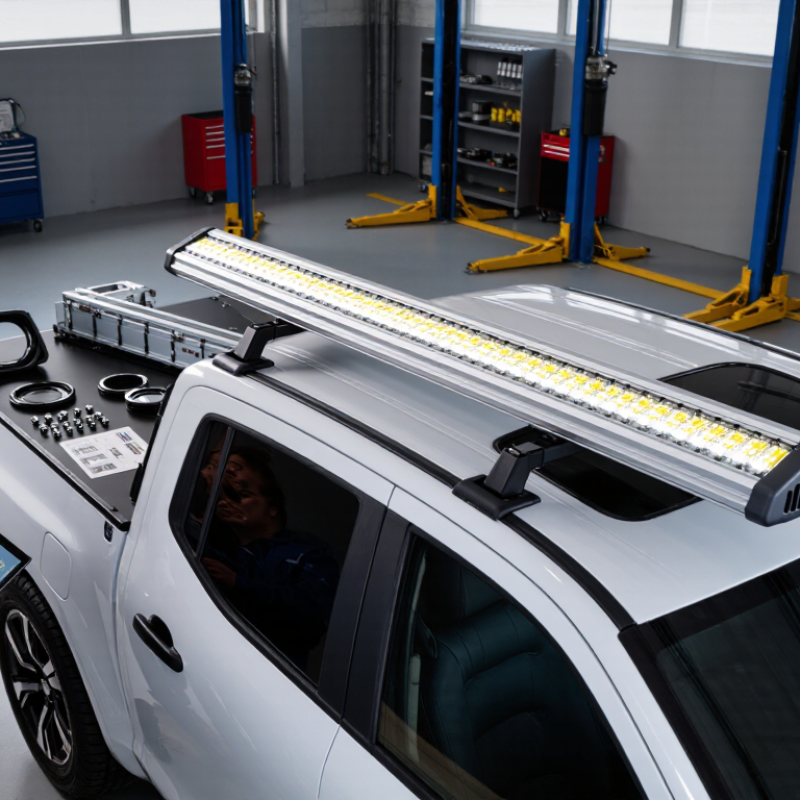
China Top SAE LED Lightbar Manufacturers How to Choose?
SAE LED lightbars are warning or work-light systems designed around recognized automotive performance expectations. SAE markings may relate to photometric output, durability, or testing requirements. They do not automatically prove that every part meets the same standard. Buyers should request test reports, product drawings, and clear compliance details.
Manufacturer choice matters because a lightbar faces vibration, rain, dust, heat, and voltage changes. A reliable supplier should explain beam patterns, light intensity, current draw, ingress protection, and thermal control. Ask how the housing is sealed and how the LEDs are tested after heat exposure. A bright sample can look impressive on a warehouse floor, yet lose output after hours on a hot vehicle roof. That difference matters.
Practical evaluation should include wiring quality, mounting strength, lens clarity, and controller response. Request production samples, not only polished catalog photos. Check whether the factory can maintain consistent color, flash timing, and connector quality across batches. Documentation should be specific, dated, and traceable.
No specification sheet is perfect. I have seen buyers focus on peak lumens and overlook heat management. That is an expensive lesson. A capable manufacturer welcomes technical questions and admits design limits. Some suppliers may offer a lower price, but weak sealing or unstable electronics can create replacement costs later. Choose evidence over confident promises.
SAE LED lightbars are vehicle warning-light systems evaluated against applicable SAE requirements for optical performance, color, visibility, and construction. When comparing manufacturers, prioritize documented compliance, optical consistency, thermal management, environmental protection, and quality control rather than appearance alone.
The chart uses a practical 1–5 screening scale, where 5 means the factor should receive the highest priority during supplier evaluation. SAE compliance documentation should be verified for the intended vehicle, lightbar configuration, and operating region.
When assessing Chinese SAE LED lightbar manufacturers, begin with evidence, not catalog brightness. SAE J595 and SAE J845 define performance practices for warning lamps, but they are not automatic certifications. Request photometric test reports, laboratory accreditation, test dates, and the tested model number. A report for a similar product is not enough. In practical sourcing, this small detail often exposes weak supplier claims.
Thermal control deserves close attention. Ask for operating data at 25°C and elevated ambient temperatures, including current draw, LED junction protection, and output decline. IP ratings should come from standardized testing, not factory photographs. The 2024 Mordor Intelligence automotive lighting market report estimates continued market growth through 2029, increasing pressure on suppliers to scale quickly. Fast growth can reduce inspection discipline. Check whether each production batch receives electrical, sealing, vibration, and radio-interference tests.
Factory capability matters beyond equipment. Review ISO 9001 records, calibration schedules, incoming-material controls, and component traceability. Ask for a sample built on the same line, then compare its beam pattern with the approved report. Keep a retained sample. It can reveal quiet design changes later. Warranty terms should state failure rates, replacement timing, and evidence requirements. Do not rely only on a polished audit score. A manufacturer may pass an audit and still struggle with consistency. That uncomfortable gap deserves a second inspection.
| Assessment Area | What to Verify | Evidence to Request | Practical Evaluation |
|---|---|---|---|
| SAE Performance and Classification | Confirm which applicable SAE performance standard and class are claimed for the specific lightbar configuration. SAE J845 covers optical warning devices; SAE J595 covers directional flashing warning devices. | Complete test report identifying the exact model, configuration, test method, results, and issuing laboratory. Check that the report supports the advertised claim. | Do not rely on a general “SAE compliant” statement. Match the report to the lightbar’s installed optics, colors, operating modes, and intended application. |
| Photometric Performance | Review measured light output and distribution for the required viewing angles and operating modes. Confirm that the chosen configuration suits the vehicle and jurisdiction. | Photometric test data, test setup, configuration details, and clearly identified operating mode. | Compare equivalent configurations under the same test conditions. Ask how the unit performs at relevant angles, not only at its brightest point. |
| Environmental Testing | Check resistance to vibration, shock, moisture, temperature changes, and other conditions expected in vehicle service. SAE J575 includes environmental test methods for lighting devices. | Test reports stating the methods used, sample configuration, test conditions, and results. Request the IP rating and its supporting test evidence where claimed. | Confirm that testing applies to the assembled lightbar, including its lens, housing, seals, connectors, and mounting hardware. |
| Electrical Compatibility | Verify the supported vehicle voltage, current draw, circuit protection, polarity protection, and behavior during voltage variation or electrical transients. | Electrical specification, wiring diagram, current measurements by mode, and relevant test results. For vehicle installations, assess whether ISO 7637-2 testing is appropriate to the application. | Check the product against the intended 12 V or 24 V system and the vehicle’s available circuit capacity. Confirm fuse recommendations and connector pinouts. |
| Electromagnetic Compatibility | Assess whether the lightbar could cause or experience interference in the intended vehicle environment. | Applicable EMC test reports, test standards and editions, operating modes tested, and details of the tested configuration. | Confirm the report covers the supplied controller and wiring arrangement, not only an isolated LED module. |
| Optics, Colors, and Flash Patterns | Review available lens colors, optical layouts, flash patterns, synchronization options, and controls. Confirm that local rules permit the intended colors and use. | Configuration drawings, color and mode list, controller documentation, and samples or demonstration units where practical. | Check visibility, pattern selection, synchronization, and control operation on the target vehicle. Verify regulatory requirements separately for each destination market. |
| Materials and Construction | Examine lens clarity, housing material, corrosion resistance, sealing, fasteners, cable protection, and mounting design. | Material specifications, product drawings, mounting instructions, and documented inspection or durability procedures. | Inspect a production-representative sample for fit, finish, exposed wiring, water-entry paths, and ease of service. |
| Manufacturing Quality Control | Determine how incoming components, assembly, finished products, and changes to production are controlled. | Quality-process overview, inspection records or sample forms, traceability method, and change-control process. | Ask how serial or lot records link a delivered unit to its production and inspection history. Verify that approved samples match production units. |
| Warranty and After-Sales Support | Review the written warranty period, exclusions, claim procedure, replacement-parts availability, and technical support arrangements. | Written warranty terms, service contact process, spare-parts list, and expected support response procedure. | Evaluate the clarity and practicality of the remedy process, including how faults are documented and replacement units are supplied. |
| Delivery and Order Readiness | Confirm production lead time, minimum order quantity, packaging, export documentation, and ability to maintain configuration consistency across repeat orders. | Written quotation, product specification, approved configuration record, packaging details, and delivery terms. | Use a signed specification and pre-production sample approval to reduce the risk of substitutions or unapproved design changes. |
Assessment note: Request independent, model-specific evidence and verify applicable standards and vehicle-lighting regulations for the intended market before purchase.
When comparing China’s top SAE LED lightbar manufacturers, technical specifications deserve more attention than polished product photos. Start with measured luminous output, beam pattern, and effective range. Raw lumens can look impressive, but usable road coverage matters more. Ask for test reports under realistic temperatures and mounting positions.
Check input voltage carefully. A lightbar should match the vehicle’s electrical system and tolerate normal voltage variation. Review current draw, LED lifespan, housing material, and heat management. Aluminum housings with well-designed fins usually release heat more effectively. Confirm the sealing rating, connector quality, vibration resistance, and operating temperature range. Small details often decide service life.
SAE compliance needs evidence, not a printed claim. Request traceable test documents and the exact standard referenced. Also compare electromagnetic compatibility, warning flash patterns, brightness control, and installation hardware. In field evaluations, I have found that poor brackets create more trouble than weak LEDs. Numbers can mislead. I once focused too heavily on peak brightness and overlooked glare during rain. That was a useful correction. Ask manufacturers how they validate samples, control production consistency, and handle warranty inspections. A clear answer is valuable. A vague answer deserves another question.
Choosing China’s top SAE LED lightbar manufacturers requires more than comparing brightness or price. Verify the exact standard first. SAE J595 and J845 address warning-light performance, while FMVSS 108 and UNECE requirements apply differently by market. Ask for current photometric, EMC, and environmental test reports from an ISO/IEC 17025 laboratory. IEC 60529 IP ratings should match the tested enclosure, not merely appear on a brochure.
Quality systems reveal manufacturing discipline. The ISO Survey 2022 recorded 1,265,216 ISO 9001 certificates worldwide, but certification alone is not proof of consistent production. Request audit scope, certificate validity, incoming inspection records, and corrective-action reports. Check thermal cycling, vibration, salt-spray, waterproofing, and accelerated aging results. A useful practical test is simple: inspect ten units from different lots, not ten units from one sample batch.
Production capability needs physical evidence. Review SMT equipment, optical inspection, assembly flow, burn-in stations, and serial-number traceability. Ask for monthly capacity, historical on-time delivery, failure rates, and the quality-control plan for LEDs, lenses, drivers, and wiring. The U.S. Department of Energy’s 2022 Solid-State Lighting R&D Plan emphasizes thermal management and reliability as continuing industry priorities. That matters because poor heat dissipation can reduce output before the lamp looks damaged. Certificates can be outdated. Test reports can be incomplete. I would still request a factory video audit and an independent pre-shipment inspection before approving volume production.
China Top SAE LED Lightbar Manufacturers: How to Choose?
How to Select the Best Manufacturer for Your Project
Choosing a manufacturer starts with your project requirements, not a supplier’s sales brochure. Define beam pattern, warning modes, voltage range, mounting space, and operating temperature. A capable factory should explain these choices clearly. Ask for test reports, photometric data, ingress protection records, and electromagnetic compatibility results. Do not accept vague claims.
Production experience matters when lightbars face vibration, rain, dust, and long operating hours. Review housing materials, lens quality, sealing methods, wiring protection, and thermal design. Request a sample before placing a large order. Test it on the intended vehicle, especially around mirrors, roof curves, and existing electronics. Small fitting problems can create expensive delays.
Factory audits reveal more than polished photographs. Check assembly procedures, aging tests, inspection points, and traceability for critical components. Confirm whether the manufacturer can support custom lengths, connectors, brackets, packaging, and documentation. A realistic warranty should define response time and replacement procedures. Communication matters too. Slow answers during sampling may become serious problems after delivery. No factory is perfect. A supplier may offer strong optics but weak documentation, or excellent customization with limited production capacity. Compare these weaknesses honestly. The lowest quotation is rarely the lowest project cost. Reliable selection comes from verified evidence, practical testing, and a manufacturer willing to discuss limitations.
Northeast Battery, a Stored Energy Holdings, Inc. Company