
Choosing an Electrical Cabinet for an overseas project involves more than comparing prices. The enclosure must suit its environment, equipment, installation method, and service needs. A cabinet that looks suitable in a product photo may be too shallow for the wiring, difficult to maintain, or poorly matched to a humid production floor.
Small details matter. Check the cabinet’s dimensions against the actual layout, including space for cable bends and door movement. Confirm its material, coating, ingress protection rating, ventilation options, and mounting arrangement with the supplier. Ask for drawings, technical data, and clear answers about what is included. If a specification is vague, pause and clarify it. Assumptions can become expensive.
Global purchasing adds practical questions. Buyers may need to review packing, shipping dimensions, documentation, communication across time zones, and availability of replacement parts. Requirements also vary by project and destination, so verify applicable technical and installation requirements with qualified local professionals. A low quotation is not always the best value. Nor is the most feature-rich cabinet necessarily the right choice.
There is no perfect checklist for every site. Even experienced teams can miss a clearance or underestimate heat buildup. That deserves a second look. These 10 Electrical Cabinet buying tips help global buyers compare options, ask more useful questions, and reduce avoidable surprises before placing an order.
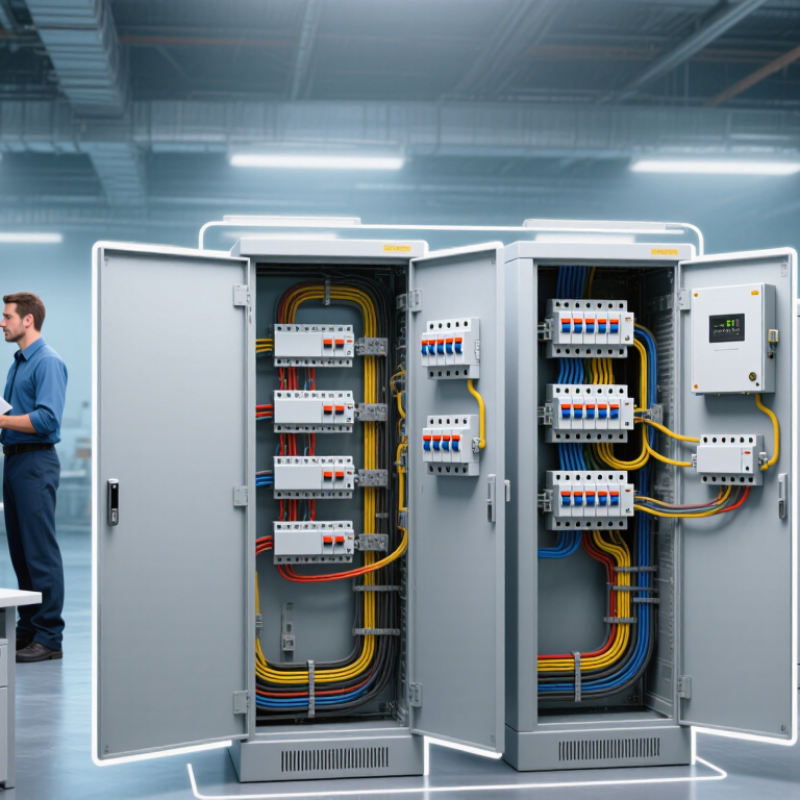
Before requesting cabinet quotations, build a realistic load schedule. Record each device’s rated current, voltage, phase, starting current, and duty cycle. Include heaters, drives, control power, and spare circuits. Small loads still add up.
Do not size the assembly from a single total-current figure. Check how equipment operates together, then assess heat dissipation, ambient temperature, and ventilation. A cabinet in a hot production area may need a different arrangement than one in a clean, cool room. Allow practical space for wiring and future changes. It is easy to underestimate both.
Ask the supplier to identify how the assembly will be assessed against IEC 61439. Relevant details include rated current, short-circuit withstand capability, protective circuits, clearances, and enclosure conditions. Confirm which design verification evidence applies to the proposed configuration, and ensure routine verification is planned for the completed assembly. The exact checks depend on the assembly and its intended use. Share the installation location, fault-current data, and cable-entry requirements early; missing information can undermine an otherwise careful specification. Review drawings and verification records before shipment, not after a cabinet arrives with cramped terminals or unsuitable cooling. A neat quotation is not proof of a suitable assembly.
When choosing an electrical cabinet, match its IP rating to the dust it will face. Under IEC 60529, the first digit 6 means dust-tight: no dust ingress is permitted during the specified test. That matters in workshops where fine powder settles on cable glands, or near conveyors that send dust into every seam. Check the complete rating, not just the “6.” The second digit describes water protection, and IP6X alone makes no claim about water resistance.
Ask suppliers for test documentation that identifies the tested enclosure configuration. A rating may depend on doors, seals, cable entries, and installation details. A cabinet tested without your gland plate may not represent the finished assembly. Look closely at gasket compression and door alignment; even a small mismatch can compromise the barrier. Dust-tight does not mean maintenance-free. Seals can age, and repeated door opening can introduce contamination. It is easy to overlook that.
Consider the site, too. Cement dust, metal particles, and flour behave differently, while heat and vibration can affect enclosure performance. IP6X does not certify resistance to corrosion, impact, or internal condensation. Inspect seals during routine maintenance, especially after cable changes. The paperwork helps, but the actual installation deserves a close look.
When comparing NEMA 4X and IP66 for an outdoor electrical cabinet, do not treat the ratings as interchangeable. IP66 means the enclosure is dust-tight and tested against powerful water jets. It does not, by itself, certify corrosion resistance. NEMA 4X includes protection against corrosion, along with specified protection from windblown dust, rain, splashing, and hose-directed water.
That difference matters near coastal spray, road salt, or chemical washdown. A cabinet may look sealed, yet a poorly fitted cable gland can create an entry point. Check the rating of the complete assembly, including doors, seams, connectors, and installed accessories. Ask for test documentation, and confirm that the stated rating applies in the cabinet’s intended mounting position. Details matter.
Think about the actual site. A shaded wall with occasional rain has different demands from a cabinet beside a salt-laden loading area. Material choice and maintenance still matter, even with a suitable rating. Inspect door gaskets for compression and watch for scratches around fasteners. One uncomfortable truth: no rating makes neglected seals reliable. If corrosion is a serious concern, NEMA 4X may offer a clearer specification, while IP66 describes dust and water protection well. Compare the requirements, not just the label.
IEC 61439 uses 35°C as the maximum average ambient temperature over 24 hours for normal service conditions. This is not the same as a guaranteed cabinet interior temperature. Sunlight, nearby furnaces, and crowded equipment can raise internal temperatures quickly. A cabinet beside a warm production line may need more cooling than one in a ventilated electrical room. Check the applicable standard edition and project requirements before selecting an assembly.
Tips: Ask the supplier for temperature-rise data and the conditions used for testing. Record the expected room temperature across a full operating day, including hot afternoons and overnight shutdowns. Check heat from drives, transformers, and closely spaced components. Leave room for airflow around the cabinet. Small details matter.
Do not size cooling from the room thermostat alone. Measure or estimate heat loads, then confirm the cabinet’s thermal performance at the intended installation conditions. Dust filters can restrict airflow over time, and blocked vents are easy to miss during procurement. Allow for maintenance access and realistic cleaning intervals. A little uncertainty remains until the site is operating; review temperatures after commissioning and adjust if needed.
For normal indoor service conditions, IEC 61439 specifies an ambient temperature that does not exceed 40°C and a 24-hour average that does not exceed 35°C. The chart shows these temperature limits; it is not a record of measured site conditions.
Electrical Cabinet Buying Tips for Global Buyers
An electrical cabinet can look suitable in a catalog yet fail in a humid workshop or dusty production line. Match the enclosure rating and construction to the actual installation conditions, including washdown, temperature swings, and corrosion exposure. Review certification documents for the exact cabinet configuration, not just a supplier’s general statement. Check whether doors, glands, finishes, and internal plates are included in the tested assembly. Small differences matter.
Tips: Ask for material specifications and coating details, then compare them with your site’s environment. Stainless steel may suit corrosive areas, while coated steel can be practical indoors; neither is automatically the best choice. Request drawings, sample inspection photos, and a written lead-time breakdown covering fabrication, testing, and shipping. A promised dispatch date is not the same as delivery. Confirm packaging requirements and who handles damage claims.
Read the warranty for exclusions, response times, and replacement-part availability. A long warranty has limited value if troubleshooting takes weeks. Estimate lifecycle cost, not only purchase price: installation labor, ventilation, spare parts, energy use, and maintenance visits can shift the balance. Get costs in writing. Compare equivalent specifications across quotations. One detail is easy to miss: future expansion may require extra mounting space or unused cable entries. I would leave room where practical, though that can increase the initial footprint and cost.
| No. | Buying Dimension | What to Check | Practical Buyer Action |
|---|---|---|---|
| 1 | Applicable standards | Requirements depend on the cabinet’s intended use, installation location, and destination market. IEC 61439 covers low-voltage switchgear and controlgear assemblies; IEC 60529 defines IP degrees of protection for enclosures. | Identify the standards and local regulations that apply to the complete assembly. Ask for relevant test reports or conformity documents, and confirm that they cover the supplied configuration. |
| 2 | Certification scope | A component certificate does not automatically certify the finished cabinet. Marking and conformity obligations vary by product category and country. | Check the certificate holder, product model, scope, validity, and destination-market relevance. Verify documents with the issuing body where possible. |
| 3 | Enclosure material | Painted carbon steel, stainless steel, and non-metallic materials differ in corrosion resistance, strength, weight, and maintenance needs. Suitability depends on the environment. | Specify the environment, such as indoor use, outdoor exposure, washdown, or corrosive atmosphere. Request material grade, coating system, and finish details rather than relying on a generic material description. |
| 4 | Ingress protection | IP ratings classify protection against access to hazardous parts, solid objects, and water under defined test conditions. They do not, by themselves, establish resistance to corrosion, impact, or every weather condition. | Choose the required IP rating for the installation and check that doors, seals, cable entries, ventilation parts, and installed accessories preserve the intended protection. |
| 5 | Dimensions and thermal design | Installed equipment, cable bend space, heat dissipation, and future expansion all affect cabinet size and layout. Electrical losses and ambient temperature influence internal temperature. | Provide a component and heat-load list, ambient conditions, cable-entry plan, and space for maintenance. Request a layout and thermal assessment for heat-sensitive applications. |
| 6 | Electrical ratings and safety | Rated voltage, current, short-circuit withstand capability, and protective-device coordination must suit the system. These values should be established for the actual assembly and application. | Share the system voltage, available fault current, load information, and protection requirements. Have qualified personnel review the proposed design and assembly documentation. |
| 7 | Lead time and delivery | Production schedules can depend on design approval, component availability, customization, testing, and shipping. A quoted factory lead time may not include international transit or customs clearance. | Request a schedule with milestones for drawing approval, production, inspection, dispatch, and delivery. Confirm the quotation’s assumptions and how changes affect timing. |
| 8 | Warranty and support | Warranty coverage, start date, exclusions, remedies, and claim procedures are contract-specific. Cross-border service can also depend on spare parts and technical support availability. | Obtain the full written terms. Confirm the coverage period, what is excluded, who pays shipping or labor, response arrangements, and the availability of replacement parts. |
| 9 | Inspection and documentation | Drawings, wiring diagrams, bills of materials, test records, and operating instructions support installation, verification, and future maintenance. | Agree on required documents and inspection points before ordering. Define any factory acceptance tests, acceptance criteria, and records to be delivered with the cabinet. |
| 10 | Lifecycle cost and supplier evaluation | Purchase price is only one cost. Installation, energy use, maintenance, spare parts, downtime, transport, and end-of-life handling can affect total ownership cost. | Compare like-for-like specifications and estimate costs over the expected service period. Evaluate technical support, repairability, spare-part access, delivery terms, and documented quality processes alongside price. |
Northeast Battery, a Stored Energy Holdings, Inc. Company