What is a Hand Retractable Spring Plunger and How to Use It?
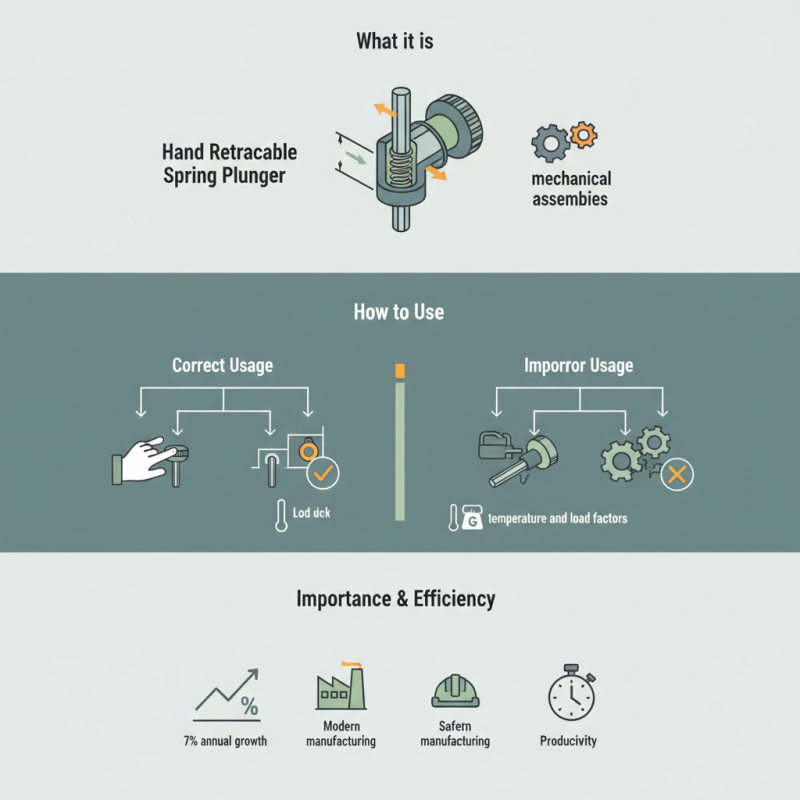
The Hand Retractable Spring Plunger is a vital component in mechanical assemblies. These devices are commonly used in various industries, demonstrating their significance in facilitating quick and efficient operations. According to a recent market report from Research and Markets, the global demand for precision components, including spring plungers, is expected to rise by 7% annually through 2025. This growth underscores their importance in modern manufacturing applications.
Understanding how to properly utilize a Hand Retractable Spring Plunger can greatly enhance operational efficiency. These plungers offer advantages such as simple actuation and reliable performance. However, it is essential to recognize that improper usage can lead to equipment failure or safety hazards. For example, if the plunge depth is not adequately synchronized with the machinery, this can cause misalignments that compromise the system's functionality.
Incorporating a Hand Retractable Spring Plunger effectively requires knowledge of its specifications and limitations. While they are designed to operate flawlessly, users must consider environmental factors such as temperature and load. Recognizing these variables can lead to more informed decisions, ultimately improving productivity and safety in the workplace.
Understanding the Basics of Hand Retractable Spring Plungers
Hand retractable spring plungers are crucial components in various mechanical applications. They provide a simple yet effective way to engage or disengage parts. Their design typically features a spring-loaded pin that can be manually pushed down and released. This allows for quick and easy adjustments in machinery setups or jigs.
Using a hand retractable spring plunger involves a few straightforward steps:
First, ensure the pin is in the retracted position. Apply pressure to the pin while aligning it with the intended hole or slot. Once it is aligned, release the pressure to let the spring engage. The plunger should securely hold the components together. However, if there’s excessive wear or damage, it may not operate smoothly. Regular maintenance is essential for reliability.
These plungers are versatile but have limitations. They are not suitable for high-load applications. Users should assess their needs before implementation. If you find your assembly often requires repositioning, reconsider the plunger's placement or specifications. Balancing ease of use with durability can be challenging, but it leads to more efficient operations.
Key Components of Hand Retractable Spring Plungers Explained
Hand retractable spring plungers are ingenious devices used to create quick locking and releasing mechanisms. They are mainly composed of a body, a spring, and a plunger. The body houses the spring and plunger. The spring applies pressure, enabling the plunger to extend or retract easily. When engaged, the plunger locks into place, securing components within machinery or furniture.
One essential feature is the spring’s ability to control tension. A weak spring may fail to hold weight, while excessive tension can make retraction hard. Proper selection of spring strength is crucial. The plunger’s size and material also impact performance. Stainless steel is common for durability, while plastic options provide lightweight solutions. Users should experiment to find the right match for their specific use case.
Clear installation is vital for effective operation. Misalignment can cause dysfunction. Ensure the components fit snugly in their designated spots. Regular maintenance can prevent wear. Users sometimes overlook signs of fatigue. Even the best components require monitoring. Awareness of these aspects ensures longevity and reliability.
How to Properly Use a Hand Retractable Spring Plunger
Using a hand retractable spring plunger can be quite simple, but it requires careful attention. This device consists of a spring-loaded pin that is manually activated. To begin, ensure the plunger is clean and free of debris. This ensures optimal function when engaging with various materials.
To use it effectively, first position the plunger against the designated spot. Apply gentle pressure until the pin fully retracts. This action often requires a steady hand. Once you reach your target, release the pressure to allow the pin to extend fully again. Make sure to observe how it interacts with the surface. Sometimes it sticks or doesn't seat properly. Experiment with the angle you are using to enhance its performance.
Remember to evaluate your technique continually. Mistakes can lead to damage or misalignment. Take a moment to reflect after each use. Understanding how much pressure to apply improves accuracy over time. This device offers versatility, but like any tool, it demands practice for mastery. Keep an open mind and refine your approach as you gain experience.
Common Applications for Hand Retractable Spring Plungers
Hand retractable spring plungers are versatile components widely used in various industries. Their ability to provide quick engagement and disengagement makes them ideal for applications requiring frequent adjustments. Common uses include securing machine parts, indexing, and providing detents. According to industry reports, the demand for spring plungers has increased by 15% over the past five years due to their efficiency and reliability.
In manufacturing, these plungers help in quick part positioning. They are essential in assembly lines where speed matters. In the automotive sector, they assist in fixtures and jigs setup. Data shows that proper use of spring plungers can reduce assembly time by up to 30%. This efficiency contributes significantly to productivity and cost-saving measures.
Tip: Regular maintenance is crucial. Check for wear and tear to prevent failures. Misalignment can occur over time, affecting performance. Ensure plungers are correctly installed for optimal functionality. Remember, the correct application of these devices helps avoid operational delays. Always assess your specific needs before selecting a spring plunger.
Maintenance Tips for Ensuring Longevity of Spring Plungers
Regular maintenance of hand retractable spring plungers is essential for ensuring their longevity and reliable performance. These devices can wear over time due to friction and contamination. Keeping them clean is a straightforward yet crucial task. Use a soft cloth to wipe away dirt and debris that may accumulate on the plunger and housing.
Lubrication is another critical factor. A light application of oil to the plunger can reduce friction and improve its movement. Remember, however, that too much lubrication can attract more dirt. It’s a balancing act that requires periodic checking. Each time you assess the plunger, pay attention to how it retracts and clicks. If resistance is felt, further cleaning or lubrication might be necessary.
Inspecting the springs and retaining clips regularly can catch potential issues before they become problems. Signs of wear or damage should not be ignored. Replacing worn components promptly will save time and resources later. These simple steps create an environment where your spring plungers perform optimally, minimizing unexpected failures. Regular checks develop a rhythm, yet this routine should not become mechanical. Each inspection can reveal new insights into your equipment's health and operational efficiency.