
Choosing the right Rotomolding Chair involves more than comparing colors or prices. The chair must suit its setting, support its users, and hold up under everyday use. A patio chair faces sunlight, rain, and temperature changes. A chair for a café may need to move easily and withstand frequent cleaning. Small details matter.
Rotomolding, or rotational molding, forms plastic into a hollow, seamless shape. This construction can provide durable seating, but quality still depends on the material, wall thickness, design, and manufacturing standards. Ask what type of plastic is used and whether the product has been tested for its intended environment. Check the chair’s weight capacity, dimensions, stability, and care instructions. Then picture it in your space: Does it fit beneath the table? Can someone sit down and stand up comfortably? Is the surface easy to wipe after a spill?
Comfort is personal. A sculpted seat may feel supportive to one person and too firm to another. If possible, test the chair before ordering several. Look closely at its edges, legs, and finish; rough spots or wobble deserve attention. Warranty terms and access to replacement parts can also indicate how confidently a supplier stands behind the product. Yet specifications never tell the whole story. A chair can look perfect online and feel awkward in a real room. Use the sections ahead to compare construction, comfort, appearance, and value, while keeping your own needs in view. There is no single best choice. The best Rotomolding Chair is the one that fits your space and earns its place through reliable daily use.
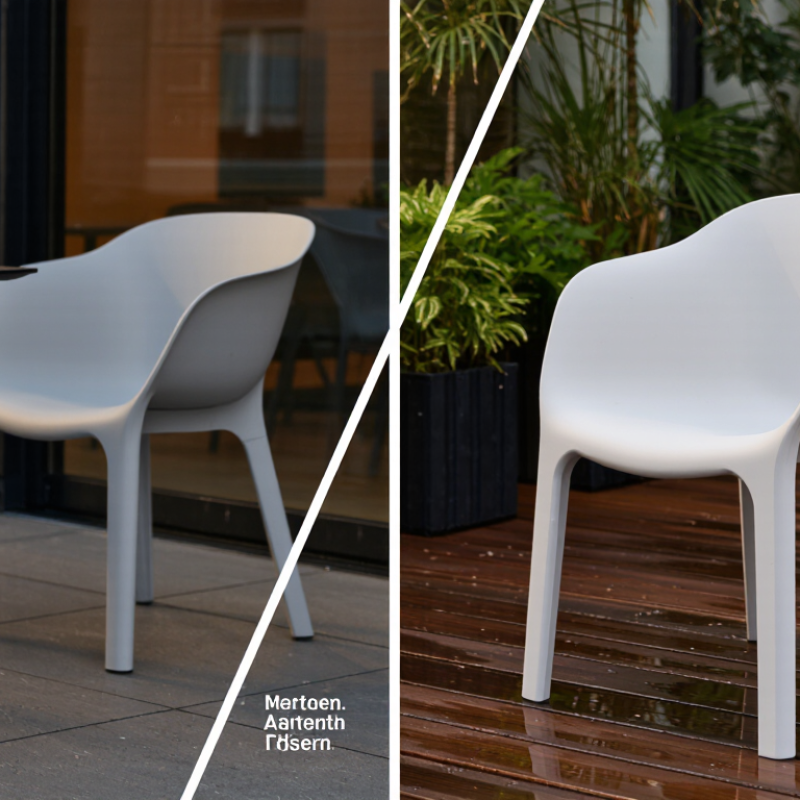
Rotomolding begins with polymer powder inside a hollow metal mold. Heat softens the powder while the mold rotates on two axes, spreading molten plastic across its inner surface. No high injection pressure forces the material into place. Instead, oven temperature, rotation speed, and heating time shape wall coverage. Too little heat can leave weak, uneven areas; too much may degrade the polymer. There is no single setting for every mold. That makes process records and sample testing essential, not optional.
Polymer choice affects weight, impact resistance, UV durability, and feel. Polyethylene is widely used for molded products because it can tolerate impacts and moisture, but grades differ considerably.
PlasticsEurope’s Plastics – the Fast Facts 2024 report estimates global plastics production at 413.8 million tonnes in 2023. That figure covers plastics broadly, not rotomolding alone, so it should not be mistaken for chair-market data.
For a chair, ask for the specific resin grade and test results. ASTM D638 provides a standard method for measuring tensile properties, though it does not predict every real-world failure. Check the underside for smooth transitions, consistent walls, and stable feet. Then test it on an uneven floor. A chair can look perfect and still wobble. I would not judge comfort from a showroom sit alone; longer use often reveals pressure points that a quick test misses.
Choosing a rotomolding chair starts with the material, not just its shape. Polyethylene grades can vary in stiffness, toughness, and behavior after repeated use. ASTM D638 tensile testing measures how a plastic specimen stretches and resists pulling before it breaks. For chair design, results can help compare material batches and assess whether a seat or leg may flex under load. Check the test method, specimen preparation, and conditioning; numbers from different setups may not be directly comparable.
ASTM D256 measures impact resistance using a notched specimen struck by a pendulum. It offers a useful comparison of how materials handle a sudden blow, such as a chair edge hitting a hard floor. A higher impact value may indicate better resistance in that test, but it does not guarantee that a finished chair will never crack. The molded wall, corners, cooling, and UV exposure matter too. Tests are clues, not the whole story.
Ask suppliers for D638 and D256 data tied to the specific resin grade, then compare it with real-use checks: loaded seating, repeated handling, and cold-condition impacts. Look closely at stress points around the legs and seat transitions. A chair that feels slightly flexible may be more comfortable, though that impression alone is not proof of strength. I would want both test results and a finished-part evaluation before choosing.
A rotomolding chair may look sturdy in a showroom, but sunlight can gradually fade its color and weaken exposed plastic. Ask whether the material has been evaluated using ASTM G154 accelerated-exposure testing. This method uses fluorescent ultraviolet lamps and controlled moisture cycles to simulate aspects of outdoor weathering. It is useful evidence, not a guarantee of a chair’s exact service life outdoors.
Look beyond a simple “UV tested” claim. Request the test duration, exposure cycle, and results for the specific material or finished chair. After exposure, check for color change, chalky residue, surface cracking, and brittleness. If possible, compare tested samples with an unexposed piece under the same light. Small changes matter. A chair near a sunny pool may face harsher conditions than one kept beneath a covered patio.
Test conditions do not reproduce every climate, and accelerated exposure cannot predict an exact number of years in use. That limitation is worth keeping in mind. Ask how the chair is expected to be used, and consider whether its color and finish still look acceptable after testing. A clear report with defined methods is more useful than a confident promise without supporting details.
A molded chair can look sturdy and still rock on a hard floor. Set it on a level surface and press each corner; movement may reveal uneven feet or a warped base. Then sit down and shift your weight gently. The chair should remain steady without sharp creaks, sudden flexing, or tipping. Small details matter. Check that edges feel smooth and that the seat supports you without forcing an awkward posture.
ANSI/BIFMA X5.1 provides test methods for general-purpose office chairs, including tests related to stability, strength, and durability. Ask whether the exact chair model—not merely a similar design—was evaluated to the standard, and request the test report or clear documentation. A molded shell alone does not prove compliance. Also check the intended user weight, use conditions, and any limits stated by the manufacturer. Repeated loading can expose weak joints, fasteners, or support points over time. Inspect them closely.
One detail is easy to overlook: passing a test does not guarantee a chair suits every room or user. I would compare the test evidence with the way the chair will actually be used, including frequent movement or long sitting periods. Standards help make comparisons more reliable, but they cannot replace a hands-on check.
How to Choose the Best Rotomolding Chair?
Match Chair Dimensions, Load Rating, and Maintenance Needs to Its Intended Use
A good rotomolding chair should fit the space and the person using it. Measure seat height, width, and depth before ordering. A chair that looks roomy online may feel cramped beside a table or against a wall. Check the stated load rating, too, and allow a sensible margin rather than choosing right at the limit. For shared seating, stability and easy entry may matter more than a sculpted shape. Small details count.
Think about where the chair will live. Outdoor use can mean rain, dust, and frequent wiping, while indoor seating may face food spills or scuffs. Look for smooth surfaces and drainage details that suit the setting. Confirm cleaning guidance with the supplier; harsh cleaners can damage some finishes. A low-maintenance chair still needs occasional inspection for cracks, loose fittings, or wear. No material is maintenance-free.
Tips: Put a tape measure on the floor to mark the chair’s footprint. Compare that space with nearby walkways and table legs. Ask how the load rating was tested, and check whether cushions or accessories change care requirements. If possible, sit in a similar chair before committing. Product dimensions never tell the whole story.
| Intended use | Typical chair dimensions (W × D × H) | Suggested minimum load rating | Useful design features | Maintenance needs | Selection notes |
|---|---|---|---|---|---|
| Home dining | 45–52 × 48–56 × 78–86 cm | At least 120 kg | Contoured seat, stable legs, smooth surfaces | Wipe with mild soap and water; dry after cleaning. | Check seat height against the table; about 43–48 cm suits many standard dining tables. |
| Outdoor patio or garden | 50–60 × 52–62 × 78–90 cm | At least 120 kg | UV-stabilized material, drainage openings, weather-resistant construction | Rinse off dirt and salt; avoid abrasive cleaners. Store or cover during prolonged severe weather. | Confirm that the chair is rated for outdoor exposure; not all plastics resist UV fading equally. |
| Hospitality and event seating | 45–55 × 48–58 × 78–88 cm | At least 150 kg for frequent public use | Reinforced structure, non-marking feet, stackable form | Clean routinely with a compatible non-abrasive detergent; inspect feet and joints for wear. | Check the stated test method and whether the rated capacity applies to static or repeated use. |
| Poolside or wet areas | 50–60 × 52–62 × 78–90 cm | At least 120 kg | Water-shedding seat, corrosion-free construction, slip-resistant feet | Rinse chlorine or salt residue with fresh water and allow the chair to dry. | Look for a stable footprint and feet that maintain grip on the intended floor surface. |
| Workshop or utility area | 45–55 × 48–58 × 78–90 cm | At least 150 kg | Broad base, easy-clean surfaces, impact-resistant construction | Remove oils and chemicals promptly using cleaners approved for the chair material. | Verify chemical compatibility and avoid using the chair as a step or platform. |
Dimensions and load ratings above are practical comparison ranges, not universal specifications. Actual capacity depends on the chair design, materials, and test method; always check the product’s stated rating and care instructions before purchase.
Northeast Battery, a Stored Energy Holdings, Inc. Company