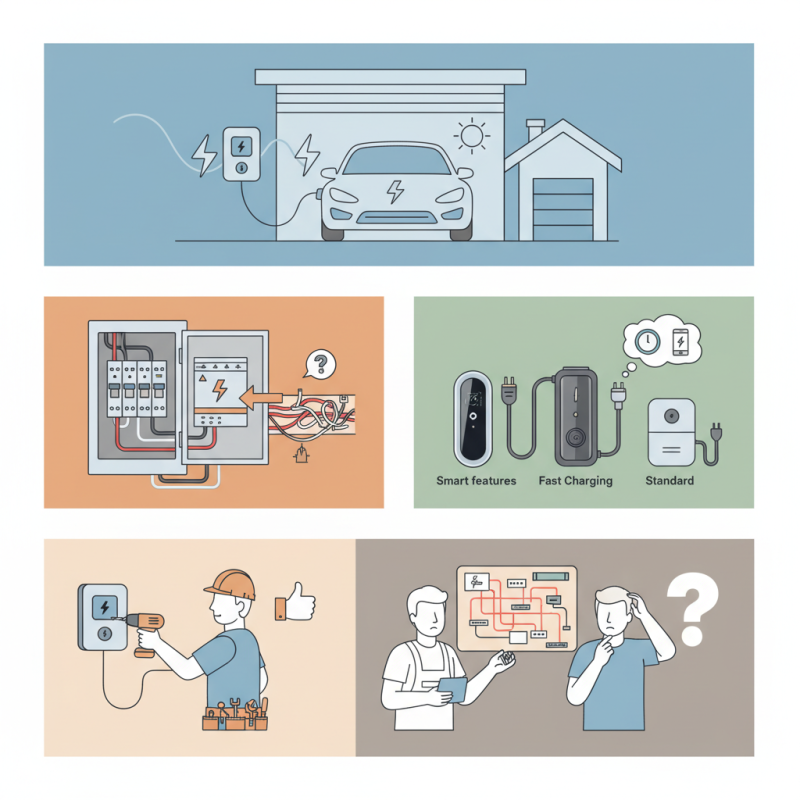
How to Install an EV Charger Wall Plug at Home?
Installing an Ev Charger Wall Plug at home can offer convenience and efficiency. This is particularly true as electric vehicles (EVs) gain popularity. With this installation, charging becomes a simple task, right in your garage or carport.
It's important to consider the specifics of your home’s electrical system before installing. You may need a dedicated circuit to support the charger. Not all homes are prepared for this upgrade. Some homeowners discover unexpected challenges, like inadequate amperage or wiring issues.
Choosing the right EV Charger Wall Plug is crucial. Different models offer various features, such as charging speed and smart capabilities. Reflect on your needs and usage patterns. Remember, a well-planned installation can save time and energy in the long run. Yet, it's essential to evaluate your DIY skills honestly. If in doubt, consult a professional.
Understanding the Basics of EV Chargers and Wall Plugs
Electric vehicle (EV) chargers are essential for EV owners. Understanding their types is crucial. There are primarily two types: Level 1 and Level 2 chargers. Level 1 uses a standard 120-volt outlet, offering a slow charge. It’s suitable for overnight charging. However, charge times can extend to 24 hours for a full battery. This may not be practical for many users.
Level 2 chargers are more efficient. They use a 240-volt outlet, providing faster charging times. According to the U.S. Department of Energy, a Level 2 charger can deliver up to 25 miles of range per hour. This makes daily charging much easier for many EV owners. However, they may require home electrical upgrades, which can be costly.
Installation does not come without challenges. Many users underestimate the electrical capacity of their homes. An electrician's assessment is vital before installation. In some cases, a dedicated circuit might be required. This can lead to unexpected renovation costs. Additionally, the placement of the wall plug affects usability. Accessibility is important for a seamless charging experience, especially in garages or driveways.
Determining the Optimal Location for Your EV Charger Installation
Choosing the right location for your EV charger is crucial. It ensures convenience and efficiency for everyday charging needs. Research shows that over 80% of EV charging occurs at home. Therefore, optimal placement can save time and simplify the process.
Consider proximity to your parking area. A wall plug installed close to where you park can minimize cable length and improve access. Avoid placing it in dimly lit areas. Adequate lighting enhances safety and usability. Moreover, consider the layout of your home. An EV charger should not obstruct walkways or entrances.
Accessibility is vital. A report from the International Energy Agency indicates that easier access to charging points increases EV adoption rates. Study your daily routine. If you park in a garage, placement inside that space may offer more flexibility. Reflect on these factors. A poorly chosen location might lead to inconvenience and reduce the overall charging experience.
Optimal Locations for EV Charger Installation
This bar chart illustrates the most optimal locations for installing an EV charger at home based on space availability, convenience, and safety. The data is collected based on homeowner preferences.
Gathering Necessary Tools and Materials for Installation
Installing an EV charger at home needs careful planning. Gathering the right tools and materials is crucial. Start with a power drill. You’ll also need a stud finder, wire cutters, and a level. Don't forget safety goggles. They protect your eyes during installation.
Next, you should consider the electrical components. Heavy-duty wire is necessary for most installations. Choose the correct gauge for your home. Circuit breakers and connectors are also important. Buying too few materials is frustrating. You might need extra trips to the store.
Ensure your wall plug is designed for outdoor or indoor use, depending on your setup. Missteps can lead to issues down the line. Check your local codes, as they might dictate specific requirements. A little research goes a long way. Gather everything before you start, and remember to review your plan. Mistakes can happen, and adjusting later is often messy.
Step-by-Step Installation Process of EV Charger Wall Plug
Installing an EV charger wall plug at home is increasingly popular. In the U.S., EV sales rose by 60% in 2022, according to industry reports. This surge creates a higher demand for home charging solutions. The installation process can be straightforward, but attention to detail is crucial.
Begin by assessing your power supply. Ensure your existing electrical system can handle the charger’s requirements. Many EV chargers need a dedicated circuit. Overloading your system can lead to safety risks. Engage a qualified electrician if unsure. They can evaluate load capacity and ensure compliance with local codes.
Next, choose an appropriate location for the charger. Aim for an area that minimizes cable strain. Consider convenience and accessibility too. While planning, remember potential future needs as EV technology evolves. You may find that your charging habits change over time. Research indicates that most owners prefer charging overnight. However, flexibility is essential for unexpected trips or visitors. Keeping these factors in mind will help create an efficient charging setup.
Important Safety Tips and Considerations During Installation
Installing an EV charger wall plug at home requires careful planning. Safety should be your top priority. Before you start, check your electrical panel. Ensure it can handle the additional load. A licensed electrician can help you assess this. Inspect the wiring and outlets too. Faulty wiring can lead to hazards.
During installation, wear appropriate personal protective equipment. This includes gloves and safety goggles. Keep the workspace clean to avoid accidents. Be mindful of where you place the charger. It should be accessible yet away from water sources. Water and electricity don’t mix. If you live in a wet climate, install a weatherproof cover.
Always follow local codes and regulations. Each area has different standards for EV charger installations. Neglecting these can lead to problems down the line. Checking regulations can save you from costly mistakes. After installation, make regular inspections. This ensures your charger remains safe and functional. Don't ignore any signs of wear. Regular maintenance is key in keeping your EV charger safe for use.