10 Essential Tips for Maximizing Battery Energy Efficiency
In today's tech-driven world, battery energy plays a pivotal role in powering our devices. Smartphones, laptops, and electric vehicles all rely on battery energy to function efficiently. However, many users experience rapid battery drain, leading to frustration.
Maximizing battery energy efficiency is essential for extending the lifespan of our devices. Simple habits can make a significant difference. Adjusting brightness, managing app usage, and disabling unnecessary features are just a few strategies. These small changes may seem insignificant but can lead to notable improvements.
It's easy to overlook these practices. People often prioritize performance over energy conservation. Reflection on our habits is crucial. We can enhance battery energy management by shifting our perspectives and making conscious choices in our daily routines.
Understanding Battery Energy Basics and Efficiency
Understanding battery energy efficiency is crucial in our modern, tech-driven world. According to the International Energy Agency (IEA), batteries account for nearly 70% of energy storage capacity worldwide. This underlines the importance of optimizing their performance. Efficiency varies widely between battery types. For instance, lithium-ion batteries can reach up to 95% efficiency under optimal conditions. However, real-world scenarios often demonstrate a drop to around 80%, affected by factors such as temperature and usage patterns.
It's essential to consider the energy loss during charging and discharging processes. Inefficient charging can waste up to 15% of energy. Monitoring temperature is vital; extreme heat can degrade battery life and efficiency. Additionally, a study from the National Renewable Energy Laboratory (NREL) revealed that maintaining a charge between 20% and 80% can significantly prolong battery lifespan. Yet many users often ignore this advice, leading to premature wear.
Furthermore, environmental factors play a role in battery performance. Discharge rates can increase in colder conditions. A user may find their device's battery drains faster than expected in winter. These insights highlight the need for continued research and user education. The balance between maximizing performance and understanding limitations can lead to more sustainable energy consumption practices.
Identifying Factors that Affect Battery Life and Performance
Battery life and performance are affected by several key factors. Temperature is a major player. Batteries operate best at room temperature. Extreme cold or heat can reduce their efficiency. In fact, studies show that high temperatures can shorten battery lifespan by 20% or more.
Charging habits also influence battery health. Frequent fast charging can lead to heat buildup. This heat damages the battery's internal structure. Try to use standard charging when possible. It might take longer, but it preserves battery health.
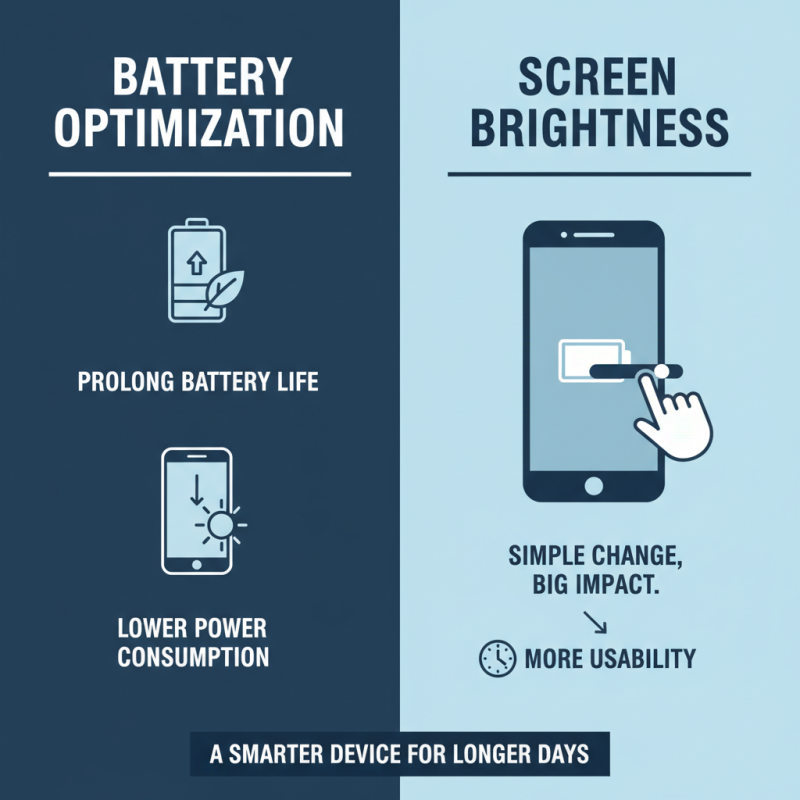
Here are some essential tips for enhancing battery efficiency. Limit background applications. They drain energy quickly, leading to faster depletion. Optimizing screen brightness can also have a big impact. Reducing it to a comfortable level can save power significantly. Lastly, consider keeping your device updated. Manufacturers often release updates that enhance battery management. By paying attention to these factors, users can improve battery longevity effectively.
Best Practices for Proper Battery Maintenance and Care
Maintaining battery health is critical for energy efficiency. Regular cleaning of battery terminals helps prevent corrosion. Use a soft cloth for this task. Ensure connections are tight but not overly forceful. Loose connections can lead to inconsistent performance, requiring you to rethink your handling habits.
Temperature is another crucial aspect. Batteries thrive in moderate conditions. Extreme heat or cold can diminish their lifespan. Do you keep your batteries in a stable environment? Or do they endure temperature swings? For optimal performance, consider relocating them.
Charging practices also demand attention. Avoid letting your battery drain completely before recharging. This habit stresses the battery. Instead, recharge when it reaches around 20%. It might be tempting to leave devices plugged in overnight, but this can lead to overcharging. Reflect on your charging routines and make adjustments for better longevity. Small changes can yield significant benefits.
Leveraging Smart Technology for Enhanced Battery Management
Smart technology has revolutionized how we manage battery life. With innovations in apps and devices, users can track energy consumption in real time. This data can help pinpoint energy drains. For instance, an application can alert you when background processes consume too much power. Simple notifications can make a significant difference.
In addition to tracking, smart technology can automate power-saving features. Devices can enter low-power modes during periods of inactivity. It's essential to find the right balance. Sometimes, these settings may turn on too frequently, disrupting your experience. Adjusting these features requires thoughtful consideration, as users often overlook the automation potential.
Employing smart technology also means embracing flexibility. Regularly updating software can enhance battery performance. However, updates can sometimes introduce new bugs or issues. Finding the perfect tech setup is often a trial-and-error process. Users must remain patient and willing to adapt to ensure maximum energy efficiency.
10 Essential Tips for Maximizing Battery Energy Efficiency - Leveraging Smart Technology for Enhanced Battery Management
| Tip Number |
Tip Description |
Smart Technology Utilization |
Expected Efficiency Improvement |
| 1 |
Optimize Charging Habits |
Smart chargers with adaptive charging |
Up to 20% |
| 2 |
Use Battery Management Systems |
BMS with real-time monitoring |
Up to 25% |
| 3 |
Implement Energy-Saving Modes |
Smart devices with low-power modes |
Up to 15% |
| 4 |
Schedule Regular Maintenance |
IoT-enabled reminder systems |
Up to 10% |
| 5 |
Utilize Renewable Energy Sources |
Smart solar inverters |
Up to 30% |
| 6 |
Monitor Temperature Effects |
Smart temperature sensors |
Up to 18% |
| 7 |
Limit Energy-Intensive Applications |
Smart app usage analytics |
Up to 12% |
| 8 |
Adopt Efficient Cooling Systems |
Smart HVAC systems |
Up to 22% |
| 9 |
Keep Software Up to Date |
Automatic updates via cloud |
Up to 5% |
| 10 |
Educate Users on Best Practices |
Smart tutorial apps |
Up to 10% |