Top Energy Battery Trends You Need to Know Now?

The landscape of energy batteries is evolving rapidly. New advancements are transforming how we store and utilize energy. These changes are crucial for sustainable development. Energy batteries are at the forefront of this shift.

Recent trends indicate a growing interest in solid-state batteries. These types of energy batteries promise higher efficiency and safety. This could revolutionize electric vehicles and renewable energy storage. However, challenges remain in terms of production and cost.

Another trend is the integration of artificial intelligence in battery management systems. AI can optimize performance and extend battery life. Yet, reliance on technology poses risks, such as data security concerns. It is essential to balance innovation with caution in the energy battery sector.
Top Energy Battery Trends You Need to Know Now?

Emerging Technologies in Energy Storage Solutions

Emerging technologies in energy storage have transformed how we approach sustainability. Advanced battery systems are at the forefront of this shift. Solid-state batteries, for instance, offer improved safety and energy density. They utilize a solid electrolyte, reducing risks associated with liquid electrolytes, like leaks and flammability. This innovation can significantly enhance electric vehicle performance.

Another fascinating development is the rise of flow batteries. These systems store energy in liquid solutions, allowing for large-scale energy storage and rapid recharging. They are particularly useful for balancing renewable energy sources like wind and solar. As the grid modernizes, flow batteries can deliver the stability needed for widespread adoption of renewables.

However, challenges remain. Scaling up production and reducing costs are essential for widespread implementation. The mining of materials for batteries raises environmental concerns. Addressing these issues requires collaboration across the industry. A balance must be struck between technological advancement and responsible sourcing. As the landscape evolves, continuous reflection is necessary to ensure sustainable progress.
Advancements in Lithium-Ion Battery Efficiency

Recent advances in lithium-ion battery efficiency are reshaping the energy landscape. Researchers are exploring new materials and techniques to enhance performance. Innovations such as silicon anodes and solid electrolytes show great promise. These developments could significantly increase the energy density of batteries.

Improving efficiency isn't without challenges. Scaling up new technologies often requires extensive testing and investment. Current manufacturing processes must adapt to accommodate these innovations. Additionally, the environmental impact of sourcing new materials is still a topic for discussion.

The industry is increasingly focused on sustainability. Recycling old batteries is critical to reducing waste. Creating a closed-loop system can help mitigate the environmental burden. As the demand for electric vehicles rises, efficiency gains remain vital. Striking a balance between performance and sustainability will be key moving forward.

Advancements in Lithium-Ion Battery Efficiency

This chart illustrates the advancements in lithium-ion battery energy density over the years, showcasing a steady increase in efficiency. The data reflects ongoing improvements in battery technology aimed at enhancing performance for various applications.

Sustainability Trends in Battery Manufacturing

Top Energy Battery Trends You Need to Know Now?

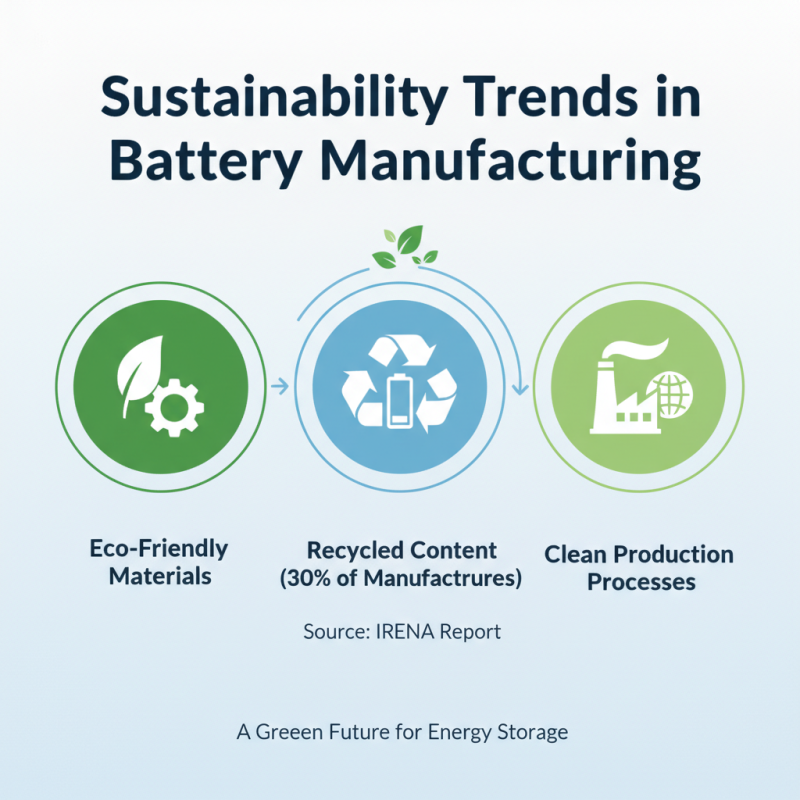
The landscape of battery manufacturing is rapidly evolving with a strong emphasis on sustainability. Current trends highlight a significant shift towards eco-friendly materials and production processes. A report from the International Renewable Energy Agency indicates that nearly 30% of manufacturers are now focusing on using recycled materials in battery production.

Many companies are committing to zero-carbon emissions by 2030. However, achieving this goal remains a challenge. Sourcing sustainable materials is often difficult and can lead to higher production costs. Despite these obstacles, manufacturers understand the long-term benefits of sustainable practices. They could reduce waste and improve their brand reputation.

Additionally, experts emphasize the importance of circular economy models in battery life cycles. A study from the World Economic Forum estimates that implementing recycling processes can reduce the demand for new raw materials by up to 50%. This statistic stresses the need for a systemic approach to battery manufacturing. Only then can the industry truly advance toward sustainability, highlighting a blend of environmental responsibility and technological innovation.

The Rise of Solid-State Batteries in Energy Applications

The rise of solid-state batteries is transforming energy applications. These batteries promise higher energy density and improved safety. According to a recent industry report, solid-state technology can increase energy capacity by up to 40% compared to traditional lithium-ion batteries. This makes them ideal for electric vehicles and renewable energy storage solutions.

Despite the benefits, challenges remain. Manufacturing solid-state batteries at scale is still a barrier. Production costs are high, and there are concerns about long-term durability. Some experts suggest that further research is essential to overcome these obstacles. There is potential for significant breakthroughs in materials science that could pave the way for wider adoption.

In addition to energy density, solid-state batteries offer faster charging times. This feature can enhance user convenience in consumer electronics and transportation sectors. However, the technology is still evolving, and performance variability is a concern. Real-world data on lifespan and efficiency must be gathered to validate the initial hype. The path ahead is promising but requires careful navigation.

Top Energy Battery Trends You Need to Know Now - The Rise of Solid-State Batteries in Energy Applications

Trend Description Advantages Challenges Projected Growth (%)
Solid-State Batteries Next-generation battery technology using solid electrolytes. Higher energy density, improved safety, longer lifespan. High manufacturing costs, material challenges. 30%
Flexible Batteries Innovative battery designs that offer flexibility for various applications. Versatility, lightweight, easy integration into devices. Durability issues, lower energy capacity compared to rigid types. 25%
Lithium-Sulfur Batteries Batteries utilizing sulfur as a cathode material. Higher capacity, lower cost potential. Limited cycle life, polysulfide dissolution issues. 40%
Recyclable Batteries Batteries designed to be easily recyclable or made from recycled materials. Environmental sustainability, resource conservation. Recycling infrastructure challenges, performance variability. 20%
Fast Charging Batteries Batteries developed to support rapid charging capabilities. Convenience, improved user experience. Potential for overheating, degradation of battery materials. 35%

Innovations in Fast Charging and Energy Density Techniques

Top Energy Battery Trends You Need to Know Now?

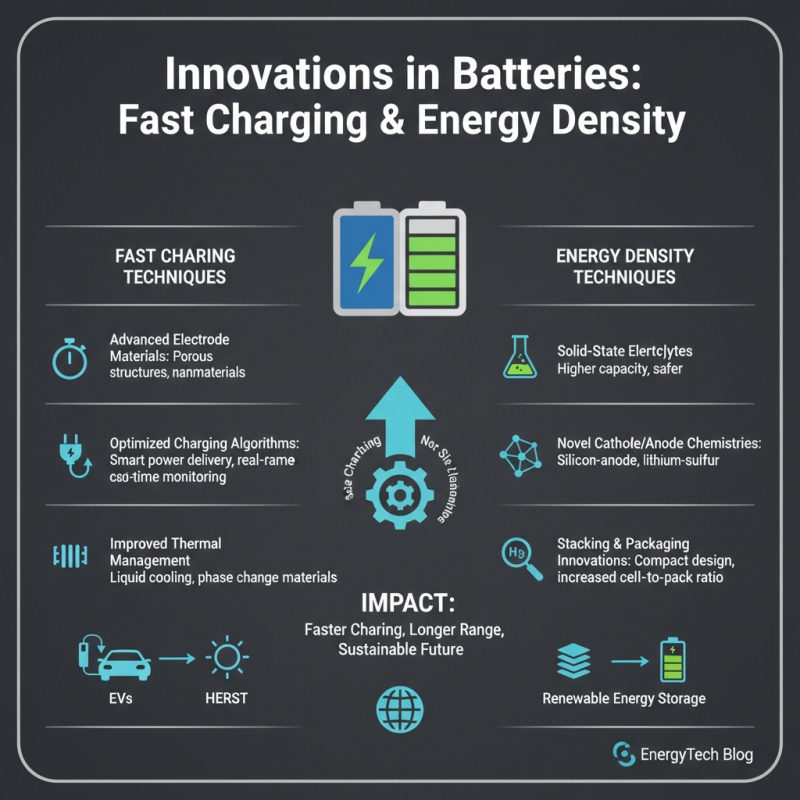
Innovations in fast charging and energy density techniques are transforming the battery landscape. Researchers are focusing on improving charging speeds while enhancing energy storage capacity. These advancements are crucial for various applications, especially in electric vehicles and renewable energy systems.

Recent progress in solid-state batteries shows significant promise. Unlike traditional lithium-ion batteries, solid-state options use solid electrolytes. This shift can lead to higher energy densities. With increased energy density, devices can operate longer without needing a charge. Fast charging technologies, such as ultra-capacitors, allow batteries to recharge in minutes rather than hours. This could change how we think about daily charging routines.

Yet, some challenges remain. Not all materials can efficiently support rapid charging without degradation. There’s also the issue of costs; advanced materials may be expensive to produce at scale. Finding a balance between performance and cost is vital. As we move forward, insights from current research will guide future innovations. Reflection on these trends is essential as the energy landscape evolves.