
Choosing among the top Non-Aging Foam Sandwich Panel suppliers worldwide requires more than comparing catalog prices. Performance depends on the foam core, facing materials, adhesive quality, edge detailing, and manufacturing consistency. A reliable supplier should provide tested thermal conductivity, water absorption, dimensional stability, fire performance, and long-term aging data. These details matter on a cold storage wall, a cleanroom ceiling, or a warehouse roof exposed to strong sunlight.
Building scientist Dr. Joseph Lstiburek has stated, “The perfect wall is an environmental separator that keeps the exterior out and the interior in.” His observation gives this comparison a practical direction. The best Non-Aging Foam Sandwich Panel should control heat, moisture, air movement, and external weather without creating hidden weaknesses.
Look closely.
This outline evaluates suppliers through technical evidence, project experience, production capacity, certification transparency, and after-sales support. It also considers panel thickness, joint design, surface durability, fire classification, and shipping reliability. A polished brochure is not enough. Factory audits, independent test reports, sample inspection, and references from completed projects provide stronger evidence.
Still, “non-aging” should not be treated as an absolute promise. Every panel faces temperature changes, humidity, ultraviolet exposure, handling damage, and installation errors. Even a high-quality product can fail when joints are poorly sealed or storage conditions are ignored. That uncomfortable point deserves attention. Supplier rankings should therefore reflect real service conditions, not only laboratory claims. This approach helps buyers identify manufacturers that combine engineering credibility with dependable worldwide delivery.
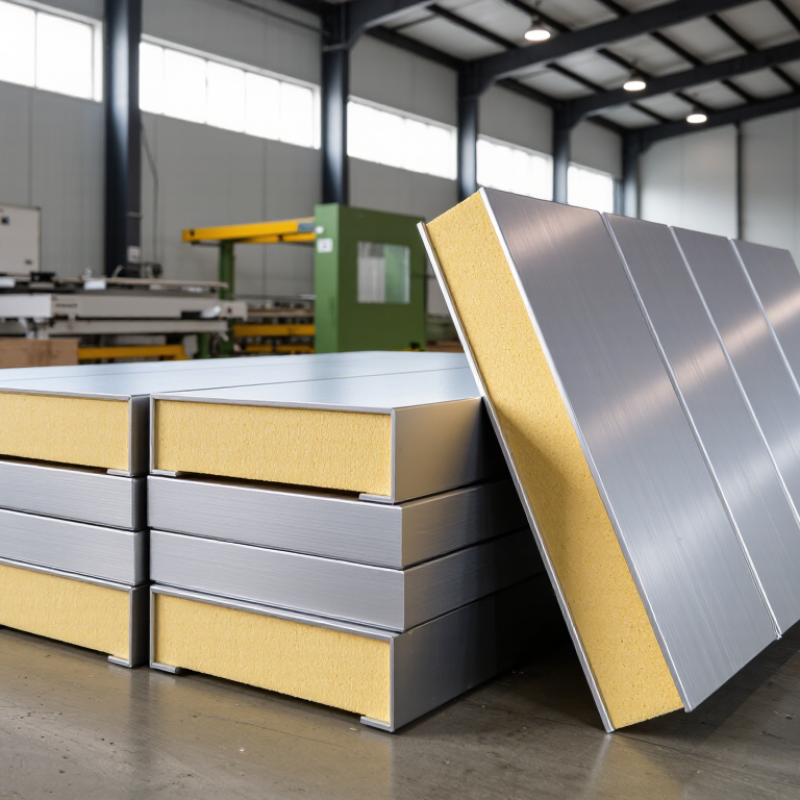
Non-aging foam sandwich panels are insulated building components designed to retain their thermal and structural performance over many years. They usually combine a rigid foam core, such as polyisocyanurate, polyurethane, EPS, or XPS, between protective metal facings. The phrase “non-aging” does not mean immortal. It generally describes low performance loss under controlled exposure to moisture, heat, chemicals, and repeated temperature changes.
Their value is practical. A properly sealed panel can reduce heat transfer through roofs, walls, cold rooms, and industrial enclosures. The International Energy Agency reports that buildings consume about 30% of global final energy and create roughly 26% of energy-related emissions. The 2023 UNEP Global Status Report for Buildings and Construction also found that buildings and construction represented 34% of global energy demand in 2022. Durable insulation can support lower heating and cooling loads, but installation quality matters more than brochures suggest.
Buyers should examine thermal conductivity retention, water absorption, dimensional stability, fire classification, and joint design. Factory-controlled bonding is important, while damaged edges can allow moisture into the core. Testing should follow recognized methods, including ASTM or EN procedures, with declared values supported by independent reports. I have seen panels described as “non-aging” despite weak sealant details. That is a warning. Service life depends on climate, loading, UV exposure, maintenance, and workmanship, so suppliers should provide aging data rather than relying on the label alone.
When comparing top non-aging foam sandwich panel suppliers worldwide, material selection deserves close attention. The core controls insulation, weight, and long-term stability. Polyurethane and polyisocyanurate provide strong thermal resistance in compact sections. XPS offers low water absorption and useful compressive strength. EPS is lighter and often more economical, but its moisture behavior needs careful review.
The facing material protects the core from impact, vapor, and weather. Coated steel suits industrial walls and roofs. Aluminum reduces weight and resists corrosion in many environments. Fiberglass-reinforced plastic can perform well in humid or chemically demanding areas. Reliable suppliers should provide density data, thermal conductivity, water absorption, fire classification, and bonding results. These documents matter more than attractive brochures. I have seen panels fail because edges absorbed water during poor installation. No panel is perfect.
Tips: Check performance at the intended service temperature. Ask for tested aging data, not only projected service life. Inspect joint design, sealant compatibility, and dimensional tolerances. A low U-value may not remain useful if seams leak air. Request samples with visible cut edges. Small details reveal manufacturing quality. Also compare test standards carefully, because different laboratories may report results differently. Suppliers with traceable production records and responsive technical support usually provide safer purchasing decisions. Still, project conditions can expose weaknesses that laboratory testing misses.
Top Non Aging Foam Sandwich Panel Suppliers Worldwide?
Evaluating global foam sandwich panel suppliers requires more than comparing prices. Start with the panel’s core material, density, fire performance, and moisture resistance. Ask for current test reports from independent laboratories. Old certificates may not represent today’s production.
Request physical samples from the same batch proposed for your project. Inspect the surface skin, edge bonding, flatness, and cut quality. Try a simple inspection under bright light. Uneven joints can reveal weak manufacturing control. Confirm thermal conductivity at the temperatures your building will face. “Non-aging” should mean tested long-term stability, not an attractive sales phrase.
Reliable suppliers should explain their factory process clearly. Check batch numbers, quality records, packaging methods, and delivery controls. Verify whether test standards match your local project requirements. A supplier with responsive technical staff is usually safer than one offering only a low quote. Ask about replacement procedures for damaged panels and documented warranty conditions. Read the exclusions carefully.
Cost still matters, but logistics can quietly change the final price. Compare production lead time, port handling, inland transport, and spare-panel recommendations. Video audits are useful, though they cannot replace an independent inspection. I would also test a small order before committing to a large shipment. That step may feel slow. It can expose weak adhesion, inconsistent thickness, or poor communication before the problem reaches the construction site.
Use this evidence-based comparison framework to evaluate global foam sandwich panel suppliers. “Non-aging” should not be interpreted as zero aging: all insulation materials can experience changes in thermal performance over time, so suppliers should provide aged or design-value data, documented test methods, and project-specific compliance evidence.
| Evaluation Dimension | Relevant Product or Technical Data | Credible Benchmark or Technical Fact | Evidence to Request from the Supplier | Suggested Weight | Recommended Assessment |
|---|---|---|---|---|---|
| Foam Core Type | Polyisocyanurate, polyurethane, expanded polystyrene, or extruded polystyrene core. | Typical declared thermal-conductivity ranges vary by formulation, density, facing, and test method: PIR approximately 0.020–0.026 W/m·K; PUR approximately 0.022–0.028 W/m·K; EPS approximately 0.032–0.040 W/m·K; XPS approximately 0.029–0.036 W/m·K. | Technical data sheet identifying the core chemistry, density, blowing-agent information, test temperature, and declared or design thermal conductivity. | 10% | Score 1–5 |
| Long-Term Thermal Stability | Initial thermal conductivity compared with aged or design thermal conductivity. | No foam insulation is completely immune to aging. A reliable comparison uses the applicable product standard’s declared or design value rather than only the initial laboratory value. | Aged-performance report, calculation method, design-value declaration, and the applicable product standard for the selected core material. | 15% | Score 1–5 |
| Thermal Resistance | Panel thickness, U-value, and thermal resistance. | Thermal resistance is calculated from thickness and conductivity, while the complete U-value also includes surface resistances, metal facings, joints, fasteners, and thermal bridges. A single conductivity figure is not sufficient for whole-panel design. | Panel-level U-value calculations for the required thickness, joint detail, temperature conditions, and installation orientation. | 10% | Score 1–5 |
| Fire Performance | Reaction-to-fire classification, flame spread, smoke development, and full-assembly performance. | European projects commonly reference EN 13501-1 classifications; North American projects may reference ASTM E84 or other assembly-specific fire tests. Results depend on the complete panel system, not only the foam core. | Current fire-test reports, classification reports, tested thickness, joint configuration, facings, coating system, and field-of-application limitations. | 15% | Score 1–5 |
| Moisture and Water Resistance | Water absorption, vapor permeability, edge sealing, and joint protection. | Closed-cell foams generally provide lower water uptake than open-cell materials, but cut edges, damaged facings, joints, and penetrations can become moisture paths. | Water-absorption test results, vapor-resistance data, joint drawings, edge-sealing details, and installation instructions for wet or humid environments. | 10% | Score 1–5 |
| Mechanical Strength | Compressive strength, tensile strength, shear strength, flexural capacity, and panel span. | Structural capacity changes with core density, panel thickness, facing thickness, temperature, span, support spacing, and load duration. Supplier span tables must be project-specific. | Independent test reports, load-span tables, deflection limits, safety factors, temperature limits, and connection design assumptions. | 10% | Score 1–5 |
| Dimensional and Manufacturing Quality | Panel thickness, length, width, squareness, flatness, camber, joint fit, and facing alignment. | Factory-made metal-faced sandwich panels are commonly evaluated under product standards such as EN 14509 in relevant European applications. Project tolerances must be confirmed against the selected standard and contract specification. | Factory quality-control plan, inspection records, tolerance schedule, production samples, calibration records, and nonconformance procedure. | 10% | Score 1–5 |
| Metal Facing and Corrosion Protection | Steel or aluminum substrate, coating type, coating mass or thickness, and environmental durability. | Corrosion performance depends on substrate, metallic coating, organic coating, cut-edge treatment, exposure category, condensation, and maintenance. Coating selection should match the project environment. | Substrate specification, coating certificates, coating thickness or mass, corrosion-resistance test results, color-stability data, and recommended exposure limits. | 8% | Score 1–5 |
| Standards and Certification | Product compliance, factory production control, quality management, and laboratory competence. | Useful references may include EN 14509, ASTM C1289, ISO 9001, ISO/IEC 17025, ISO 14025, and EN 15804, where applicable to the product and market. Certification must cover the actual product configuration. | Valid certificates, scope statements, surveillance records, product declarations, and reports issued by competent or accredited laboratories. | 8% | Score 1–5 |
| Environmental and Regulatory Profile | Recycled content, embodied carbon, blowing agents, recyclability, VOC information, and end-of-life options. | Environmental claims should be supported by a product-specific environmental product declaration or a transparent life-cycle assessment. The environmental profile can differ substantially between similar-looking panels. | EPD or LCA documentation, blowing-agent global-warming information, recycled-content declaration, waste guidance, and restricted-substance statement. | 5% | Score 1–5 |
| Supply Capacity and Lead Time | Production capacity, minimum order quantity, standard sizes, custom profiles, and order-to-shipment time. | Lead time is not a universal product property. It should be verified using written production schedules, available lines, raw-material capacity, and the requested panel configuration. | Capacity statement, production schedule, minimum order quantity, monthly output range, sample lead time, and confirmed project delivery plan. | 5% | Score 1–5 |
| International Logistics | Export packaging, container loading, shipping terms, documentation, and damage controls. | Panels can be damaged by compression, moisture, impact, and incorrect stacking during transport. Packaging and loading instructions should be agreed before shipment. | Packaging specification, loading photographs, shipping insurance terms, export documents, Incoterms, pallet dimensions, and unloading instructions. | 4% | Score 1–5 |
| Technical Support and Warranty | Design assistance, installation training, warranty coverage, exclusions, and claim response process. | Warranty duration alone does not demonstrate durability. The written warranty should define acceptable use, environmental limitations, inspection requirements, maintenance, and remedies. | Signed warranty terms, installation manual, project engineering support, training records, reference installations, and documented complaint-handling procedure. | 5% | Score 1–5 |
Scoring method: Assign each dimension a score from 1 to 5, multiply the score by the suggested weight, and compare the weighted totals. Give priority to verified panel-level test data, aged thermal-performance values, fire compliance, moisture protection, and documented quality controls rather than relying only on catalogue claims or initial price.
Worldwide suppliers of non-aging foam sandwich panels generally fall into three categories. Core manufacturers produce foam slabs and control density, cell structure, and moisture resistance. Panel fabricators bond these cores with metal, composite, or coated sheets. Regional distributors provide cut-to-size panels, technical documents, and faster delivery. Each category serves a different project need.
Europe is known for strict thermal and fire-performance testing. North American suppliers often support cold-storage, roofing, and industrial enclosure projects. East Asian producers offer broad production capacity and competitive export logistics. Middle Eastern suppliers focus on heat exposure, warehouse construction, and rapid installation. Southeast Asian distributors can be useful for humid environments, although shipping conditions require careful review. Regional quality can vary.
Tips: Ask for recent test reports, not only catalogue values. Check declared thermal conductivity after aging. Confirm adhesive compatibility before ordering. Request samples with the exact facing material. Inspect panel edges for voids and uneven bonding. I have found that delivery promises sometimes ignore port delays and seasonal demand. That detail deserves more attention. Also compare warranty language carefully, because “non-aging” does not mean damage-proof. Temperature cycling, water intrusion, poor storage, and incorrect installation may still reduce service life. A reliable supplier should explain these limitations clearly and provide installation guidance.
Reliable suppliers should explain what “non-aging” means. It usually refers to stable insulation performance, low moisture absorption, and slow thermal degradation. These panels serve cold rooms, warehouse roofs, cleanrooms, modular buildings, and refrigerated transport. In practice, edge sealing matters as much as the foam core. A small joint gap can admit moisture and reduce performance.
Energy efficiency remains a major buying factor. The UNEP Global Status Report for Buildings and Construction 2023 states that buildings and construction produced about 37% of global energy-related emissions in 2022. Buyers should request tested U-values, aging data, density, compressive strength, and water absorption. EN 14509 evaluates self-supporting insulated metal panels, while ASTM C578 and ASTM C591 address selected rigid foam insulation types. Fire testing should follow the project’s required classification, not a supplier’s vague “fire-resistant” claim.
Application conditions must guide panel selection. A roof panel exposed to sunlight needs durable coatings, proper fasteners, and verified thermal movement. A cold-storage panel needs continuous vapor control and carefully sealed penetrations. Ask suppliers for batch certificates, factory quality records, test laboratory details, and installation instructions. Product datasheets can look impressive. Site performance may still disappoint. One practical weakness is comparing only price per square meter; lifecycle energy, replacement risk, and local technical support often matter more. The IEA’s energy-efficiency analysis repeatedly identifies building envelopes as important for reducing operational energy demand.
Northeast Battery, a Stored Energy Holdings, Inc. Company