
Choosing a reliable Ph Meter supplier requires more than comparing prices on a product page. Global buyers need accurate instruments, stable calibration, responsive technical support, and dependable delivery. A meter used beside a food-processing line faces different demands from one used in a university laboratory.
This guide introduces ten notable Ph Meter suppliers serving international markets. The selection considers product range, measurement accuracy, electrode quality, software features, warranty terms, and after-sales service. It also examines practical details, including buffer solutions, automatic temperature compensation, waterproof ratings, and replacement sensor availability. These factors often determine whether a meter performs consistently after months of daily use.
Real purchasing experience matters. A clear specification sheet is useful, but it cannot reveal every service weakness. Some suppliers offer excellent instruments yet provide limited local support. Others respond quickly but have fewer specialized models. Not every supplier fits every laboratory. Buyers should confirm calibration procedures, export packaging, lead times, and regional compliance before placing an order. Small details matter, especially when a damaged electrode delays testing.
The ranking is intended as a practical starting point, not an absolute judgment. Supplier strengths can change with production updates, distributor networks, and customer service performance. Independent verification remains wise. Each company should be assessed against the buyer’s sample type, testing environment, budget, and required accuracy. This approach helps purchasing teams avoid attractive but unsuitable choices and build a more reliable instrument portfolio.
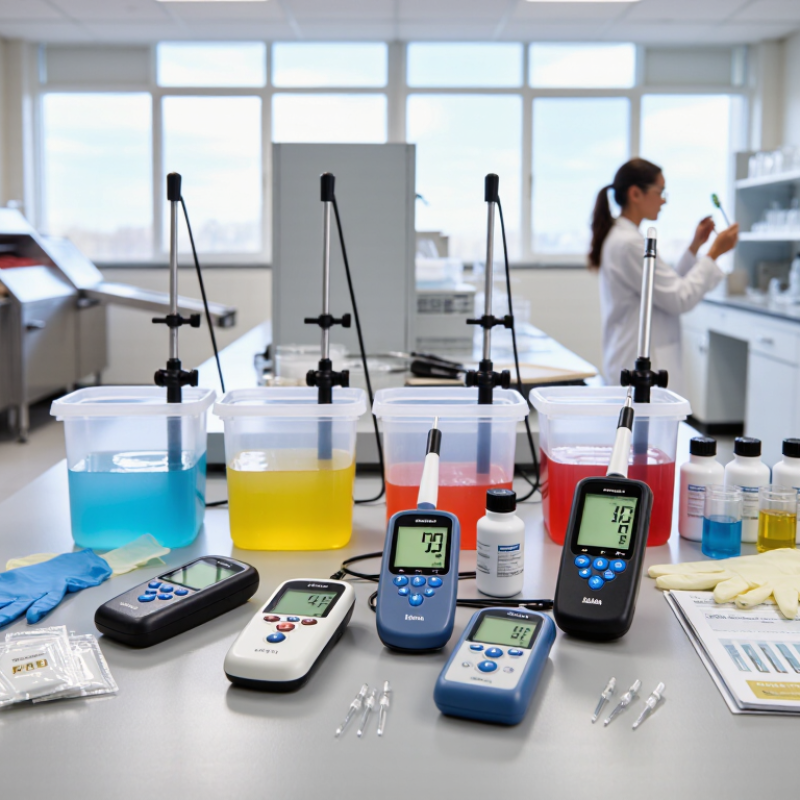
A pH meter measures how acidic or alkaline a liquid is. Its glass electrode responds to hydrogen-ion activity, while the reference electrode provides a stable comparison. The reading usually ranges from 0 to 14, with pH 7 considered neutral at a defined temperature. Temperature matters. A sample may show different values when its temperature changes, even without chemical contamination. Good instruments include automatic temperature compensation, but it cannot correct every measurement error.
Calibration should match the expected sample range. Common buffer points are pH 4, 7, and 10. Fresh buffers, clean electrodes, and gentle rinsing improve repeatability. Never wipe the glass bulb aggressively. Blot it carefully instead. The electrode should remain hydrated in proper storage solution, not dry on a bench overnight. Small habits matter. A stable reading is not automatically a correct reading.
In laboratories, pH meters support water testing, food processing, agriculture, pharmaceuticals, and environmental monitoring. Field users may test irrigation water beside a greenhouse tank, while technicians measure process liquids in stainless-steel vessels. Global buyers should examine calibration guidance, electrode availability, temperature ranges, service response, and technical documentation before choosing a supplier. Certifications can support confidence, but they do not replace method validation. A drifting value may indicate a worn electrode, trapped air, contaminated buffers, or poor sampling. It is tempting to blame the meter first. That assumption often deserves a second look.
pH meters measure acidity or alkalinity on a 0–14 scale. The ranges below represent commonly used target or control ranges; exact requirements may vary by regulation, crop, process, or product.
Typical applications include drinking water treatment, swimming pools, hydroponics, soil testing, aquaculture, food processing, and wastewater monitoring. A suitable pH meter should provide the required measurement range, resolution, temperature compensation, and electrode type for the application.
Global buyers should assess pH meter suppliers beyond catalogue price. Grand View Research valued the global pH meter market at approximately USD 1.1 billion in 2023. Its forecast also indicates steady growth through 2030. This expansion increases supplier choices, but not necessarily supplier quality.
Ask for calibration evidence linked to certified reference buffers. A reliable supplier should support two- or three-point calibration at pH 4.01, 7.00, and 10.01. Check whether certificates show traceability, lot numbers, expiry dates, and uncertainty data. ISO/IEC 17025 provides a useful benchmark for laboratory competence. It does not automatically validate every supplier claim. Read the documents carefully.
Field testing reveals practical differences. A stable meter should settle quickly after rinsing and temperature equilibration. Confirm automatic temperature compensation, electrode replacement costs, waterproof ratings, and data-export options. For drinking-water applications, the U.S. Environmental Protection Agency identifies pH 6.5–8.5 as a secondary standard range. Suppliers should explain how their instruments perform around this range, not only under ideal laboratory conditions. Request service response times, spare-electrode availability, training materials, and warranty exclusions. Cheap equipment can become expensive after six months. That part is often overlooked.
This supplier guide profiles ten established pH meter suppliers serving laboratories, factories, water plants, and food processors. Grand View Research and MarketsandMarkets report annual market growth near 5% to 7%, driven by stricter testing and portable monitoring. Demand is practical. Buyers need stable readings beside tanks, sinks, and outdoor sampling points.
The profiles compare laboratory, portable, benchtop, inline, and multiparameter suppliers. Each supplier is assessed through electrode quality, calibration support, temperature compensation, ingress protection, and replacement-part access. ISO/IEC 17025 calibration services can strengthen traceability, especially for pharmaceutical and environmental testing. Look for instruments supporting two-point or three-point calibration. Small details matter. A clear display helps during wet-handed sampling. A replaceable electrode can reduce long-term downtime.
The guide also examines regional service coverage, warranty terms, software compatibility, and training resources. Industry reports often emphasize accuracy and automation, but field experience reveals another issue: consumables may cost more than expected. A low purchase price can mislead. Users should request calibration certificates, response-time data, and electrode storage guidance before ordering. No ranking is flawless, because supplier performance changes by country, application, and distributor. That limitation deserves attention.
For global buyers comparing ten pH meter suppliers, accuracy should lead the review. Many professional meters claim ±0.01 pH accuracy, but real performance depends on calibration, temperature, and electrode condition. ISO 10523:2008 recommends controlling temperature because pH readings can shift during testing. NIST reference materials also support traceable calibration, which is essential for laboratories and regulated water testing. Look for automatic temperature compensation, two- or three-point calibration, and a stated measurement uncertainty. A bright display helps in fieldwork. It does not replace good calibration.
Certifications reveal more than marketing language. Suppliers with ISO/IEC 17025-linked calibration services can provide stronger evidence of measurement competence. For drinking-water applications, buyers should compare documentation against relevant methods, including ASTM D1293 and US EPA Method 150.1. Check electrode response time, waterproof ratings, data export, and replacement availability. These details affect total ownership cost. A low purchase price may become expensive after repeated electrode replacement. No ranking is perfect. Product specifications can also be tested under ideal conditions.
Tips: Request a recent calibration certificate, not a generic compliance logo. Ask whether accuracy applies across the full pH range. Confirm buffer traceability and storage requirements. Test one sample repeatedly before approving a large purchase. Industry reports often present clean performance figures, yet daily use is less controlled. Humidity, dirty samples, and poor rinsing can create larger errors than the meter itself. Suppliers should explain these limitations clearly, with records that buyers can audit.
| Rank | Supplier Profile | Product Category | pH Range | pH Accuracy | Resolution | Calibration Options | Temperature Compensation | Ingress Protection | Typical Certifications or Documentation | Recommended Buyer Application |
|---|---|---|---|---|---|---|---|---|---|---|
| 1 | Supplier Profile 01 | Laboratory benchtop meter | 0.00–14.00 pH | ±0.01 pH | 0.01 pH | 1–5 point calibration; automatic buffer recognition | Automatic and manual | IP54 housing | CE, RoHS, user manual, calibration documentation | Research laboratories, education, quality-control testing |
| 2 | Supplier Profile 02 | Portable professional meter | 0.00–14.00 pH | ±0.02 pH | 0.01 pH | Up to 3 point calibration | Automatic temperature compensation | IP67 | CE, RoHS, EMC test documentation | Field sampling, water treatment, environmental monitoring |
| 3 | Supplier Profile 03 | Industrial process meter | 0.00–14.00 pH | ±0.02 pH | 0.01 pH | 2 point calibration; configurable alarm limits | Automatic with external temperature probe | IP65 panel or transmitter enclosure | CE, RoHS, EMC compliance, wiring documentation | Process control, chemical handling, wastewater systems |
| 4 | Supplier Profile 04 | Waterproof handheld meter | 0.00–14.00 pH | ±0.05 pH | 0.01 pH | 2 point calibration | Automatic temperature compensation | IP67 or IP68 | CE, RoHS, waterproof test information | Aquaculture, swimming pools, hydroponics, outdoor testing |
| 5 | Supplier Profile 05 | Compact pocket meter | 0.00–14.00 pH | ±0.10 pH | 0.01 pH | 2 point calibration; replaceable electrode options | Automatic temperature compensation on selected models | IP67 | CE, RoHS, battery and operating documentation | Routine screening, food preparation, small laboratories |
| 6 | Supplier Profile 06 | Food and beverage meter | 0.00–14.00 pH | ±0.02 pH | 0.01 pH | 1–3 point calibration; application-specific probes | Automatic temperature compensation | IP65–IP67 | CE, RoHS, food-contact material information where applicable | Dairy, brewing, sauces, fermentation and food quality control |
| 7 | Supplier Profile 07 | Multiparameter water tester | 0.00–14.00 pH | ±0.05 pH | 0.01 pH | 2 point calibration; conductivity and temperature channels | Automatic temperature compensation | IP67 | CE, RoHS, EMC documentation, sensor specifications | Drinking water, aquaculture, environmental and utility testing |
| 8 | Supplier Profile 08 | High-accuracy research meter | −2.00–20.00 pH | ±0.005 pH | 0.001 pH | Up to 5 point calibration; buffer history and slope display | Automatic and manual | IP54 | CE, RoHS, traceable calibration certificate options | Pharmaceutical, chemical, academic and analytical laboratories |
| 9 | Supplier Profile 09 | OEM and private-label meter | 0.00–14.00 pH | ±0.02–0.05 pH | 0.01 pH | 2 or 3 point calibration; customizable firmware options | Automatic temperature compensation on selected configurations | IP65–IP67 | CE, RoHS, EMC files and factory inspection records | Distributors, e-commerce programs and private-label projects |
| 10 | Supplier Profile 10 | Basic institutional meter | 0.00–14.00 pH | ±0.05 pH | 0.01 pH | 2 point calibration | Manual or automatic, depending on configuration | IP54–IP65 | CE, RoHS, operating instructions and warranty documentation | Schools, general laboratories and entry-level testing |
Note: The supplier names are intentionally anonymized. Specifications represent commonly offered configurations in the global pH-meter market; buyers should verify the exact model, calibration certificate, electrode type, warranty terms, and applicable regulatory documents before purchase.
Global buyers need more than a low unit price.
Water testing remains a major operational need. The WHO/UNICEF Joint Monitoring Programme reported that 2.2 billion people lacked safely managed drinking water in 2022. This demand increases pressure on laboratories, treatment facilities, and field technicians. Supplier selection should therefore include measurement stability, electrode lifespan, calibration support, and delivery reliability.
ISO 10523 defines requirements for measuring pH in water. Ask suppliers whether their instruments support traceable calibration and documented procedures. Calibration matters most. Request recent accuracy data, buffer certificates, temperature compensation details, and test records from production.
A supplier offering only a glossy specification sheet may create problems later. Check whether replacement electrodes, storage solutions, and cables remain available after purchase. These small parts often decide whether a meter works next month.
Support deserves equal attention. Confirm response times, training options, warranty terms, and local service coverage before signing a purchase order. Remote troubleshooting is useful, but it cannot replace practical repair capacity.
Compare packaging, customs documents, voltage compatibility, and delivery terms. A cheaper meter may become expensive after delayed shipments and repeated recalibration.
I would also test a sample under real conditions, using a wet electrode, a dirty beaker, and changing temperatures. Laboratory performance can look perfect. Field work is less polite.
Northeast Battery, a Stored Energy Holdings, Inc. Company