| Density | About 4.51 g/cm³ for titanium | Aluminum is about 2.70 g/cm³; carbon steel is about 7.85 g/cm³. | Titanium is lighter than steel but not as light as aluminum. Its value often comes from combining relatively low weight with high strength and corrosion resistance, rather than from low material mass alone. |
| Melting point | About 1,668°C for titanium | Aluminum melts at about 660°C; iron melts at about 1,538°C. | Producing and melting titanium requires high-temperature processes and carefully controlled equipment. High melting temperature is one part of a demanding production chain, not the only reason for high sheet prices. |
| Thermal conductivity | Commercially pure titanium is roughly 22 W/(m·K) near room temperature. | Aluminum is roughly 200 W/(m·K), while many steels are around 40–60 W/(m·K). | Heat does not flow away from cutting and forming zones as readily as it does in aluminum. Machining can concentrate heat at the tool edge, making cutting conditions and tool life more challenging. |
| Elastic modulus | Commonly about 105–120 GPa, depending on grade and condition | Aluminum is about 69 GPa; steel is about 200 GPa. | Titanium is less stiff than steel, so thin sheet can spring back after forming. Process planning may need to account for springback and dimensional control. |
| Strength and strength-to-weight ratio | Strength varies substantially by grade, thickness, and heat treatment. Many titanium alloys offer high strength at relatively low density. | Commercially pure grades are generally less strong than many structural titanium alloys; steel and aluminum strength also vary widely by grade. | High-strength grades can require greater forming force and more carefully selected tooling. Comparisons should use the specific grade and temper, not a single value for “titanium.” |
| Reactivity at elevated temperatures | Titanium can react with oxygen, nitrogen, and other elements when hot. | Surface reactions and contamination risks differ by metal and process temperature. | High-temperature processing may require controlled atmospheres and careful protection of the surface. Contamination can impair surface quality or material performance and may require extra inspection or finishing. |
| Primary production route | Titanium metal is commonly produced from titanium sponge using the magnesium-based Kroll process, followed by melting and further processing. | It is not typically produced by simply melting an abundant metal ore in a basic furnace. | The extraction route is energy-intensive and involves multiple process stages. Sponge conversion, melting, and conversion into sheet add time, equipment, and quality-control costs. |
| Melting and ingot quality | Some grades and applications use vacuum or other controlled melting processes; remelting requirements depend on the product specification. | Not every titanium sheet follows an identical melting sequence. | Strict chemistry and defect limits can require specialized melting, testing, and traceability. Additional remelting or inspection increases cost when required by the specification. |
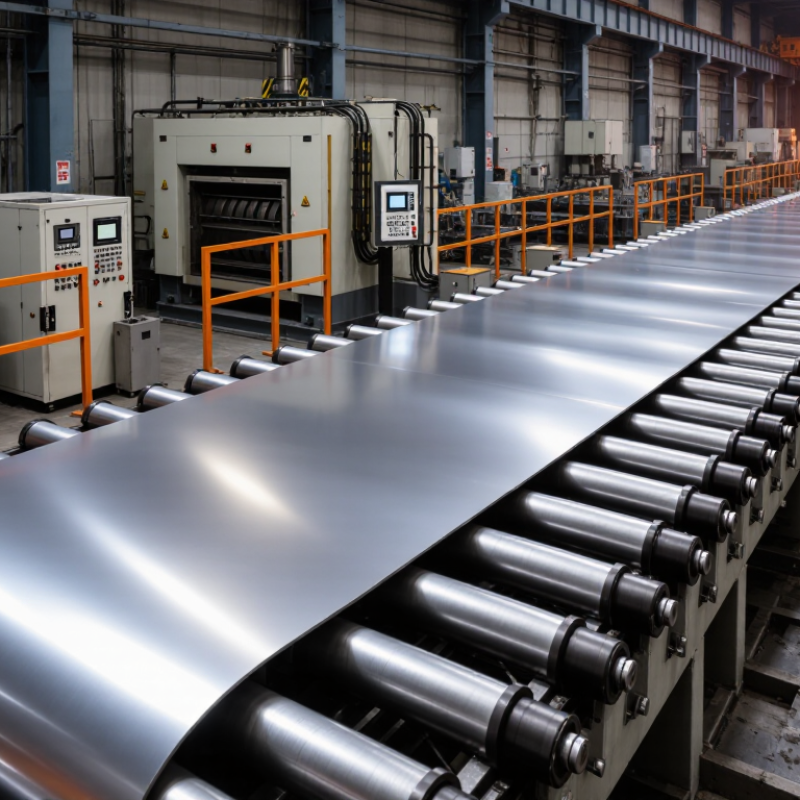
| Rolling and heat treatment | Sheet production may involve repeated hot or cold rolling, annealing, and surface finishing. | The exact sequence depends on grade, thickness, and required mechanical properties. | Controlled processing is needed to achieve the specified thickness, flatness, surface condition, and properties. More demanding tolerances or finishes can require additional production steps. |
| Machining behavior | Low thermal conductivity and high strength can make machining more demanding than machining many common metals. | Compared with readily machined materials, cutting heat and tool wear can be more difficult to manage. | Appropriate cutting speeds, feeds, tooling, and cooling strategies help protect tool life and part quality. These requirements can increase machining time and operating costs. |
| Corrosion resistance | Titanium forms a stable, protective oxide film in many environments. | Performance depends on the grade, environment, temperature, and exposure to specific chemicals. | Corrosion resistance can reduce maintenance or extend service life in suitable applications. It is a valuable performance benefit, although it does not remove the cost of producing the sheet. |