Choosing the right battery deep cycle technology in 2026 requires more than comparing prices or advertised capacity. Global buyers face different climates, transport conditions, charging systems, and service expectations. A battery working well in a cool European warehouse may perform poorly in a hot coastal installation. This guide introduces the leading options, including lithium iron phosphate, AGM, gel, and flooded lead-acid batteries.
Dr. Jeff Dahn, a respected lithium-ion battery researcher, often reminds audiences, “The lithium-ion battery is a very complex device.” That statement matters for every buyer. Chemistry affects cycle life, charging speed, safety, weight, and usable energy. LiFePO4 batteries usually provide high cycle performance and lower maintenance. AGM and gel batteries remain practical for backup systems, boats, and moderate energy demands. Flooded batteries can still offer value, but ventilation and routine maintenance cannot be ignored.
No ranking is perfect. Real performance depends on temperature, discharge depth, charger quality, and installation habits. A product label may promise 5,000 cycles, yet poor charging can reduce that figure sharply. Buyers should examine independent test data, warranty terms, certifications, replacement support, and the supplier’s technical history. Small details matter. Cable size matters. Storage temperature matters. Even a dusty battery compartment can create problems.
This 2026 overview helps distributors, installers, and end users compare battery deep cycle types with greater confidence. It also highlights uncomfortable questions, such as whether the cheapest purchase remains economical after five years. Reliable decisions require evidence, practical inspection, and realistic expectations.
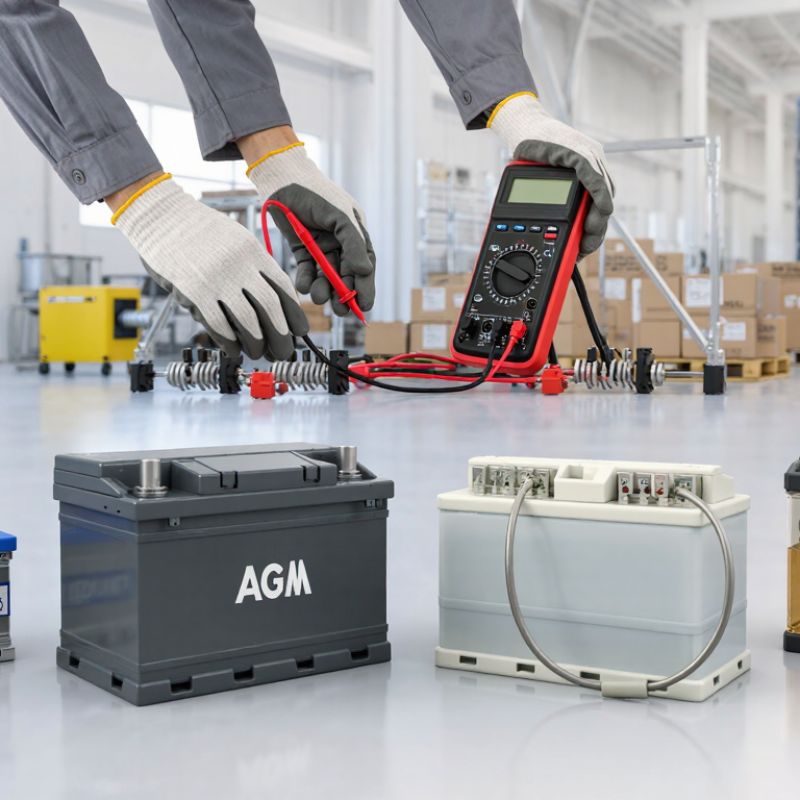
Deep cycle batteries are designed to deliver steady energy over repeated discharge and recharge cycles. Unlike starter batteries, they tolerate deeper discharge without immediate damage. However, no battery is perfect. Capacity, temperature, charging habits, and installation quality all affect real performance.
Key metrics include amp-hours, cycle life, depth of discharge, energy efficiency, and self-discharge rate. Amp-hours show stored capacity, but they do not guarantee usable energy. A battery rated at 100 Ah may provide less under heavy loads or cold conditions. Cycle life depends strongly on discharge depth. Frequent deep discharges usually shorten service life. For global buyers, compare test conditions carefully. A cycle-life figure without temperature, discharge rate, or end-of-life limits can be misleading. I have found that published laboratory results often feel more optimistic than field experience.
Tips: Match the battery voltage with the system. Leave safety capacity for cloudy days, seasonal demand, and aging. Check charging compatibility before purchase. Keep terminals clean and connections tight. Measure actual performance after installation. Small voltage drops can reveal poor wiring. Also, review local recycling and transport requirements, because battery rules differ between markets. Never choose only by the lowest price. A cheaper battery may require earlier replacement, creating higher ownership costs. Personally, I would question any specification that looks unusually impressive but lacks clear testing details.
Deep cycle battery fundamentals and key performance metrics: typical cycle life at 80% depth of discharge and round-trip energy efficiency.
Lithium iron phosphate batteries generally provide the longest service life and highest round-trip efficiency. Lead-acid technologies can offer lower initial cost, but their usable energy and cycle life are typically lower. Values shown are representative industry ranges, expressed as midpoint estimates, and vary with temperature, charging profile, maintenance, discharge rate, and system design.
2026 Best Deep Cycle Battery Types for Global Buyers
Lead-acid remains practical for fixed solar systems, backup power, and low-cost equipment. It is heavy, but widely serviceable. AGM batteries use sealed construction and absorb electrolyte, reducing spill risk during normal handling. Gel batteries resist vibration and deep discharge better than many flooded designs. However, incorrect charging can permanently reduce their capacity. The U.S. Department of Energy reports that lead-based batteries still support major stationary storage applications because of their mature recycling systems. Cost remains their strongest advantage. Weight matters.
Lithium batteries offer higher usable capacity and lower weight. Many systems can use 80–90% of rated capacity, while lead-acid systems often perform better near 50% depth of discharge. Actual results depend on temperature, charging limits, and battery management. BloombergNEF reported an average lithium-ion pack price of 115 US dollars per kWh in 2024, a 20% annual decline. This does not equal the final price of a complete deep-cycle system. Installation, protection electronics, and transport still matter. The International Energy Agency also recorded battery demand above 750 GWh in 2023, showing strong manufacturing scale, though stationary buyers should not copy vehicle specifications blindly.
Tips: Check daily energy use, peak current, local temperatures, and replacement access. Avoid choosing by capacity alone. A lithium battery may be efficient, but its control system can fail. Lead-acid may be cheaper, yet frequent deep cycling can expose its real cost. Compare total ownership over five years, then verify the charging profile with a qualified technician. Temperature changes everything.
2026 Best Deep Cycle Battery Types for Global Buyers
Matching battery chemistry to the application prevents costly sizing mistakes. Flooded lead-acid batteries suit fixed installations with ventilation and regular maintenance. AGM batteries handle vibration better and require less routine care. They can support boats, backup systems, and remote equipment. Lithium iron phosphate batteries deliver higher usable capacity and faster charging. They fit solar storage, electric mobility, and compact off-grid systems. However, they need a compatible battery management system and carefully selected chargers.
Tips: Check daily energy use, peak current, temperature, and available space. In hot regions, heat control matters. In cold regions, charging limits matter. Ask for cycle-life data under your actual discharge depth, not only laboratory ratings. Confirm transport documents, warranty terms, and local service access before purchasing.
Field assessments often reveal an overlooked issue: buyers compare capacity but ignore recovery time. A battery may show sufficient amp-hours yet struggle with repeated evening loads. This is especially common in irrigation pumps and telecom shelters. Lead-acid chemistry remains practical where budgets are tight and technicians are nearby. Lithium chemistry may reduce maintenance, but its higher initial cost can challenge smaller projects. My view is not absolute; application data should decide. Record load patterns for several days, then size the battery with a safety margin and qualified electrical review.
Practical comparison based on typical commercial specifications. Actual performance depends on cell design, operating conditions, charging settings, and battery management.
| Battery chemistry / type | Typical nominal voltage | Practical depth of discharge | Typical cycle-life range* | Approx. energy density | Charging temperature guidance | Main strengths | Key limitations | Best-fit applications |
|---|---|---|---|---|---|---|---|---|
| Flooded lead-acid deep cycle | 2 V cells; 6 V or 12 V batteries are common | 50% recommended for regular service; occasional discharge may be deeper | 500–1,000 cycles at approximately 50% DoD | Approximately 30–50 Wh/kg | Charge above 0°C where possible; avoid overheating and provide ventilation | Low initial cost; widely available; simple recycling infrastructure | Heavy; requires ventilation and maintenance; slower charging; lower usable capacity | Budget solar systems, recreational vehicles, marine service, backup power with infrequent cycling |
| AGM lead-acid (VRLA) | 6 V or 12 V modules; 2 V cells for large systems | 50% recommended for routine cycling | 400–800 cycles at approximately 50% DoD; premium designs can be higher | Approximately 30–50 Wh/kg | Charge above 0°C; use the manufacturer’s voltage limits to reduce gassing and heat | Sealed construction; low maintenance; good short-duration power delivery | Sensitive to repeated deep discharge; heavier than lithium; limited charge acceptance | UPS systems, security equipment, telecommunications, mobility devices, moderate-use off-grid storage |
| Gel lead-acid (VRLA) | 6 V or 12 V modules; 2 V cells for large systems | 50% recommended for long service life | 600–1,000 cycles at approximately 50% DoD | Approximately 30–50 Wh/kg | Charge above 0°C; lower charging current and accurate voltage control are important | Spill-resistant; good vibration tolerance; suitable for slower, steady discharge | Cannot tolerate excessive charging voltage; slower charging; heavy | Remote telecom sites, mobility equipment, small solar systems, marine and recreational loads |
| Lithium iron phosphate (LiFePO₄ / LFP) | 12.8 V, 25.6 V, 51.2 V modules; higher-voltage packs are also used | 80–90% commonly used; follow the battery management system limits | 2,000–6,000 cycles at approximately 80% DoD | Approximately 90–160 Wh/kg | Charging below 0°C can cause lithium plating; use low-temperature protection or heating | Long service life; high usable capacity; efficient; comparatively stable thermal behavior; low maintenance | Higher upfront cost; requires a suitable BMS and compatible charger; reduced cold-weather charging capability | Daily solar storage, residential energy storage, electric boats, RVs, industrial backup and low-speed vehicles |
| Nickel manganese cobalt oxide (NMC) | 3.6–3.7 V per cell; commonly assembled into 12 V, 24 V, 48 V or higher packs | 70–90%, depending on pack controls and required life | 1,000–2,500 cycles at approximately 80% DoD | Approximately 150–250 Wh/kg | Charge within the cell manufacturer’s specified range; cold charging protection is required | High energy density; compact and lightweight; strong power capability | More demanding thermal and safety management; cycle life is generally lower than LFP in stationary use | Portable power, electric mobility, weight-sensitive equipment and applications requiring high energy per kilogram |
| Sodium-ion | Approximately 3.0–3.3 V per cell; system voltages vary by pack design | Approximately 80–90%, subject to product specifications | Approximately 2,000–4,000 cycles for current commercial designs | Approximately 90–160 Wh/kg; generally below NMC and comparable with some LFP products | Often more tolerant of low temperatures than many lithium-ion products, but the specified charging range still applies | Uses abundant sodium-based materials; good low-temperature potential; reduced dependence on lithium and nickel | Less mature supply chain; lower energy density; product availability and standards vary by market | Cost-sensitive stationary storage, low-speed mobility, backup systems and cold-climate applications where products are locally supported |
| Lithium titanate (LTO) | Approximately 2.3–2.4 V per cell; high-voltage packs require more cells | 80–100% is possible in appropriately managed systems | 8,000–20,000+ cycles in suitable operating conditions | Approximately 50–90 Wh/kg | Generally strong low-temperature performance; the specified charging limits must still be followed | Very long cycle life; rapid charging capability; high power output; strong safety margin | High cost; low energy density; larger and heavier for the same stored energy | High-cycling buses, industrial equipment, fast-charge systems, grid power smoothing and demanding backup applications |
For global buyers, deep-cycle selection starts with the load, not the chemistry. Record daily watt-hours, peak watts, and required backup hours. A cabin using 3,000 Wh nightly needs more than a 3 kWh nameplate. Inverter losses, cold weather, ageing, and reserve margins reduce usable energy. The U.S. Department of Energy’s Energy Storage Grand Challenge Roadmap identifies duration, efficiency, safety, and lifetime as core storage design metrics. These are sizing inputs, not brochure claims.
Use this practical equation: required nominal capacity equals daily load multiplied by backup days, divided by usable depth of discharge and system efficiency. For example, 3,000 Wh, two days, 80% usable discharge, and 90% efficiency require about 8.33 kWh.
Add solar-recharge limits and motor-starting surges. Lead-acid batteries often need a shallower operating window, while lithium iron phosphate usually supports deeper cycling. Actual limits depend on cell design, battery management, temperature, and warranty. IEC 60896 and IEC 62619 offer useful safety references, but they do not replace local installation rules.
Country conditions can change the answer. At 0°C, charging behavior becomes critical for many lithium systems. Hot rooms accelerate ageing. NREL’s 2023 cost-projection report models storage by duration, showing why a four-hour system may not suit an eight-hour load. The IEA’s Batteries and Secure Energy Transitions report projects strong battery demand growth toward 2030. Fast growth can encourage rushed sizing. A spreadsheet may look precise. It can still miss seasonal clouds, cable voltage drop, or generator failure. Request cycle-life data at the intended temperature, discharge rate, and depth, not only headline capacity.
Choosing the best deep cycle battery in 2026 requires more than comparing capacity and price. International buyers should check standards that match the battery’s application. IEC 61427 is relevant to renewable energy storage, while IEC 60896 covers many stationary lead-acid systems. Lithium batteries may require transport testing under UN 38.3. Local electrical, fire, and recycling rules still apply.
Safety begins with correct system design. A lithium battery should include a tested battery management system, overcharge protection, temperature monitoring, and clear installation instructions. Lead-acid units need ventilation, secure terminals, and protection against acid leaks. Check the safety data sheet, emergency procedures, and enclosure rating. Small details matter. A loose cable can create dangerous heat.
Purchasing teams should request test reports, production traceability, warranty conditions, and cycle-life data at a stated depth of discharge. Ask whether performance was measured at 25°C, because cold storage conditions can change the results. Confirm the battery’s usable energy, charging limits, weight, dimensions, and communication protocol. A certificate alone is not proof of reliable performance. In practical procurement reviews, inconsistent documents often reveal weak quality control. I may sound cautious, but advertised cycle life can be difficult to compare fairly. Samples, factory audits, and independent testing provide stronger evidence. Consider service access, replacement timing, import paperwork, and end-of-life handling before placing a large order.
Northeast Battery, a Stored Energy Holdings, Inc. Company