Choosing a marine battery is not just a matter of picking the largest capacity or newest chemistry. Your boat’s engine, electronics, charging equipment, and time away from shore all affect what will work well. As marine electrical author Nigel Calder puts it, “A battery is only as good as its charging system.” That reminder matters: even a premium battery can disappoint when its charger or alternator is poorly matched.
This guide compares seven marine battery options for 2026, including lead-acid, AGM, and lithium models. We look at practical details such as usable capacity, cold-cranking performance, reserve capacity, weight, maintenance, and charging compatibility. A trolling motor running for hours has different needs from an engine starter or a small electronics bank. Measure your available space, check your boat’s charging specifications, and consider how often you can recharge. Small details count.
There is no perfect choice for every boat. Some owners may value a lower upfront cost; others may prefer lighter weight and more usable energy. Trade-offs remain. The recommendations are starting points, not a substitute for checking your equipment manual or consulting a qualified marine technician. The right marine battery should fit your real usage, not just a product label. That part is easy to overlook.
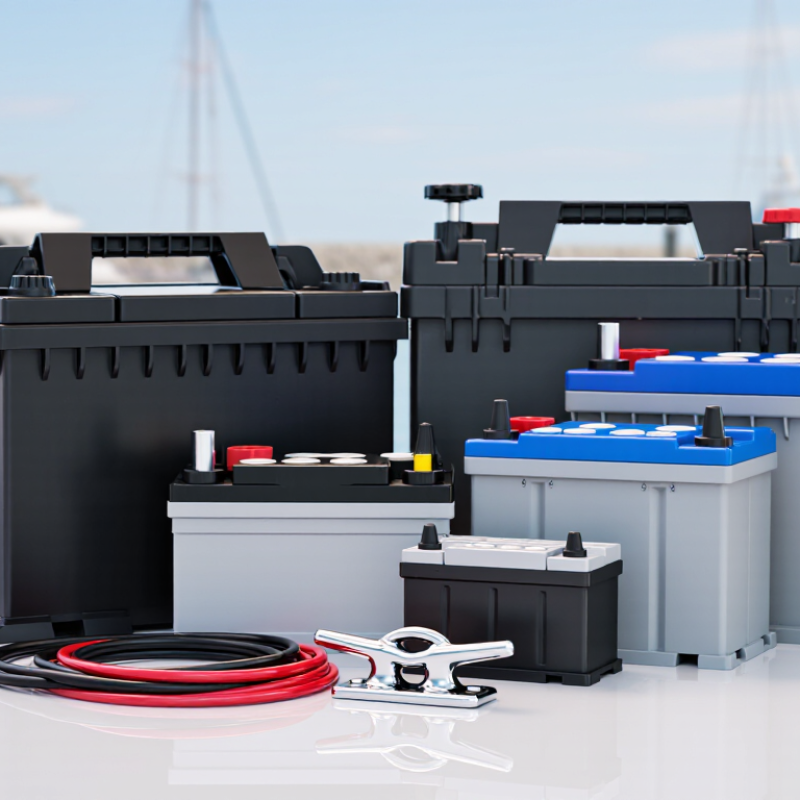
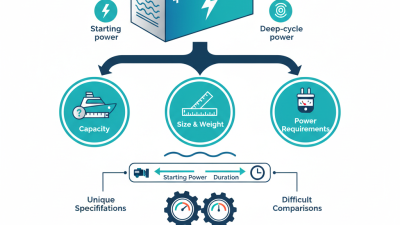
Marine batteries do different jobs, even when they look alike on the shelf. A starting battery delivers a brief burst of current to turn the engine over. It is built for cranking, not repeated deep discharge. Use it to run cabin lights all evening, and its service life may suffer. Check the engine’s required cranking amps before choosing one.
A deep-cycle battery supplies steadier power for trolling motors, fish finders, pumps, and lights. It is designed to handle regular discharge and recharge cycles. Capacity, often listed in amp-hours, helps estimate how long those loads can run. Add up their power use, then leave a margin; real conditions rarely match neat estimates. The labels can be confusing.
A dual-purpose battery combines starting ability with some deep-cycle capacity, but it may be a compromise when either job is demanding. Battery chemistry matters, too. Flooded lead-acid batteries need ventilation and periodic water checks. AGM batteries are sealed and generally resist vibration well, while lithium batteries are lighter and can provide usable capacity efficiently. They also require compatible charging equipment and careful setup. On a boat, match the battery to the load, available space, charging system, and expected time away from shore power. One overlooked detail: a battery can fit its tray and still be wrong for the charger.
Choosing a marine battery starts with its job. A starting battery delivers a brief burst to crank the engine, while a deep-cycle battery supplies steadier power to electronics, lights, or a trolling motor. A dual-purpose model may handle both, but it can be a compromise. Check your boat’s manual and estimate how many hours each device will run. A chartplotter left on during a long afternoon can use more capacity than expected.
Compare capacity, not just the battery’s size or price. Amp-hours indicate stored energy, while reserve capacity describes how long a battery can support a set load. Starting batteries also list cranking ratings; check the engine maker’s recommendation and the conditions where you boat. Cold mornings can make engine starts harder. Small details matter.
Chemistry affects weight, charging, maintenance, and cost. Lead-acid batteries are widely used but need suitable ventilation and may require periodic care. Lithium batteries are lighter and can provide useful capacity, but confirm that the charger and onboard system support the battery’s specifications. Measure the compartment, check terminal placement, and secure the battery against movement and spray. It is easy to focus on headline capacity and miss these practical limits. A little uncertainty remains: real-world runtime changes with temperature, age, and electrical load, so leave a sensible margin rather than planning around perfect conditions.
These seven options represent common marine battery types for different onboard jobs, rather than specific products. Capacity, weight, service life, and charging requirements vary by model; check the battery label and your vessel’s equipment manual before choosing.
| Option | Battery Type | Typical Voltage & Capacity | Typical Weight | Typical Service-Life Range | Best Suited For | Key Considerations |
|---|---|---|---|---|---|---|
| 1. Flooded Starting Battery | Flooded lead-acid; designed for short, high-current engine starts | 12 V; commonly about 50–100 Ah | About 12–28 kg (26–62 lb) | Often around 2–5 years, depending on care and conditions | Starting an outboard or inboard engine when house loads are supplied separately | Usually the lowest-cost option. Needs ventilation and, on serviceable models, electrolyte-level checks. Not intended for repeated deep discharging. |
| 2. AGM Starting Battery | Absorbent glass mat (AGM) lead-acid; sealed and vibration-resistant | 12 V; commonly about 50–100 Ah | About 15–32 kg (33–71 lb) | Often around 3–6 years, depending on use and charging | Engine starting where reduced maintenance and better vibration tolerance are priorities | Costs more than many flooded batteries and still should not be routinely deeply discharged. Use a charger with an AGM-compatible profile. |
| 3. AGM Dual-Purpose Battery | AGM lead-acid; combines starting capability with moderate cycling ability | 12 V; commonly about 70–120 Ah | About 20–38 kg (44–84 lb) | Often around 3–6 years; frequent deep cycling can shorten life | Smaller boats needing one battery for engine starting and occasional accessories | A practical space-saving compromise, but typically less effective than separate starting and deep-cycle banks for heavy or sustained loads. |
| 4. Flooded Deep-Cycle Battery | Flooded lead-acid; built for repeated discharge and recharge | Usually 12 V; commonly about 75–225 Ah | About 20–60 kg (44–132 lb) | Often around 3–6 years with appropriate charging and discharge limits | House loads, lighting, pumps, and trolling-motor use where weight and ventilation are manageable | Requires secure installation, ventilation, and regular checks on serviceable models. Avoid leaving it discharged for extended periods. |
| 5. AGM Deep-Cycle Battery | AGM lead-acid; sealed construction with cycling capability | Usually 12 V; commonly about 75–200 Ah | About 23–55 kg (51–121 lb) | Often around 3–7 years, influenced by depth of discharge and charging | Deep-cycle house service when a sealed, low-maintenance battery is preferred | Generally heavier and lower in usable capacity per kilogram than lithium. Confirm the charger supports the battery’s specified AGM voltage limits. |
| 6. 12 V LiFePO₄ Deep-Cycle Battery | Lithium iron phosphate (LiFePO₄), typically with a built-in battery management system | 12.8 V nominal; commonly about 50–200 Ah | About 7–25 kg (15–55 lb) | Often rated for roughly 2,000–5,000 cycles under specified test conditions | House loads and electric trolling motors where lower weight and frequent cycling are valuable | Higher upfront cost. Check charging compatibility, alternator protection, BMS limits, and cold-temperature charging protection; cycle ratings depend on test conditions. |
| 7. 24 V LiFePO₄ Trolling-Motor Battery | LiFePO₄ battery configured for a 24 V trolling-motor system | 25.6 V nominal; commonly about 50–100 Ah | About 14–32 kg (31–71 lb) | Often rated for roughly 2,000–5,000 cycles under specified test conditions | 24 V trolling motors on boats that benefit from a lighter, deep-cycle power source | Confirm that the motor supports the battery’s voltage and that the battery can supply its continuous and peak current. Use a compatible charger and follow the manufacturer’s series-connection guidance. |
Comparing seven marine battery options means looking beyond price and advertised capacity. A flooded starting battery delivers strong cranking power, while a flooded deep-cycle model suits steady loads such as lights and fish finders. A flooded dual-purpose battery saves space, but may compromise on both jobs. AGM starting batteries resist vibration and need little maintenance. AGM deep-cycle batteries handle repeated use, though they remain heavy. Gel batteries offer sealed construction but require a compatible charging profile. Lithium iron phosphate batteries are lighter and provide more usable capacity, yet cost more and need suitable charging equipment.
The differences matter on the water. Check cranking amps for engine starts, reserve capacity for running electronics, and the manufacturer’s charging limits. A larger capacity number alone does not guarantee a better match. Some boats need separate starting and house batteries; others have room for one dual-purpose unit. I would not rank one chemistry as best for every boat. Even a well-reviewed battery can disappoint if its dimensions, terminals, or charger do not fit.
Tips: Measure the battery compartment before buying. Match the battery to your engine and daily load. In cold weather, verify lithium charging limits; not every battery can be charged below freezing. Keep the manual handy. That small step can prevent avoidable wear.
Choosing a marine battery starts with the job, not the chemistry. A starter battery delivers a brief burst to turn the engine over; it is not designed to run a fish finder all day. House loads, such as cabin lights and radios, need steady energy. Trolling motors need repeated deep discharge, so check the battery’s usable capacity and cycle-life rating. Small details count.
For a practical estimate, add the amp-hours each device uses, then include a reserve for cloudy weather, longer trips, and aging. NREL’s 2024 Annual Technology Baseline models utility-scale lithium-ion storage at about 85% round-trip efficiency. That figure is not a rating for boat batteries, but it shows why planning around every rated amp-hour can disappoint. With lead-acid batteries, avoid routinely using the full stated capacity; usable energy falls when discharge is deep.
Match the battery to the boat’s charging system, too. Confirm that the alternator or onboard charger supports the selected chemistry, and check terminal layout, hold-downs, ventilation, and weight. A lithium battery may save space and weight, but only if charging and protection systems are compatible. I would still leave more reserve than the spreadsheet suggests; real trips rarely follow neat estimates.
A marine battery should sit upright in a rigid, corrosion-resistant tray, with hold-downs that prevent movement when the hull pitches. Keep terminals covered, and use cable sizes and overcurrent protection suited to the load. ABYC Standard E-11 outlines practices for marine electrical systems; follow its guidance and the battery maker’s instructions. Small details matter. Before connecting cables, isolate loads and verify polarity—reversed connections can damage equipment quickly.
Charging settings must match battery chemistry and capacity. A charger set for flooded lead-acid batteries may not suit AGM or lithium batteries. Check alternator compatibility too, especially when replacing an older battery type. Keep charging areas ventilated, and avoid charging a battery that is cracked, swollen, or unusually hot. It happens. Owners sometimes blame the battery before checking loose connections or a poor ground.
Inspect the case, terminals, and cables regularly for leaks, corrosion, looseness, or heat damage. For flooded batteries, check electrolyte levels and add distilled water only as the manufacturer directs; sealed batteries should not be opened. Record voltage and charging behavior over time, since one reading can mislead. Battery Council International’s 2022 National Recycling Rate Study reports that about 99% of lead batteries are recycled in the United States. That figure supports responsible end-of-life handling, but it does not mean a failing battery is safe to keep aboard.
Northeast Battery, a Stored Energy Holdings, Inc. Company