What Are the Best Trojan Batteries for Golf Carts in 2026?

Choosing the best Trojan batteries for a golf cart in 2026 starts with the cart, not the label. A two-seat cart on smooth paths has different needs from a loaded utility cart climbing damp hills. Battery voltage, available space, daily distance, charging access, and maintenance habits all affect the right choice. Trojan’s deep-cycle lineup includes flooded and sealed options, but availability and specifications can vary by model and market. Check the current product sheet before comparing capacity or expected runtime.

Battery educator Isidor Buchmann’s published guidance can be paraphrased this way: charging habits matter as much as battery choice. This is a paraphrase, not a verbatim quotation. For golf-cart owners, that means matching the charger to the battery type and following the manufacturer’s care instructions. Small details matter. A loose terminal, low water level in a flooded battery, or repeated undercharging can shorten service life. This guide will compare practical Trojan choices by use case, explain the trade-offs between maintenance and convenience, and highlight what to verify before buying. No battery is best for every cart. The right pick is the one that fits your route, workload, and routine—and that you can maintain consistently.
What Are the Best Trojan Batteries for Golf Carts in 2026?

Understanding Trojan Battery Types for Golf Carts in 2026

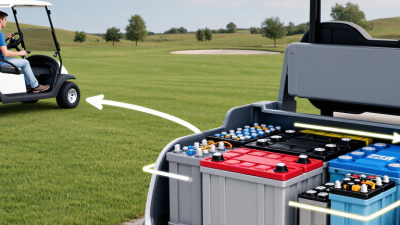
Golf-cart battery choice starts with chemistry, not a badge. Flooded lead-acid batteries are common in 36- and 48-volt packs. They suit owners who can check water levels, clean terminals, and ventilate the charging area. Miss a maintenance check, and performance can fade sooner than expected. AGM batteries are sealed and need less routine attention, but they still require a charger matched to their chemistry. Trade-offs remain.

Lithium iron phosphate packs weigh less and typically recharge faster, while a battery-management system helps guard against unsafe operating conditions. The U.S. Department of Energy’s battery technology summaries report specific energy of roughly 30–50 watt-hours per kilogram for lead-acid and 100–265 for lithium-ion. Those figures describe broad battery categories, not guaranteed golf-cart range; terrain, passenger load, speed, and temperature all matter. On a steep course, a heavy cart may use its charge quickly. Check the cart’s required voltage, charger compatibility, available space, and warranty terms before choosing. I would not compare batteries by voltage alone. A little less range on paper can feel different on a flat course.

Key Factors for Choosing the Right Trojan Battery

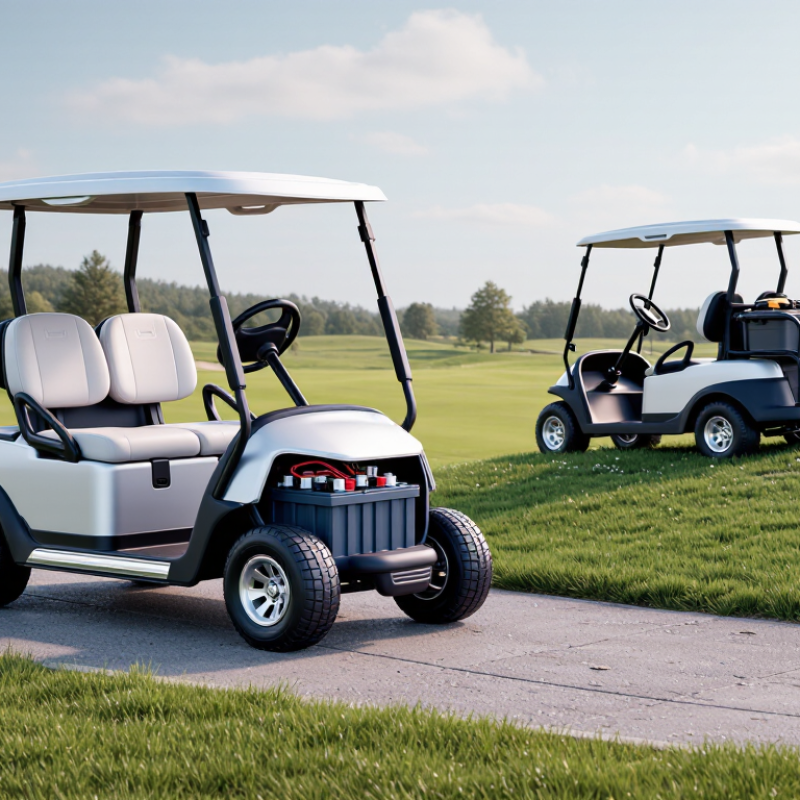
Choosing a golf-cart battery starts with the cart, not a product label. Check the owner’s manual for voltage, battery count, terminal layout, and required battery type. A six-battery setup can differ from a four-battery one, even on similar carts. Measure the compartment, including cable clearance; a case that barely fits can make servicing awkward. Measure twice.

Then match capacity to actual use. Amp-hour ratings help estimate runtime, but hills, passenger load, tire pressure, and frequent stops affect range. For steep paths or long shifts, favor adequate reserve capacity over the lowest price. Confirm that the charger’s voltage and charging profile suit the battery chemistry; mismatches may shorten service life. Flooded lead-acid batteries need periodic watering and ventilation, while sealed types reduce routine upkeep. That convenience has a cost. Compare warranty terms, expected cycle life, and local service access, not just the headline rating. A battery may look right on paper and still disappoint in cold weather or under heavy loads. Real-world range varies, so track your cart’s use for a few weeks before deciding whether its capacity is enough.

What Are the Best Golf Cart Batteries in 2026? Key Factors for Choosing the Right Battery

Battery option Typical configuration What to expect Maintenance Best suited for
6 V flooded deep-cycle Six batteries for a 36 V system; eight for a 48 V system A common golf-cart setup. Capacity varies by model; compare amp-hours at the same discharge rate, such as the 20-hour rate. Requires periodic electrolyte checks and watering with distilled water, plus terminal cleaning. Owners seeking a widely used, serviceable lead-acid option and willing to perform routine upkeep.
8 V flooded deep-cycle Four batteries for a 32 V system; six for a 48 V system. Confirm the cart’s required system voltage. Can suit carts designed for an 8 V battery bank. Capacity and runtime depend on the specific battery and driving conditions. Requires watering, terminal care, and charging with a compatible charger. Carts whose original battery layout and electrical system call for 8 V batteries.
12 V lead-acid deep-cycle Three batteries for 36 V or four for 48 V, only where the cart and battery specifications permit. Fewer units may simplify handling, but do not assume a 12 V battery will match the capacity or fit of a purpose-designed golf-cart battery. Flooded versions need watering; sealed versions do not require routine watering. Follow the battery instructions. A replacement where the cart manufacturer’s specifications explicitly approve the battery type and configuration.
Sealed AGM lead-acid Available in multiple voltages; the number of batteries must match the cart’s system voltage and wiring plan. Spill-resistant and maintenance-free with respect to watering. Check deep-cycle suitability, capacity, dimensions, and required charging profile. No routine watering; keep terminals clean and use a charger compatible with AGM batteries. Owners who prefer sealed batteries and whose cart supports the required battery specifications.
Lithium iron phosphate (LiFePO₄) pack A single pack designed for the cart’s nominal system voltage, often with a battery management system. Typically lighter than a comparable lead-acid bank. Verify usable capacity, peak-current rating, charger compatibility, and installation requirements. No watering; follow the pack maker’s charging, storage, and temperature guidance. Owners prioritizing lower weight and reduced routine maintenance, with a compatible cart and charging system.

Before choosing: Confirm the cart’s system voltage, battery count, tray dimensions, terminal layout, and charger compatibility. Compare amp-hour ratings only when they use the same discharge-rate standard; actual range also varies with load, terrain, speed, temperature, battery age, and maintenance. Always follow the cart and battery manufacturers’ specifications.

Best Trojan Battery Options by Voltage and Usage

Choosing a battery voltage starts with the cart, not the charger. Check the manual or existing pack before buying. A 36-volt system may use six 6-volt deep-cycle batteries, while a 48-volt cart may use six 8-volt units or eight 6-volt units. Match the total pack voltage exactly. Close is not close enough.

For frequent rounds, steep paths, or carrying extra passengers, prioritize reserve capacity and deep-cycle construction. Six-volt batteries often suit carts that need steady power over longer runs, but the correct choice depends on the tray, wiring, and controller. Measure twice. A higher capacity rating can extend use between charges, though it may also mean more weight and a tighter fit. I would not treat voltage alone as a performance guarantee.

Flooded batteries can offer practical value, but they need regular water checks and clean, ventilated storage. AGM batteries reduce routine maintenance, yet still require a charger matched to their chemistry. Dust around the terminals and a charger left disconnected overnight are small details with real consequences. Check the manufacturer’s specifications, then compare capacity ratings using the same test conditions. Cold weather can reduce usable range. That part is easy to overlook.

Best Golf Cart Battery Configurations by Voltage and Usage

Estimated usable energy for representative deep-cycle lead-acid battery configurations. Values assume a 50% depth of discharge.

The 48V configuration using eight 6V batteries offers the most estimated usable energy in this comparison. Actual capacity varies by battery model, condition, temperature, and discharge rate; check the battery specifications for exact values.

Comparing Battery Capacity, Lifespan, and Cost

When comparing golf-cart batteries in 2026, look beyond the amp-hour number. Capacity tells you how much energy a battery can store, but cart range also depends on terrain, passenger load, speed, and temperature. A cart carrying two people on level paths may use far less energy than one climbing a steep, grassy slope. Check that the battery bank matches your cart’s voltage and that its charger is compatible. A bigger capacity can help, but it may add weight and cost.

Lifespan depends heavily on daily use and care. Deep, frequent discharges can shorten the service life of lead-acid batteries, while timely charging and clean, secure connections help protect performance. Some types require regular water-level checks; others are sealed but may cost more upfront. Compare the expected service life with the full replacement cost, not just the shelf price. Real use is messier than a chart, and advertised cycle figures may assume ideal conditions.

Tips: Estimate your usual daily distance, then keep a modest capacity reserve for hills or colder days. Ask for capacity ratings under the same test conditions. Include charger, maintenance, and replacement costs in your budget. A cheaper pack can be the wrong deal if it needs replacing sooner.

Charging, Installation, and Maintenance Requirements

For deep-cycle lead-acid golf-cart batteries, use a charger matched to the battery type and system voltage. A mismatched charger can undercharge or overheat the pack. Charge in a ventilated area, away from flames and sparks. Let the batteries cool after a demanding drive before charging. A full charge after regular use helps limit damaging partial-charge cycles. Exact settings vary by battery model and temperature, so check the manual.

Installation deserves care. Turn off the cart and charger, then confirm the wiring diagram before connecting cables. Keep positive and negative terminals correctly matched. A reversed connection can damage electrical components. Tighten connections to the specified torque, not by guesswork, and secure batteries so they cannot shift over bumps. Wear eye protection and gloves. Small details matter.

Inspect the case, cables, and terminals regularly for cracks, looseness, corrosion, or unusual heat. Clean corrosion carefully, and keep metal tools from bridging terminals. For flooded batteries, check electrolyte levels and use distilled water only; follow the manual on when to top up. Never overfill. Sealed batteries need different care, so do not open them. Real routines are not always perfect, but a monthly inspection can catch a loose cable before it becomes a breakdown.