How to Choose the Best Power Battery for Your Needs
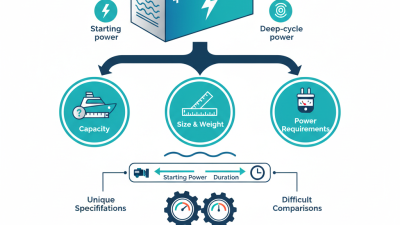
Choosing the right power battery is not simply a matter of picking the largest capacity. It means matching stored energy, output power, chemistry, and charging speed to the job. A battery for a camping fridge has different demands from one supporting a home backup system or a workshop tool. The details matter.
The International Energy Agency’s Global EV Outlook 2024 reports that battery demand for transport reached about 750 gigawatt-hours in 2023, rising 40% from 2022. That figure reflects a fast-changing industry, not a promise that every battery suits every user. IEA Executive Director Fatih Birol has emphasized that batteries are vital to the clean-energy transition. For an individual buyer, though, the useful questions are practical: How many hours of power are needed? What devices must run together? How often will the battery be charged?
Numbers can mislead. A high capacity rating may look impressive, yet a low continuous output could fail to run a demanding appliance. Chemistry also affects weight, lifespan, operating temperature, and maintenance. Some comparisons remain imperfect because manufacturers may report performance under different test conditions. Check the product’s specification sheet, warranty, and independent test results before deciding.
This guide will explain how to compare those factors, estimate real-world runtime, and balance upfront cost against useful service life. It will also examine safety features and charging options. No single model is best for everyone. The right choice should fit your actual loads, available space, and budget—not just a bold number on a box.
Estimate Energy Demand with Wh = Voltage × Ampere-Hours
How to Choose the Best Power Battery for Your Needs
Start with the energy calculation: watt-hours (Wh) = voltage (V) × ampere-hours (Ah). A 12 V, 100 Ah battery stores 1,200 Wh nominally. That is about 1.2 kWh, enough in theory to run a 60 W lamp for 20 hours. Real use will be lower. Inverter losses, battery limits, and temperature can reduce available energy. Check the manufacturer’s usable-capacity figure, not just the headline rating. Also calculate each device’s watts multiplied by its expected operating hours, then add the results.
The U.S. Energy Information Administration’s 2020 Residential Energy Consumption Survey estimates average household electricity use at roughly 10,500 kWh annually. That averages close to 29 kWh per day, but a backup battery rarely needs to supply every household load. A refrigerator, router, and a few lights have different needs from electric heating or cooking. NREL’s 2024 Annual Technology Baseline models utility-scale battery storage with a four-hour duration; this is a useful industry reference, not a required home-battery size. One number can mislead.
Tips: List essential devices and their wattage. Estimate daily runtime, include conversion losses, and leave a reserve for aging or unexpectedly long outages. Check peak power too: a motor may briefly draw more than its running rating. Revisit your estimates after a real outage; actual habits can surprise you.
How to Choose the Best Power Battery for Your Needs — Estimate Energy Demand with Wh = Voltage × Ampere-Hours
Nominal energy is estimated by multiplying battery voltage by capacity in ampere-hours: Wh = V × Ah. For example, a 24 V, 50 Ah battery stores about 1,200 Wh nominally. The energy available to power devices may be lower because of conversion losses and battery operating limits.
Compare Chemistry and Energy Density: Li-Ion Cells Often Reach 150–250 Wh/kg
Choosing a power battery starts with chemistry, not just capacity. Lithium-ion cells often reach 150–250 Wh/kg, but that range is a guide, not a guarantee. The exact figure depends on cell design, materials, and the balance between energy, power, and service life. Higher energy density can reduce weight or extend runtime. Useful, but not the whole story.
Lithium iron phosphate cells often trade some energy density for long cycle life and strong thermal stability. Nickel-rich chemistries can store more energy per kilogram, though their performance and lifespan depend on operating conditions and battery management.
Check whether a quoted figure describes cells or a complete pack. A pack includes casing, wiring, controls, and sometimes cooling, so its Wh/kg is usually lower.
Small detail. Big difference.
Match the chemistry to the job. A portable tool may need high output, while a backup battery may prioritize dependable cycling. Compare usable capacity, charging limits, operating temperature, and expected cycle life alongside Wh/kg. A common planning mistake is choosing the lightest option before estimating actual daily energy use. I would also leave a modest capacity margin; real conditions rarely match a neat specification sheet.
Match Continuous and Peak Output to the Device’s C-Rating
How to Choose the Best Power Battery for Your Needs
Match Continuous and Peak Output to the Device’s C-Rating
A battery’s C-rating helps estimate how much current it can deliver relative to its capacity. Multiply capacity in amp-hours by the C-rating to get a theoretical current limit. For example, a 5 Ah battery rated at 10C suggests up to 50 A. Treat that as a guide, not a guarantee. Temperature, battery age, and wiring can affect real-world output.
Check the device’s continuous current draw and its brief peak demand, such as when a motor starts. The battery must support both without exceeding its own continuous or peak limits. Also confirm voltage compatibility; a suitable C-rating cannot compensate for the wrong voltage. Peak ratings may apply only for a few seconds, so check the manufacturer’s stated duration. I’ve found this detail easy to overlook.
Tips: Compare the device’s specifications with the battery’s rated output, not just its capacity. Leave some headroom for sudden load changes and aging. If the device’s peak draw is unclear, measure it under realistic use or consult its technical documentation. A close match on paper can still run warm in practice.
Verify Transport and Industrial Safety Compliance: UN 38.3 and IEC 62619
A power battery should fit its real job, not just its advertised capacity. Check the voltage, peak load, operating temperature, and expected charge cycles. Then verify the safety documents for the exact battery model. UN 38.3 covers tests for lithium batteries during transport, including vibration, shock, and temperature changes. Ask for the test summary and confirm that its model details match the product label. A similar-looking battery is not necessarily covered.
IEC 62619 addresses safety requirements for secondary lithium cells and batteries used in industrial applications. Review whether the assessment covers the complete battery system, including its battery management protections, rather than only individual cells. Check the report’s scope and intended operating conditions. A document alone cannot confirm that a battery is suitable for your installation; consult a qualified supplier or safety professional when the application is unusual. Requirements can also vary by destination and use.
Tips: Match every document to the precise model and configuration. Check labels, reports, and temperature limits before purchase. Keep the test summary with shipping records. Small details matter. I would also ask what happens when a battery operates outside its recommended limits; this is easy to overlook.