10 Best Batteries for Golf Carts in 2026?
Choosing among the 10 best batteries for golf carts in 2026 requires more than comparing voltage and price. A battery may fit the tray yet deliver disappointing range on hills, soft ground, or repeated short trips. Real performance depends on chemistry, usable capacity, charging habits, temperature, weight, warranty support, and installation quality. A 48-volt cart with four passengers needs different priorities than a lightly loaded 36-volt vehicle.
Industry data provides useful context. BloombergNEF’s 2024 Battery Price Survey reported an average lithium-ion pack price of $115 per kilowatt-hour, showing continued cost pressure across the battery market. However, golf-cart packs can cost more because of low-volume designs, battery-management systems, chargers, and protective housings. The U.S. Department of Energy’s Vehicle Technologies Office also emphasizes that battery life depends strongly on temperature, charging, and operating conditions. That warning matters in daily use. A cart stored in a hot garage may age differently from one used on a cool coastal course.
This guide compares lead-acid, AGM, and lithium options using practical criteria: usable energy, cycle life, charging time, weight, safety features, warranty terms, and total ownership cost. We also consider independent testing claims and manufacturer documentation, not marketing language alone. Some published range figures seem optimistic. They often ignore slopes, payload, tire pressure, and weather. That is worth remembering. The best batteries for golf cart applications are not automatically the newest or cheapest models. They are the ones that match your cart, route, charger, maintenance ability, and realistic daily expectations.
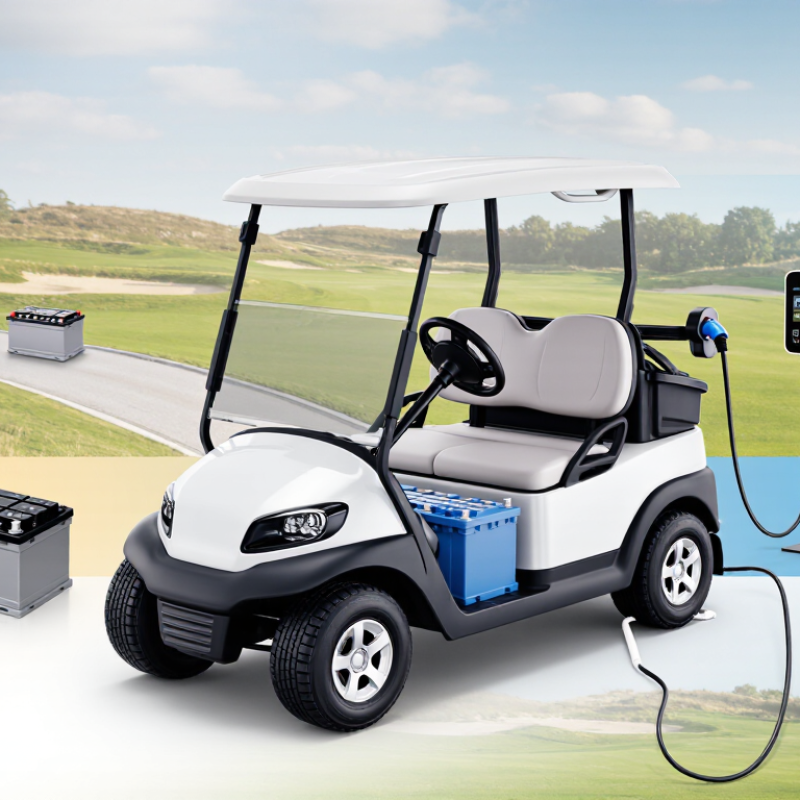
Golf Cart Battery Basics and Key Specifications
10 Best Batteries for Golf Carts in 2026?
Golf cart batteries are selected by voltage, capacity, chemistry, size, and charging compatibility. Most carts use 36 or 48 volts, while capacity is measured in ampere-hours. A 48-volt, 100Ah pack stores roughly 4.8 kilowatt-hours before real-world losses.
The U.S. Department of Energy reports that lithium-ion cells generally offer about 100–265 Wh/kg, compared with roughly 30–50 Wh/kg for lead-acid cells. That difference can reduce vehicle weight significantly.
Lead-acid batteries remain familiar and affordable, but they need ventilation, watering, and regular terminal inspection. Lithium batteries usually provide steadier voltage and faster charging, but their battery-management system must match the charger.
Argonne National Laboratory’s GREET research also shows that battery impacts depend heavily on materials, manufacturing, use, and recycling conditions. Specifications can mislead. A battery advertised with high capacity may perform poorly under repeated hills, heavy loads, or cold weather.
I have seen owners compare amp-hours while ignoring continuous discharge ratings. That is an expensive mistake.
Check the cart’s controller limits, tray dimensions, cable size, and charger output before buying. Compare usable watt-hours, warranty terms, cycle testing, and documented safety compliance.
The U.S. Department of Energy’s energy-storage guidance emphasizes temperature control and proper charging because heat accelerates battery aging.
A practical test matters too: record range, charging time, and voltage after a normal route. Perfect laboratory numbers rarely survive daily use.
How to Match Battery Types to Different Golf Cart Models
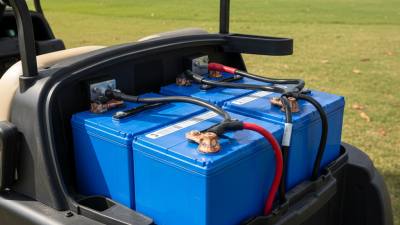
Choosing the best golf cart battery starts with the cart’s voltage, tray size, controller, and charging system. A 36-volt model usually needs six 6-volt batteries, while a 48-volt cart may use six 8-volt units or four 12-volt units. Lithium packs can also support 36, 48, or 72 volts, but their battery management system must match the cart’s current demands. Voltage is not the whole story.
Flooded lead-acid batteries
suit older carts and frequent maintenance routines. They are affordable, heavy, and tolerant of basic electrical systems.
AGM batteries
reduce spills and require less attention, though they still carry substantial weight.
Argonne National Laboratory’s BatPaC analysis places lead-acid energy density near 35 Wh/kg, while lithium-ion designs can exceed 150 Wh/kg. That difference explains lithium’s faster acceleration and longer driving range. BloombergNEF reported an average lithium-ion pack price of 115 dollars per kWh in 2024, but golf-cart installation costs remain highly variable.
Tips:
- Measure the battery compartment before ordering.
- Confirm the charger’s output voltage and charging profile.
- Check the controller’s peak current rating.
- Never assume a lithium replacement is plug-and-play.
- Some conversions need new cables, a compatible charger, or a mounting bracket.
- Battery Council International reports that lead batteries achieve nearly 100 percent recycling in North America, making disposal planning important.
- A neat specification sheet can still miss real-world heat, hills, passengers, and poor maintenance. Test the cart under those conditions.
10 Best Golf Cart Batteries for 2026: Features and Use Cases
10 Best Golf Cart Batteries for 2026: Features and Use Cases
The best golf cart battery depends on voltage, terrain, charging habits, and payload. Ten practical choices stand out: flooded lead-acid for low upfront cost; AGM lead-acid for cleaner installation; gel batteries for vibration resistance; 36-volt lithium iron phosphate for older carts; 48-volt lithium iron phosphate for daily use; 72-volt lithium packs for higher-speed platforms; modular lithium packs for easier replacement; heated lithium packs for cold climates; deep-cycle AGM batteries for rental fleets; and recycled lead-acid batteries for budget-focused operators. Lithium usually delivers greater usable energy with less weight. The U.S. Department of Energy reports lithium-ion energy density near 150–250 Wh/kg, compared with roughly 30–50 Wh/kg for lead-acid chemistry.
Battery Council International reports that lead battery recycling in the United States exceeds 99 percent. That makes lead-acid a credible choice when recycling access is strong. However, flooded batteries need watering, ventilation, and careful terminal cleaning. I have seen neglected batteries lose range before their rated service life. That detail matters more than brochure claims. The International Energy Agency also identifies lithium battery demand as a rapidly expanding market, but supply-chain pressure can affect replacement pricing. In practice, a 48-volt lithium pack suits frequent hill climbing and long rounds. A flooded pack suits occasional use and simple maintenance. A cold-weather cart may need battery heating, though that feature adds cost and another failure point. No ranking is permanent. Weight, charger compatibility, and controller limits can change the result.
Battery Performance, Lifespan, Charging, and Maintenance Factors
10 Best Batteries for Golf Carts in 2026?
Choosing a golf cart battery requires more than comparing prices. Match the battery voltage to the cart’s system, then check capacity in amp-hours. Higher capacity usually supports longer driving, but it can also increase weight and charging time. Deep-cycle designs handle repeated discharge better than ordinary starting batteries.
Lithium batteries often provide lighter weight, faster charging, and a longer service life. Lead-acid batteries remain practical when purchase cost matters. Real lifespan depends on discharge depth, heat, storage, and charging habits. A cart used on steep paths may consume energy quickly. Watch that detail. One overlooked factor is usable capacity, not the printed rating alone.
Use the charger recommended for the battery chemistry. A mismatched charger can reduce performance or create safety risks. Keep terminals clean and tight on lead-acid models, and inspect cables for corrosion. Check electrolyte levels only when the battery design allows it. Never add acid as routine maintenance. Lithium systems need less daily care, but their battery management system still requires suitable charging conditions.
During storage, leave the battery at the manufacturer’s recommended charge level and keep the cart in a dry, moderate-temperature space. Recharge after heavy use instead of repeatedly driving until the cart barely moves. That habit is easy to neglect. A perfect “best battery” ranking is difficult because terrain, passenger load, climate, and charging access change the result. Track real driving distance for several weeks before replacing the pack.
Safety, Installation, and Buying Considerations for Golf Cart Batteries
Golf-cart battery safety starts before installation. Lead-acid batteries can release hydrogen during charging, and NFPA identifies hydrogen’s flammable range as approximately 4% to 75% in air. Charge batteries in a ventilated area, away from flames, sparks, and stored materials. Wear eye protection and acid-resistant gloves. Remove metal jewelry. Small mistakes can become serious.
Installation requires matching the cart’s system voltage, battery chemistry, dimensions, terminals, and charger profile.
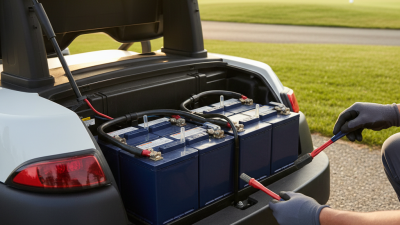
Disconnect power before touching cables, and photograph the original wiring. Connect positive and negative terminals exactly as shown in the service manual. Loose connections create heat; over-tightened terminals can crack posts. I still recheck polarity twice. It feels excessive, but polarity errors are costly. Lithium-based systems also need a compatible battery-management system and charger, not a standard lead-acid charger.
Buying decisions should include capacity, operating temperature, warranty terms, service access, and verified safety testing. Capacity in ampere-hours helps estimate range, but actual performance changes with load, terrain, tire pressure, and passenger weight. The U.S. Environmental Protection Agency reports that lead-acid battery recycling exceeds 99% in the United States, supporting responsible end-of-life planning. For lithium batteries, ask for transport, recycling, and failure-response instructions. Look for documentation aligned with applicable standards, such as IEC 62619 or UL 1973, when relevant. A lower purchase price may hide installation work, charger replacement, or shorter usable life.