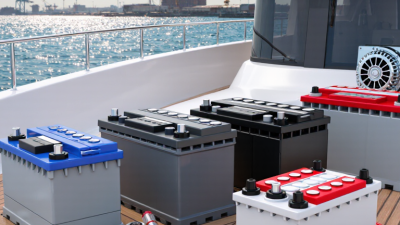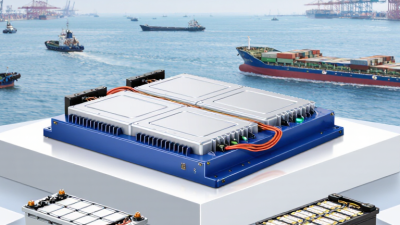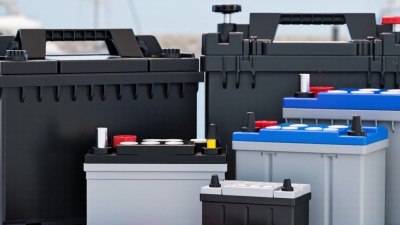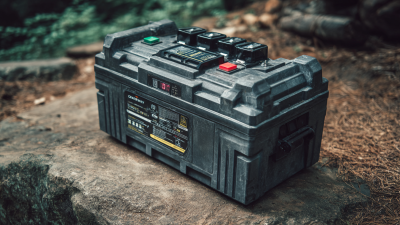
Choosing a marine battery is not just a matter of comparing amp-hour ratings. A dependable marine battery deep cycle system must handle real loads, repeated discharge, vibration, and the charging equipment already installed aboard. Nigel Calder, a respected marine electrical author, stresses the importance of matching batteries, loads, and charging systems. In paraphrase, his practical lesson is simple: “Match the battery to the duty, and the charger to the battery.” This is a summary, not a verbatim quotation.
This guide to China’s top 10 marine deep-cycle battery manufacturers looks beyond polished product claims. It considers battery chemistry, usable capacity, cycle-life testing, protection features, warranty terms, and the clarity of technical support. These details matter when a cabin light stays on overnight or a refrigerator runs through a quiet anchorage. Small choices add up. A lithium battery may save weight, while a well-chosen lead-acid model may suit a tighter budget. Neither option is automatically right for every vessel.
Manufacturer rankings can be imperfect. Published specifications do not always reflect performance after years of real use, and product ranges change. So treat the list as a starting point, not a final verdict. Compare datasheets, confirm charging compatibility, and ask how cycle-life figures were measured. A careful comparison helps buyers narrow the field without assuming that the biggest name—or the lowest price—will deliver the best service at sea.

China’s marine deep cycle battery industry combines a broad component supply chain with large-scale battery assembly. Manufacturers serve fishing boats, sailboats, yachts, and small commercial vessels. Common options include flooded lead-acid, AGM, and lithium iron phosphate batteries. Each suits different budgets, charging systems, and maintenance habits. An AGM battery can handle vibration and needs little routine attention. A lithium pack may reduce weight, but it needs compatible charging controls and careful thermal design. At a marina, practical details matter: available space, cable reach, and overnight charging can be as important as rated capacity.
The industry benefits from access to cells, separators, electronic controls, and enclosure suppliers, though quality can vary across factories and product lines. Buyers should check usable capacity, cycle-life test conditions, discharge limits, temperature range, and warranty terms—not just the amp-hour figure. Ask how a battery performs after repeated partial charging, since boats may return to shore before the battery is fully replenished. Independent test reports can provide useful evidence, but paperwork alone cannot guarantee service life. The picture is not perfectly uniform. A datasheet may look precise, while actual results still depend on installation, ventilation, charging, and storage. Not always obvious. That gap deserves more attention.
Common nominal DC system voltages used in marine applications
Marine deep-cycle battery banks commonly use 12, 24, 36, or 48 V nominal systems. The appropriate voltage depends on vessel electrical design and connected equipment; these values represent system voltages, not market share or manufacturer output.
Marine deep-cycle batteries are designed for repeated discharge, not just short engine starts. Flooded lead-acid batteries are familiar and often economical, but need ventilation and regular maintenance. AGM and gel batteries are sealed lead-acid options; their charging limits differ, so they are not interchangeable. Lithium iron phosphate (LFP) offers high usable capacity and lower weight, while nickel-manganese-cobalt (NMC) packs can provide high energy density. Chemistry alone does not determine suitability.
The IEA’s Global EV Outlook 2024 reports that LFP supplied nearly 40% of the electric-car battery market in 2023. That figure describes road vehicles, not marine installations, but it shows LFP’s growing industrial scale.
On a boat, compare usable amp-hours, cycle life at a stated depth of discharge, charge acceptance, and cold-weather performance. Check the battery’s rated vibration resistance and protection against water exposure. A battery management system matters for lithium packs. So does a charger with a chemistry-matched profile. There is no perfect choice. A claimed cycle count can mislead if temperature, load, and discharge depth are omitted. Measure real onboard loads, including pumps and electronics, before sizing a bank; a neat catalog figure may not match a wet, cold weekend at anchor.
Choosing a marine deep cycle battery supplier in China takes more than comparing quoted capacity and price. Check whether the amp-hour rating specifies test voltage, discharge rate, and temperature. Ask for cycle-life data under a defined depth of discharge. Ask for evidence. If test conditions differ, impressive figures may tell little about service life.
Review details that matter at sea: vibration resistance, enclosure sealing, terminal protection, and battery-management behavior during overcurrent or cold-weather charging. For lithium models, request cell traceability and written BMS limits. For lead-acid batteries, check maintenance needs and usable capacity. Independent laboratory reports can help verify claims. Confirm they match the exact model and factory. Paperwork can be stale.
Assess manufacturing consistency through sample testing, process-control records, and clear warranty terms. Ask how failures are diagnosed, who covers shipping, and whether replacement stock is available. A video tour is useful, but cannot replace an independent audit. A polished brochure is not proof. Even careful checks leave uncertainty: sea conditions vary, and buyers may overlook installation, charging, or cable losses.
Profiles of ten leading Chinese marine deep-cycle battery manufacturers should compare more than advertised capacity. The IEA’s Global EV Outlook 2024 reports global battery manufacturing capacity above 2.5 terawatt-hours in 2023. That figure covers a much broader market, not marine batteries alone, but it shows why buyers should check application-specific testing. Each profile should identify battery chemistry, rated capacity, cycle-life conditions, charging limits, and battery-management protections. Practical details matter. A 12-volt battery rated at 100 amp-hours may not deliver that usable energy under every load or temperature.
For marine use, ask manufacturers for discharge curves, vibration-test results, ingress-protection details, and warranty terms. Compare how clearly each supplier explains performance at low temperatures and under repeated partial charging. These details help distinguish a well-documented product range from a polished catalogue. The ten profiles should also examine production capability, export experience, technical support, and whether test documents match the exact model offered. The U.S. Department of Energy’s 2023 report on battery supply chains highlights the importance of traceable materials and manufacturing capacity; it is useful context, not a marine-product certification. Some supplier claims may still be difficult to compare fairly. That deserves scrutiny. Independent test reports and written operating limits offer firmer evidence than broad claims of long life or high performance.
When comparing China’s marine deep-cycle battery manufacturers, start with the products, not the catalogue photos. Check whether each supplier offers the chemistry, capacity, voltage, and case size your vessel needs. A 100 Ah rating alone tells little about usable energy or performance under load. Ask for cycle-life test conditions, charging limits, and battery-management details. These should match your charger and onboard equipment.
Certifications matter, but verify the documents for the exact battery model. Check the issuing body, test scope, and validity rather than relying on a logo in a brochure. Support deserves equal attention. Can the manufacturer provide clear installation guidance, warranty terms, and prompt answers about charging or fault codes? Ask for a sample technical document before ordering. I would not rank a supplier by one impressive number; that shortcut feels tidy, but it can mislead. Some comparisons remain uncertain when test conditions differ.
Tips: Request a written specification sheet and confirm dimensions, terminal layout, and operating-temperature limits. Keep the reply. It may expose gaps before a battery reaches your boat.
Company-specific product, certification, and support details should be confirmed directly with each supplier. The table below compares ten key points using verifiable product characteristics and recognized standards; it does not assign unverified claims to individual manufacturers.
| Comparison area | What to compare | Useful evidence or reference | Buyer check |
|---|---|---|---|
| 1. Battery chemistry | Flooded lead-acid, AGM, gel, or lithium iron phosphate (LiFePO₄). | Product datasheet stating chemistry, nominal voltage, and intended marine use. | Confirm charging profile and compatibility with the vessel’s charger and alternator. |
| 2. Capacity and discharge rating | Rated capacity in amp-hours, test rate, and—where applicable—reserve capacity. | Datasheet specifying the capacity test conditions; lead-acid capacity is commonly reported at a stated hour rate. | Compare ratings at the same test rate; do not compare amp-hour figures without their test conditions. |
| 3. Cycle-life claims | Cycle count at a specified depth of discharge (DoD), temperature, and test method. | Test report or datasheet showing the conditions behind the cycle-life figure. | Treat cycle-life figures without test conditions as not directly comparable. |
| 4. Battery management system | For lithium batteries, protection functions such as over-voltage, under-voltage, over-current, and temperature protection. | BMS specification, protection limits, and operating-temperature range. | Check whether the BMS supports the vessel’s loads, charging sources, and any required communications. |
| 5. Marine suitability | Vibration resistance, enclosure protection, terminal design, and installation orientation limits. | Product installation manual and applicable test reports for the exact model. | Confirm the battery is suitable for the intended location and is installed according to its manual. |
| 6. Transport testing | Whether the applicable battery type and model meet transport test requirements. | UN Manual of Tests and Criteria, subsection 38.3, test summary for the offered battery type. | Request the test summary and verify it corresponds to the shipped product configuration. |
| 7. Product safety certification | Applicable safety standards depend on battery chemistry, design, and target market. | For example, IEC 62619 covers safety requirements and tests for certain secondary lithium cells and batteries used in industrial applications. | Check the certificate’s scope, model numbers, issuing body, and validity; a standard reference alone is not proof of certification. |
| 8. Quality management | The manufacturer’s quality-management system and the sites covered by it. | A current ISO 9001 certificate identifies the certified organization, scope, and site or sites. | Verify the certificate with its issuer and ensure the scope covers relevant manufacturing activities. |
| 9. Warranty and after-sales support | Warranty duration, exclusions, claim process, technical response channels, and spare-part availability. | Written warranty terms and a named service contact or documented support process. | Confirm who handles claims in the destination market and what documentation is required. |
| 10. Customization and delivery | Available voltage and capacity options, terminals, communication interfaces, labeling, and order lead time. | A model-specific quotation, approved drawings, and written production and shipping schedule. | Confirm minimum order quantity, sample availability, change control, and delivery terms before placing an order. |
Northeast Battery, a Stored Energy Holdings, Inc. Company