2026 Top Deep Cycle Battery Types for Global Buyers

Choosing the right battery for global projects requires more than comparing voltage, capacity, and advertised cycle life. In 2026, buyers may consider flooded lead-acid, AGM, gel, lithium iron phosphate, and emerging sodium-ion designs. Each type behaves differently under heat, vibration, partial charging, and repeated discharge. A battery deep cycle system for a fishing boat may need different protection than one supporting solar storage in a remote clinic.

Real purchasing decisions often begin with physical details. A lead-acid unit may require ventilation and careful maintenance. An LiFePO4 battery can reduce weight, but its battery management system must be properly matched to the charger and inverter. Cold weather can limit lithium charging, while high temperatures can shorten the service life of almost any chemistry. Small errors matter. A mislabeled capacity rating can distort the entire budget.

This guide examines the leading deep-cycle battery types available to international buyers in 2026. It considers usable energy, cycle performance, safety features, maintenance, warranty language, transport practicality, and total ownership cost. Supplier documentation, independent test data, and regional compliance records deserve close attention. Marketing claims are not proof.

A closer check helps.

There is no universal winner. A low-cost battery may be practical for seasonal equipment, while a premium lithium model may suit daily solar cycling. Even this comparison has limits, because real performance depends on installation quality, charging habits, ambient temperature, and load patterns. Buyers should verify local service support before placing large orders. That step is often overlooked.
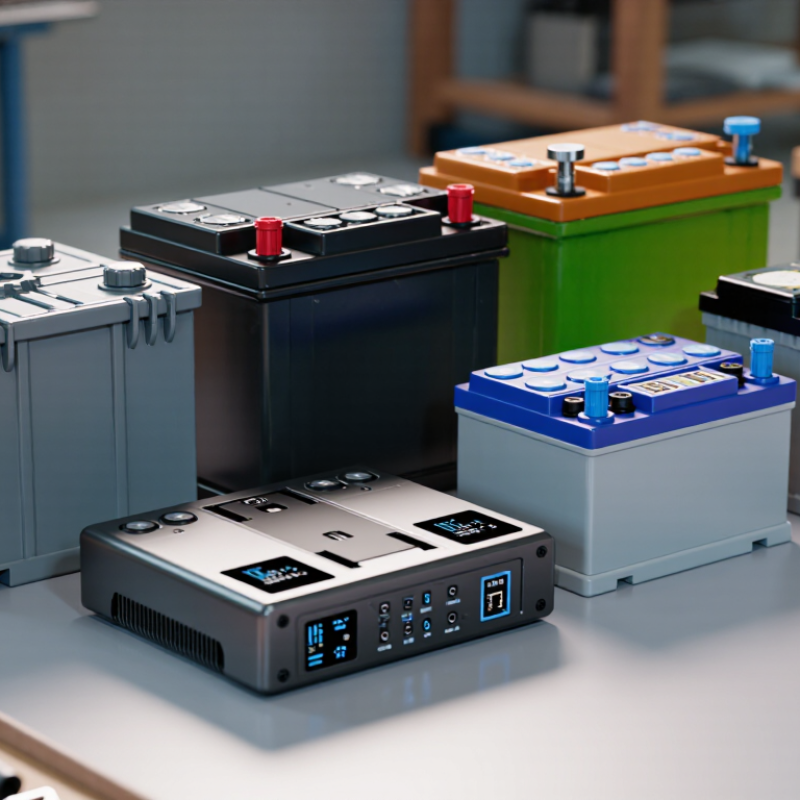
2026 Top Deep Cycle Battery Types for Global Buyers

What Deep Cycle Batteries Are and How They Differ from Starter Batteries

Deep cycle batteries are designed to release energy steadily for hours, then recover through repeated charging. Starter batteries work differently. They provide a short, powerful current to crank an engine, but repeated deep discharge can damage their plates. A deep cycle battery uses thicker plates and stronger active material, although its starting current is usually lower. In practical terms, a starter battery turns an engine once; a deep cycle battery may run lights, pumps, or medical equipment overnight.

The main types are flooded lead-acid, AGM, gel, and lithium iron phosphate. Flooded batteries remain cost-effective, but they need ventilation, water checks, and careful installation. AGM and gel batteries reduce maintenance, yet heat and overcharging still shorten their lives. Lithium systems are lighter and usually provide more usable capacity. Sandia National Laboratories’ 2022 Energy Storage Technology and Cost Characterization Report places typical lead-acid round-trip efficiency around 75–85%, compared with roughly 85–95% for lithium-ion systems. Actual results vary.

Not every “deep cycle” label proves durability. It does not.

IEC 61427 focuses on batteries used in renewable-energy applications, while IEC 60095 addresses automotive starter batteries. These standards help buyers compare intended use, testing, and operating conditions. Capacity also needs context: a 100 Ah rating may be measured at a specific discharge rate and temperature. I would check cycle-life testing, usable depth of discharge, charging limits, and warranty terms before comparing prices. Real installations are less tidy than brochures suggest.

The Main Deep Cycle Battery Types Available in 2026

2026 Top Deep Cycle Battery Types for Global Buyers

The Main Deep Cycle Battery Types Available in 2026

Deep cycle batteries are available in several chemistries, and each suits different operating conditions. Flooded lead-acid batteries remain practical for fixed solar systems and backup equipment. They usually cost less, but require ventilation, water checks, and careful charging.

AGM batteries are sealed, cleaner to install, and resistant to moderate vibration. They work well in boats, remote cabins, and mobile power systems.

Gel batteries use a silica-based electrolyte and tolerate repeated discharge effectively. However, incorrect charging can permanently reduce their capacity.

Lithium iron phosphate batteries provide low weight, high usable capacity, and many charge cycles. They also deliver stable voltage during discharge. Cold-temperature charging needs protection, especially in outdoor installations.

Sodium-ion batteries are emerging in some markets, but availability, performance data, and service support vary widely.

Tips: Match the battery to the daily load, discharge depth, temperature, and charging equipment. Weight matters. Check the datasheet. Confirm the recommended charger profile before installation.

Buyers should also review warranty terms, transport conditions, safety certifications, and local technical support. A battery may appear economical while costing more through replacement labor. In field applications, real performance rarely matches the best laboratory figure. This is easy to overlook. Leave space for inspection, secure terminals against vibration, and monitor voltage regularly during the first operating weeks.

How to Compare Capacity, Lifespan, Efficiency, and Safety

2026 Top Deep Cycle Battery Types for Global Buyers

Comparing deep cycle batteries requires more than reading the amp-hour number. A 100 Ah battery does not always provide 100 Ah of usable energy. Lead-acid batteries often use a 50% depth-of-discharge limit, while lithium iron phosphate batteries can commonly use more. Compare usable watt-hours at the same voltage, temperature, and discharge rate. A battery label can look impressive. It may still mislead.

Lifespan depends on cycle depth, charging quality, heat, and storage time. Flooded lead-acid batteries are affordable but need ventilation, water checks, and regular maintenance. AGM and gel types reduce maintenance, yet heat can shorten their service life. Lithium batteries usually deliver more cycles and higher round-trip efficiency, often above 90% in suitable systems. However, their battery management system, charger compatibility, and cold-weather limits require careful checking. More expensive is not always better.

Safety deserves a physical inspection, not only a datasheet review. Check terminals, enclosure strength, overcharge protection, short-circuit protection, and temperature control. Ask for independent test reports and clear warranty conditions. In real installations, loose connections and poor ventilation can cause more trouble than battery chemistry. I have seen capacity comparisons fail because one sample was tested at 25°C and another in a hot cabinet. That was not a fair test. Buyers should request cycle data, efficiency measurements, and installation guidance from qualified suppliers. Some published figures remain optimistic, so leave room for aging, seasonal demand, and imperfect maintenance.

Choosing the Right Battery for Solar, Marine, RV, and Backup Systems

Choosing a deep cycle battery depends on the system, not just its advertised capacity. The IEA’s Batteries and Secure Energy Transitions report (2024) says global energy storage capacity must increase sixfold by 2030. That growth makes correct battery selection more important for solar and backup systems.

For solar storage, lithium iron phosphate batteries offer high usable capacity, long cycle life, and lower weight. A battery management system remains essential. Flooded lead-acid batteries can cost less, but they need ventilation, regular inspection, and controlled charging. AGM and gel batteries suit many marine and backup installations because they are sealed and resistant to vibration. Cold changes everything. Low temperatures can reduce lithium charging performance.

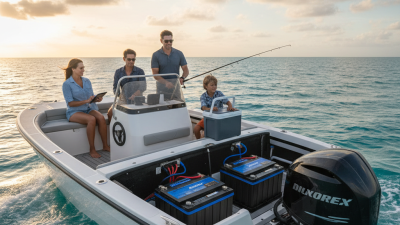
RV users should compare battery weight, available compartment space, and daily energy demand. Lithium batteries may free valuable payload, while AGM batteries can remain practical for modest loads. Marine buyers must check charging compatibility, moisture exposure, ventilation, and emergency isolation requirements. For backup systems, standby duration matters more than peak marketing claims. The U.S. Energy Information Administration reported that battery storage capacity in the United States grew rapidly through 2024, reflecting stronger demand for flexible electricity reserves. Still, I would not choose a battery from cycle-life figures alone. Real temperature, discharge depth, charging quality, and maintenance can change field results. A perfect choice rarely exists.

Global Buying Factors: Standards, Shipping, Maintenance, and Total Cost

Global buyers should compare deep-cycle batteries by duty, not chemistry alone. Flooded lead-acid often lowers purchase cost, but it needs ventilation, watering, and upright installation. AGM and gel designs reduce routine servicing, although heat and incorrect charging can shorten their lives. Lithium iron phosphate batteries offer lower weight and usable capacity, yet their control systems and transport documents require closer review. In warehouse projects, a cheaper battery can become expensive after repeated replacements. Measure daily energy demand, discharge depth, ambient temperature, and expected cycle count before requesting quotations. Small details matter.

Standards should be checked before payment, not after arrival. Ask for current test reports, safety data, dimensions, terminal details, and traceable production information. Check relevant IEC, national, and application-specific requirements. Lithium shipments may require UN 38.3 evidence, suitable packaging, and carrier approval. Confirm whether the supplier supports sea, air, or multimodal transport. A wooden crate, customs delay, or missing document can damage delivery schedules. I have seen buyers focus on watt-hours while overlooking insurance, import duties, and port handling fees. That is a costly blind spot.

Maintenance planning should match local skills. Lead-acid systems need cleaning, torque checks, electrolyte inspection, and charging records. Lithium systems need compatible chargers, temperature protection, and battery-management data. Keep spare fuses and connectors nearby. Total cost includes installation, energy losses, service labor, recycling, and downtime. Compare cost per delivered kilowatt-hour across the warranty period, not only the invoice price. Warranty wording also deserves careful reading. Coverage may exclude heat, deep discharge, or poor storage. The uncomfortable truth is that forecasts remain imperfect. Leave a safety margin, then review performance after the first season.

2026 Top Deep Cycle Battery Types for Global Buyers

Global Buying Factors: Standards, Shipping, Maintenance, and Total Cost

Battery Type Typical Chemistry Nominal Voltage Usable Depth of Discharge Typical Cycle Life* Operating & Maintenance Relevant Standards & Documents Shipping Considerations Initial Cost Level Total Cost of Ownership Best-Fit Applications
Flooded Lead-Acid Lead dioxide / lead sponge in liquid sulfuric acid electrolyte 2 V per cell; commonly 6 V or 12 V blocks Approximately 50% for regular service Approximately 500–1,200 cycles Requires ventilation, upright installation, periodic electrolyte-level inspection, watering, cleaning, and equalization charging where specified IEC 60896 series; local electrical, workplace, recycling, and transport requirements also apply Wet batteries are generally regulated as dangerous goods; commonly shipped under UN 2794. Leak prevention, upright positioning, and spill controls are important Low Low purchase price, but labor, ventilation, water, replacement frequency, and lower usable capacity can increase lifetime cost Industrial backup, traction equipment, off-grid systems, renewable-energy storage, and applications with regular maintenance capability
AGM Lead-Acid Absorbent Glass Mat valve-regulated lead-acid 2 V per cell; commonly 12 V or 24 V systems Approximately 50%; higher discharge depth may be possible occasionally Approximately 400–1,000 cycles Sealed and low-maintenance; no routine watering. Requires correct charging voltage, temperature control, and ventilation because hydrogen release can occur during abnormal charging IEC 60896 series; verify battery, charger, and installation compliance for the destination market Typically classified as non-spillable when tested and packaged accordingly; transport status must be confirmed from the safety data sheet and applicable carrier rules Low to medium Usually lower maintenance than flooded batteries, but heavier weight and shorter cycle life can raise replacement and freight costs UPS systems, telecom backup, mobility equipment, marine auxiliary power, and compact solar storage
Gel Lead-Acid Valve-regulated lead-acid with silica-gelled electrolyte 2 V per cell; commonly 12 V or 24 V systems Approximately 50%; deep discharge must remain within manufacturer limits Approximately 600–1,200 cycles Low maintenance and vibration-resistant; highly sensitive to overcharging and requires a charger with a gel-compatible profile IEC 60896 series; charger and installation requirements vary by system voltage and jurisdiction Often eligible for non-spillable battery provisions when applicable tests and packaging requirements are met; documentation must be checked before export Medium Can provide good value in low-maintenance installations, but slow charging and sensitivity to incorrect charging may increase system losses or early replacement risk Remote monitoring, marine systems, mobility equipment, solar backup, and installations requiring reduced leakage risk
Lithium Iron Phosphate (LFP) Lithium iron phosphate cathode with graphite-based anode 3.2 V per cell; commonly 12.8 V, 25.6 V, or 51.2 V packs Approximately 80–90% for many systems, subject to the battery-management system and warranty terms Approximately 2,000–7,000 cycles No watering or equalization; requires a battery-management system, compatible charger, temperature protection, and correct storage state of charge IEC 62619, IEC 63056 where applicable, UN 38.3 transport testing, and applicable electrical and EMC requirements Usually shipped as lithium-ion batteries under UN 3480 or contained in equipment under UN 3481; air freight may require state-of-charge, marking, packaging, and carrier controls High Often favorable over the full service life because of high usable capacity, long cycle life, lower maintenance, lighter weight, and improved round-trip efficiency Solar-plus-storage, recreational vehicles, marine power, electric work equipment, telecom backup, and frequent-cycling off-grid systems
Nickel-Metal Hydride (NiMH) Nickel oxyhydroxide cathode with hydrogen-absorbing alloy anode 1.2 V per cell; packs are configured for the required system voltage Approximately 60–80%, depending on operating profile Approximately 500–1,000 cycles Low routine maintenance, but higher self-discharge and heat generation during charging require suitable controls and ventilation IEC 61951-2 and relevant product-specific electrical safety requirements Transport classification depends on design and packaging; confirm the safety data sheet, test documentation, and destination-country battery rules Medium to high Durable in some high-power applications, but self-discharge, lower energy density, and limited deep-cycle availability can reduce economic competitiveness Specialized backup systems, industrial equipment, and applications where established nickel-based technology is preferred
Sodium-Ion Sodium-based cathode with hard-carbon anode Approximately 2.8–3.3 V per cell, depending on cell design Commonly about 80–90% in system designs; confirm the specific warranty limit Approximately 2,000–5,000 cycles for current commercial designs; product data varies widely Low routine maintenance; requires battery-management, thermal, and charger controls. Cold-temperature performance may be an advantage in some designs Applicable lithium-like battery safety and transport testing may be used depending on cell chemistry and jurisdiction; verify current certification files before purchase Classification is product- and jurisdiction-dependent; obtain the manufacturer’s UN 38.3 test summary, safety data sheet, packaging instructions, and carrier acceptance before shipment Medium to high Potentially attractive where raw-material availability, cold performance, and safety priorities outweigh lower energy density; lifecycle economics remain application-specific Stationary storage, backup power, low-speed mobility, and projects seeking alternatives to conventional lithium chemistries

Buyer Note: Cycle-life figures are indicative ranges rather than guarantees. Actual results depend on discharge depth, discharge rate, temperature, charging profile, storage conditions, installation quality, and end-of-life definition.

Total Cost Formula: Consider purchase price, usable energy, charger and inverter compatibility, freight and insurance, import duties, installation, maintenance labor, downtime, replacement interval, recycling, and end-of-life disposal.

Documentation Checklist: Request the technical datasheet, safety data sheet, warranty terms, applicable conformity declarations, UN 38.3 test summary where relevant, packaging instructions, and destination-market certification requirements before placing an international order.