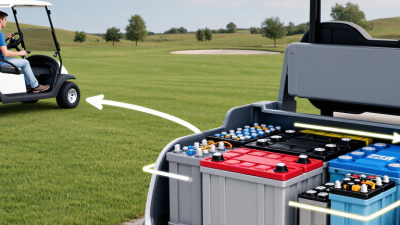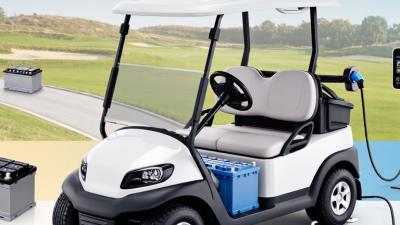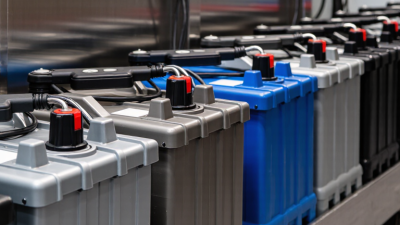
Choosing China’s top golf cart battery suppliers requires more than comparing prices and glossy product photos. The right partner should understand how golf carts operate in real conditions, including steep paths, long shifts, heat, storage, and frequent charging. Buyers must compare lithium and lead-acid options by voltage, capacity, cycle life, charging time, weight, and expected operating hours. Batteries for golf cart applications should match the vehicle’s controller, charger, space, and daily workload.
Supplier experience matters. A reliable manufacturer can provide clear datasheets, testing records, warranty terms, and traceable production information. Ask whether the factory builds battery packs in-house or mainly resells them. Review battery management system protection, cell quality, enclosure design, and communication functions before placing a large order. Samples can reveal practical details, such as connector fit, cable length, display accuracy, and charging noise.
Small details matter.
Request references from customers with similar carts and operating environments. Check how the supplier handles technical support, replacement parts, packaging, and after-sales claims. Factory audits or video inspections may also expose differences between marketing language and actual production capability. Certifications should be verified for the destination market, not simply copied from a brochure.
Price still matters, but the cheapest offer may create higher replacement and downtime costs. A perfect supplier rarely exists. Even strong factories may have inconsistent communication or limited customization capacity. Keep questions documented, test before scaling, and leave room for honest review. This approach helps buyers select dependable golf cart batteries with fewer surprises.
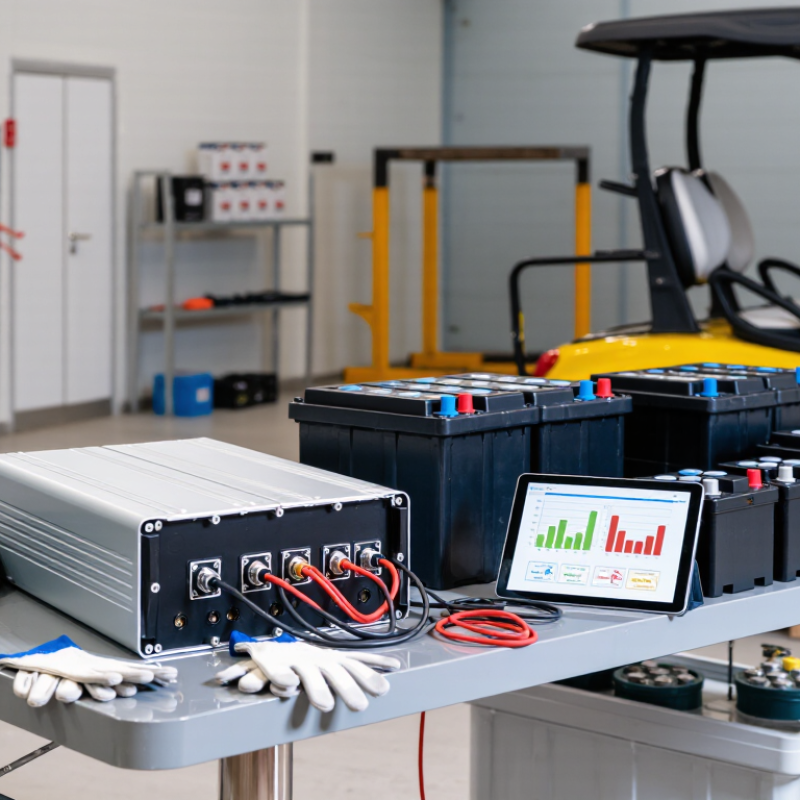
A golf cart’s battery choice should match its route, load, and charging routine. Flooded lead-acid batteries are familiar and often cost less upfront, but they need regular watering and ventilation. Sealed AGM batteries reduce maintenance, though they still require compatible charging. Lithium-ion batteries are lighter and can recharge faster, but their battery management system and charger must be properly matched.
The U.S. Department of Energy’s Alternative Fuels Data Center reports typical energy density of about 30–50 Wh/kg for lead-acid batteries, compared with roughly 100–265 Wh/kg for lithium-ion.
That gap can mean more usable energy with less battery weight. Useful, but not the whole story.
Think about the actual course. A flat nine-hole loop differs from hilly paths carrying four passengers and a cooler. Check the cart’s voltage, motor demands, daily distance, and available charging time before comparing capacity.
Ask suppliers for rated capacity and the test conditions behind it; figures measured at different discharge rates may not compare fairly. The U.S. Department of Energy’s battery guidance also emphasizes that temperature and operating conditions affect performance.
In practice, a cart that slows on the final hill may need more than a different battery chemistry. Wiring, battery age, and charging habits deserve inspection too.
I would not choose by range claims alone.
Before comparing suppliers, read the voltage printed on your cart’s battery pack or controller. Common systems use 36 or 48 volts, but the label—not a guess—should guide replacement. Check the number of batteries, too. Six 8-volt batteries, for example, make a 48-volt series pack. One mismatch can cause poor performance or damage. A quick photo of the wiring helps, though it is not a substitute for checking the specifications.
Capacity is usually listed in amp-hours (Ah), but the test rate matters. A 100 Ah rating measured over 20 hours may not deliver 100 Ah during steep, stop-start driving. Estimate daily demand from passenger load, hills, distance, and accessory use. For a rough comparison, a 48 V, 100 Ah pack stores 4.8 kWh before losses. The U.S. Department of Energy’s Alternative Fuels Data Center explains that battery energy depends on both voltage and capacity; use that relationship to compare pack-level figures, not as a guaranteed range. Range claims can be optimistic. Record your actual route and charging pattern, then ask suppliers for test conditions behind their figures.
When assessing Chinese golf cart battery suppliers, look beyond factory age and product photographs. Practical experience appears in repeat orders, documented failure analysis, and stable delivery records. Ask how many battery models they have produced for similar carts and operating temperatures. Request anonymized test reports, customer-use data, and evidence of engineering changes. A polished website proves little. Ask for records.
Quality control should be visible on the production floor, not only in a sales presentation. Check incoming inspection for cells, plates, connectors, insulation, and enclosure materials. For lithium systems, review cell matching, welding strength, BMS calibration, and thermal protection tests. For lead-acid systems, examine electrolyte filling, sealing, charge acceptance, and leakage checks. The supplier should record serial numbers from assembly through final capacity testing. Request aging data, sampling plans, and clearly defined rejection limits. Independent laboratory testing can verify capacity, vibration resistance, and safety performance. Test the sample.
Factory audits should include calibration labels, quarantine areas, and workers’ inspection instructions. Do not accept copied certificates without checking their scope and validity. A supplier may pass one audit and still lose control during peak production. Ask for corrective-action reports and proof that problems were closed. Communication also reveals competence: technical staff should explain voltage drop, charging habits, and storage conditions clearly. I would still run a small pilot order, because written procedures sometimes hide inconsistent workmanship. Keep inspection criteria agreed in writing, including capacity tolerance, packaging condition, and delivery evidence.
When comparing golf cart batteries from suppliers in China, look beyond the voltage printed on the label. Match the battery’s voltage and capacity to your cart’s motor, controller, and daily route. A cart carrying passengers uphill needs different capacity from one used on flat paths. Check the stated amp-hour rating and ask how it was measured. Small test differences can make two similar figures hard to compare.
Safety details deserve a close look. Ask whether the battery includes overcharge, overcurrent, and temperature protection. Request clear product documentation, not just a sales sheet. Inspect the enclosure rating and confirm that terminals are protected from accidental contact. A neat product photo proves little. It is also worth asking how the supplier checks cells and handles warranty claims. I would not skip that conversation, even when the quoted price looks attractive.
Then calculate total cost over the expected service life. Include the charger, installation, shipping, maintenance, and likely replacement interval. A lower purchase price may become less appealing if the charger is incompatible or support is slow. Compare written warranty terms, including exclusions and response times. Ask for a sample quotation with every charge listed. The comparison may still feel imperfect; suppliers do not always report test conditions in the same way. Keep those gaps visible when weighing your options.
China Top Golf Cart Batteries Suppliers How to Choose?
Choosing a golf cart battery supplier in China requires more than comparing quoted prices. Warranty language often exposes the supplier’s real confidence. Check the coverage period, cycle limit, and conditions for storage, charging, and installation. A useful warranty states who pays freight for defective units. It also explains inspection steps and replacement timing. Ask for written performance data from similar cart models. Request serial-number tracking. Small details matter.
Technical support should be measurable, not a promise hidden in a sales message. Confirm whether engineers can review charger settings, voltage readings, and temperature logs. Ask for a response time during the first month of operation. Clear troubleshooting sheets help warehouse staff solve simple faults safely. For larger orders, request remote commissioning and operator training. Support quality can vary between shifts. That weakness deserves attention.
Delivery terms need equal scrutiny. Confirm production lead time, battery test procedures, packaging protection, and loading photos. Clarify whether prices include export documents, insurance, and agreed transport costs. Ask how delays, damaged cartons, or missing accessories are handled. A pre-shipment sample inspection reduces surprises, although it cannot remove every risk. I would not accept vague promises. A supplier may look technically strong, yet fail on communication when schedules tighten. Record every commitment in the purchase contract.
| Evaluation Area | What to Check | Evidence to Request | Practical Decision Guide |
|---|---|---|---|
| Battery chemistry | Confirm whether the pack uses lead-acid or lithium iron phosphate (LiFePO4). Compare usable capacity, weight, maintenance needs, charging requirements, and expected operating conditions. | Product datasheet stating chemistry, rated capacity, nominal voltage, dimensions, weight, and recommended charging profile. | Compare options against the cart’s duty cycle and available charger. Do not compare capacity figures without checking the stated test conditions. |
| Voltage and fit | Match the battery system to the cart’s controller, motor, wiring, tray, and charger. Common golf-cart systems include 36 V and 48 V; the required battery configuration depends on the cart. | Cart model compatibility confirmation, wiring diagram, pack dimensions, terminal layout, and charger voltage range. | For example, a 16-cell LiFePO4 pack has a nominal voltage of 51.2 V (16 × 3.2 V). Confirm that the cart and charger are designed for the pack’s actual voltage range. |
| Capacity and testing | Check rated amp-hours (Ah), the discharge rate or test method used, operating temperature range, and any stated cycle-life conditions. | Datasheet with capacity test rate, temperature, cut-off voltage, and cycle-life test conditions. | Capacity depends on test conditions, particularly for lead-acid batteries. Compare like-for-like ratings rather than relying on an Ah figure alone. |
| Battery management system | For lithium packs, verify the battery management system (BMS) protection functions and its continuous and peak current ratings. | BMS specification covering over-charge, over-discharge, over-current, short-circuit, and temperature protection, where applicable. | Check that the BMS current limits suit the cart’s motor and controller. Ask how the pack behaves when a protection limit is reached. |
| Warranty coverage | Review the warranty duration and its start date, covered components, capacity or performance thresholds, exclusions, and remedy process. | Written warranty terms identifying the warrantor, claim procedure, required proof of purchase, and responsibility for transport costs. | Do not compare warranty periods alone. Confirm how claims are assessed and whether labor, shipping, replacement, or repair is included. |
| Technical support | Confirm the support channels, response hours, language availability, troubleshooting process, and access to replacement parts or service procedures. | Support contact details, troubleshooting guide, wiring or installation documentation, and a written escalation process. | Ask a technical question before ordering. Evaluate whether the response addresses the cart’s voltage, charger, and operating conditions specifically. |
| Safety and transport documents | For lithium batteries, verify transport-test documentation and the shipping classification applicable to the actual battery and shipment configuration. | UN 38.3 test summary and relevant shipping documents; request the safety data sheet (SDS) where applicable. | Documentation should match the supplied battery model. Confirm requirements with the carrier and destination-country authorities. |
| Delivery terms | Clarify the named delivery place, Incoterms® 2020 rule, shipment method, lead-time estimate, and which party handles export, freight, insurance, import clearance, and duties. | Quotation showing the exact Incoterms rule and named place, estimated dispatch date, packaging details, and itemized charges. | Incoterms allocate specified costs and responsibilities; they do not by themselves establish a delivery date or replace the sales contract. |
| Order and payment controls | Confirm the product specification, quantity, packaging, inspection arrangements, payment milestones, and process for reporting shortages or damage. | Signed quotation or purchase contract, approved specification sheet, inspection checklist, and written claims procedure. | Keep the approved technical specification and commercial terms together so the delivered goods can be checked against the order. |
| Final supplier comparison | Assess each offer against the same battery configuration, warranty questions, support questions, and delivery destination. | Completed comparison sheet with quoted price, verified specifications, warranty terms, support response, and landed-cost assumptions. | Treat unverified claims as open questions. Obtain written confirmation before placing an order, especially for compatibility, warranty remedies, and import-related costs. |
Northeast Battery, a Stored Energy Holdings, Inc. Company